Congress Leader Angdembe Criticizes PM Shah's Governance


Kathmandu. Nepali Congress Parliamentary Party leader Bhishma Raj Angdembe has criticized the current style of governance. He termed Prime Minister Balen Shah's working style as 'unnatural and unparliamentary'.
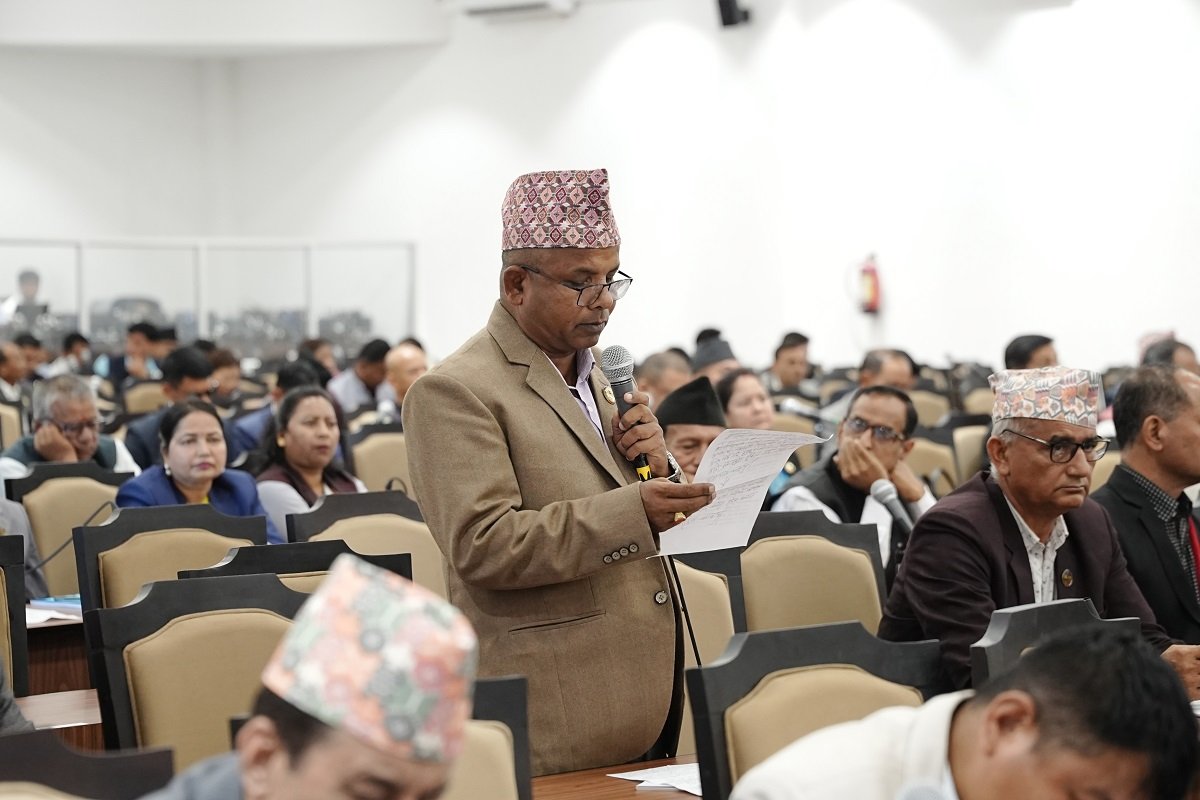
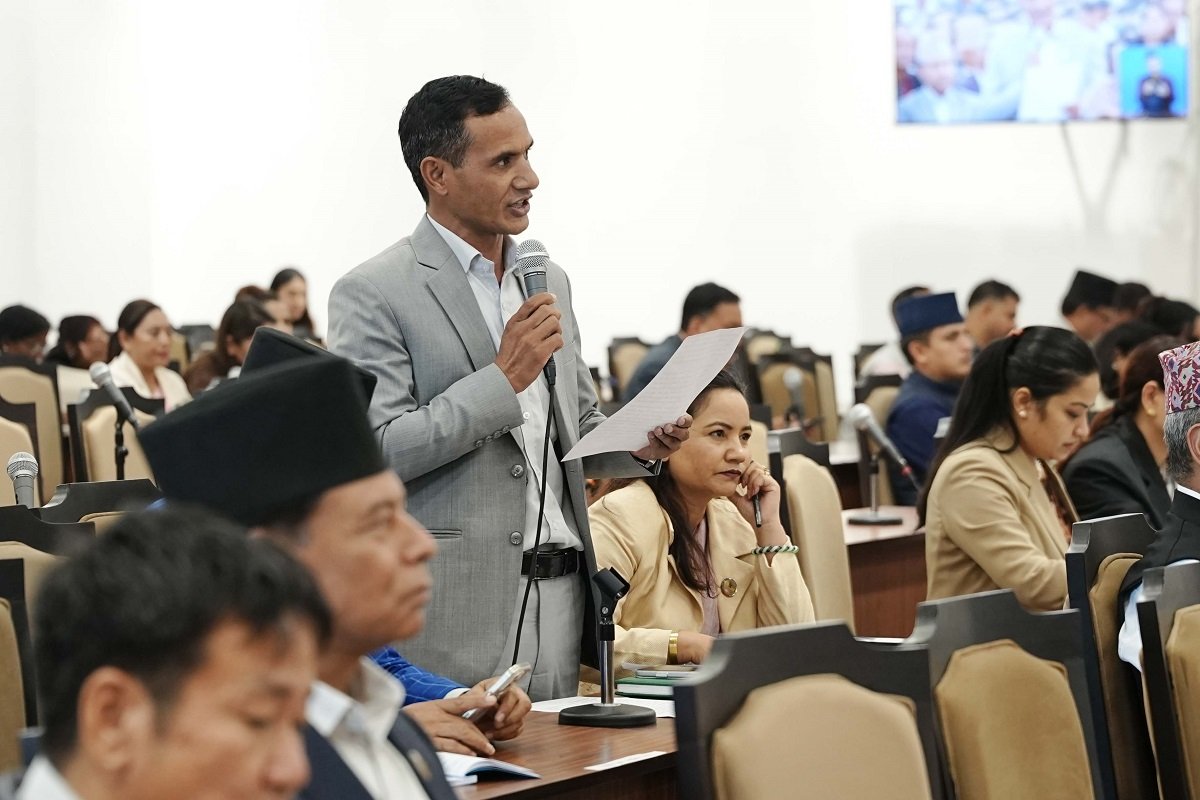
Speaking at the House of Representatives meeting on Tuesday, he accused the government of trying to rule through ordinances by snatching away the law-making task, which is considered the main right and responsibility of the parliament.
During his address, leader Angdembe said, 'It is an attack on parliamentary dignity and democratic values to suddenly postpone a convened session and bring more than one hundred and fifty laws through ordinances. The far-reaching consequences that such a trend can create can be dire, which our party cannot support.'
He commented that the government is only found on 'Facebook' but is lost in dialogue with the parliament and the public. He accused the government of becoming like 'Yamadutas (messengers of death) rather than guardians' by brutally bulldozing the homes of the landless and the poor, trampling on human sensibilities.
Angdembe questioned why the government hesitated to investigate serious allegations against its own ministers, despite advocating for good governance.
Similarly, he termed the incident where the Prime Minister walked out of the House midway while his own government's policy and program were being presented as 'arrogance and disrespectful behavior'. He also informed that it is the clear stance of the Congress to form an all-party commission under the chairmanship of a sitting or former judge of the Supreme Court for constitutional amendment.
Honorable Speaker,
This session has begun with unusual traditions. By suddenly postponing a convened session and snatching away the law-making task, which is the main right and responsibility of the parliament, the government has hurt parliamentary dignity and democratic values by announcing about one hundred and fifty laws through ordinances and amending some new laws. Doubts have arisen in the minds of the general public about the government's commitment and loyalty to the parliamentary system.
Honorable Speaker
We have had the experience of about 45 days of governance by the government formed by winning the election on the legacy of the Gen-Z rebellion. We remind you that we also expressed our commitment to provide positive and constructive cooperation with open hearts, congratulations, best wishes, and goodwill to him and his government from this very house. These goodwill gestures of ours will surely be preserved in the historical records of the parliament. Speaking here now, my heart is filled with sadness. The style of dialogue-less communication that is not heard is not conducive to democracy and its open debate style in the parliament. The misfortune of having to search for the government on Facebook is not very pleasant for us.
Honorable Speaker,
The Nepali Congress is not a supporter of the style of just making big talks but failing to deliver results. We have sought work and results, but democracy is a culture of dialogue, debate, discussion, conclusion, doubt resolution, and cooperation, which I do not need to explain. Being accountable and responsible to the public and engaging in open dialogue with the public is the primary duty of a democratic government and leader. Democracy is not rule from a closed room; it is an open and simple process. Trust, consensus, and participation are its souls. I draw the attention of the government through the Honorable Speaker that the voices and questions of the public, which will be given by the representatives in this house in the coming days, will be adequately addressed.
Honorable Speaker,
The session has already begun. Our main responsibility is to make laws and policies needed by the country. But I have to say with regret – we have ended up standing on the edge of a cliff overwhelmed by ordinances. We should have abandoned the culture of ordinances, not understanding the spirit of the constitution. But this trend has spread to an unimaginable extent. Our party cannot support this unnatural and unparliamentary style of governance, and there is a risk that the far-reaching consequences it creates could be dire.
Honorable Speaker,
Today, the country is crushed by terrible inflation. The lives of the people are in turmoil. The prices of all goods and services have skyrocketed, and ordinary people are being pushed into deeper poverty, making it impossible to survive. On the other hand, by ignoring humanity and social justice, the landless, the poor, the weak, the elderly, and even new mothers have been brutally dragged from their roofs and thrown onto the streets at once. The pressure of security personnel in civilian clothes and hooliganism increased in the settlements of the poor, and people were terrorized and silenced, unable to resist the government's oppression. We are against such cruel behavior. We are not questioning the good intentions of improving disorganized settlements, protecting public land and river areas, and the prompt resolution of the landless issue. However, we are saddened and ashamed that the aspect of human self-respect in the relationship between the state and citizens has been trampled upon. We are sensitive to the fact that the government, which should be a guardian to its citizens, should not be cruel like Yamadutas.
Honorable Speaker,
Articles 16 and 17 of the constitution are its core spirit. They are called core values. The right to equality and the right to freedom. The government has wielded a sword against these rights. We feel that the feudalistic, landlord-dominated era, which considered the rich and the poor, the destitute and the landless as different people, has been embodied by the leader of the current times. It is bulldozing the rights of workers, employees, students, and other professional sectors to organize and run organizations. What kind of good governance is it to chase others away with one-sided accusations of corruption in an 'algorithmic' manner, but not to investigate the serious allegations against its own then Home Minister? I want to ask through the Honorable Speaker why the investigation into the allegations against the then Home Minister is being shied away from.
Honorable Speaker,
I want to thank the government for forming a commission to investigate property. But what is stopping the implementation of the Lamsal Commission's report, which investigated from 2047 to 2059? If reports are made but then shelved in drawers like before, then the current fanfare will be meaningless.
Honorable Speaker,
Although the Prime Minister's 100-day, 100-point declaration has been made, some comments need to be made. Regardless of how beautifully they are expressed, there is a concern that these declarations will only become mere assurances or tools for cheap publicity. I continue to wish them well in their ability to make the public feel the change by implementing them. However, as 45 days of that declaration are nearing completion, many promises made to be fulfilled in 30 days still appear abandoned, raising concerns that this populist manifesto might ultimately become a tool to increase further disappointment by betraying the public's trust. On the 100th day, this house will review the 100-point document objectively, and we will have a detailed discussion and evaluation.
Based on this, the government's upcoming policy and program presented in the house yesterday also seem to be covered in the 100 points. I only want to make a general comment on this now.
Honorable Speaker,
We have entered the budget session. The budget is the practical tool for providing good governance, development, facilitating public service delivery, or guaranteeing the rights of the general public. The in-depth deliberation and extensive discussion that should have taken place on the budget did not happen. We are currently pressed for time. There is not enough time. At least two months before the budget arrives in the parliament, there should be a pre-budget discussion among all stakeholders in the parliament. But we did not get time for pre-budget discussions. On top of this, there are the burdens of ordinances. The public has countless expectations and needs. This is the forum where all these things that the policy, program, and budget should address can be expressed. This session, which could have given ample space to the public's grievances, demands, and suggestions expressed through our meetings and committees, could have started two weeks earlier; we also made demands and requests, but the government did not internalize the importance of parliament. It chose a style of governance through orders and declarations. Whether this is immaturity or intent is unclear.
Honorable Speaker,
Although many new-sounding phrases have been added to the policy and program of the new government, which was formed with the agenda of good governance and corruption control, the essence remains the same.
While there are some new narratives like expanding soft power in foreign policy, increasing the use of technology from the school level in public education, strategic infrastructure, and the 'Board of Trustees' model for universities, exporting IT-based services, and transforming an economy dependent on labor export into one focused on knowledge, services, digital trade, remote work, and value-added services, there are no concrete plans.
In the past, policy and program documents contained dozens of 'will do this or that' statements, but when the budget came, there was hardly any coordination between the policy and program and the budget. Policy and programs were in one direction, and the budget was in another.
It's not just that things have been mixed up in the desire to create a 100-point policy document; some things have been repeated in three or four places. The main issue is where the resources will be mobilized to implement the declared policies and programs, how to prevent the leakage or hemorrhage of state resources, and how to increase the capital budget and capital expenditure, which has been low for years.
In reality, the upcoming budget should not be about distributing dreams but should be ruthless based on priorities to make it result-oriented; in other words, the practice of scattering resources like chaff should end.
Moreover, considering the external and internal circumstances of our economy, the financial capacity to ensure resources for programs and plans is weak. On top of that, the burden of public debt has made the budget unsustainable. The budget also lacks credibility. The tendency to show a lot at the beginning and then drastically reduce it halfway through the year is unlikely to be absent this time. This policy also lacks the intention to prevent policies, programs, and budgets from becoming deceptive packages of deceit.
Let's hope that the experienced Finance Minister will present a new standard compared to previous budgets by bringing a new budget, increasing the capacity to mobilize and spend resources.
However, the policy lacks a creative and hope-inspiring message for that. The ritual has been completed with the 'monotonous' vocabulary that is always read.
Honorable Speaker,
I want to comment on the government's highest priority policy of constitutional amendment. Constitutional amendment is not just an administrative and procedural matter; it is also a matter of broader citizen ownership. Procedurally, it is an extremely profound and complex process, just like the creation of this constitution. The current constitution was created through long discussions and debates in the Constituent Assembly to manage the armed conflict in the country and provide a way out. Therefore, it is necessary to be more sensitive from the very beginning of the discussion on amending the constitution.
The beginning of the constitutional amendment debate has not been right. The way the task force has been formed and the way the debate has started is not inclusive in terms of process and subject matter. Entering into a complex issue like constitutional amendment without being as thorough and sensitive as the creation of a specific law might not lead to the right outcome, which should be considered from the beginning.
Therefore, the Nepali Congress has a clear stance that an all-party commission with competent experts, including sitting or former judges of the Supreme Court, should be formed to provide suggestions for constitutional reform.
Honorable Speaker,
We are all aware of the limitations of resources, means, and capabilities, and we are all aware of the complexities of sensitive geopolitics. But the government appears reckless in this regard as well. Nepal and India's open border is a reality of our civilization, culture, daily life, and history. Forcing the lives of border residents into formality would be unnatural. Today, the rule of 100 rupees at the customs has caused a stir; let's be practical about this.
Honorable Speaker,
We are affected by the impact of climate change and unseasonal rains. Even now, the country is being gripped by the sorrows of disaster. The preparedness that should have been there for this is not visible. A sensitive ministry like the Home Ministry is headless. This playing with national security will surely lead us to a dire accident.
Honorable Speaker,
While his own government's policy and program were being presented in the parliament, in which country in the world does the Prime Minister get up and leave midway? Soon, our country's Prime Minister's name will be written in the Guinness Book for this!
Should I congratulate him for setting such a record, or should I express my sorrow, Honorable Speaker?
I will not directly say that the Prime Minister displayed disrespectful behavior, as millions have written on social media – it is possible that his health suddenly deteriorated, and he left.
Therefore, I urge the government, if there was any sudden adverse condition in his health, to immediately conduct a health check-up and inform the parliament about what happened!
Perhaps, the burden of power is greater than expected, our young Prime Minister's mind does not appear stable and calm. Anyway, it is unfortunate that the Prime Minister displayed arrogance and disrespectful behavior.
His behavior yesterday has saddened the hearts of the people. The country's head has bowed. We feel that the dignity and honor of this house have been tarnished.
Thank you, Jai Nepal.
This specific news has been automatically translated by AI. As a result, there may be some inaccuracies or language errors.