Construction Sector Faces Economic Crisis Due to Price Hikes


The current global economy is going through a difficult phase. Due to the conflict between powerful nations, especially the increasing tension between Iran and America, and other fluctuations in world politics, the prices of fuel and raw materials in the international market have risen abnormally.
For a country like Nepal, which has an import-based economy, the impact has been quite deep and adverse. Especially, the construction sector, which is the backbone of the country, is currently facing severe price hikes, creating a situation where projects worth billions will be stalled and construction entrepreneurs will be displaced.
- The Dire Picture of Price Hikes
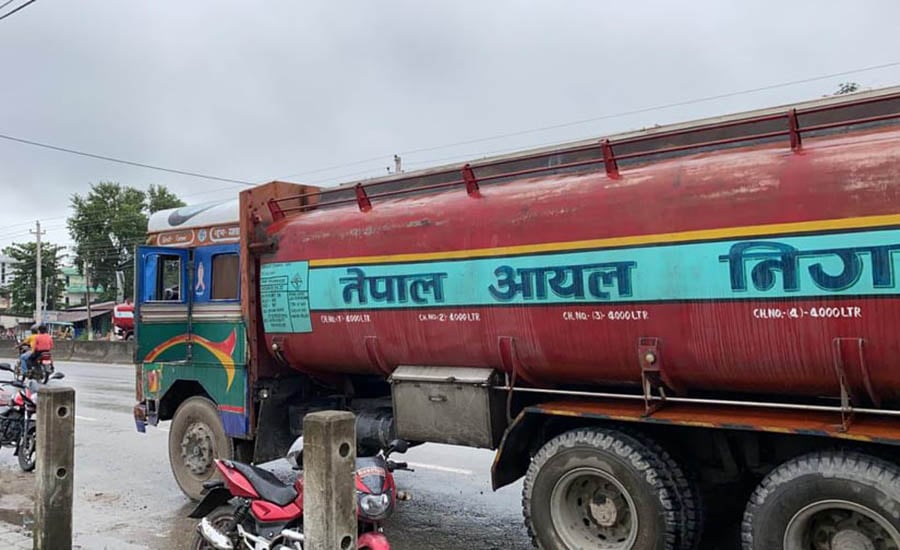
Looking at the data from the past year, the prices of construction materials have skyrocketed. In Nepal, the price of petroleum products, essential for transportation and machinery operation, has increased by approximately 65 percent.
An increase in fuel prices not only means an increase in transportation costs but also directly affects production costs.
Bitumen, considered the backbone of road infrastructure, has seen a price increase of over 100 percent. This has put construction entrepreneurs who planned to pave roads in great difficulty. Similarly, other essential materials for infrastructure construction such as cement, rebar, gravel, stone, sand, and bricks have seen price increases ranging from 15 to 30 percent.
Based on the weightage of all these materials, analyzing the average price increase from last Saun to the present shows an average price increase of about 30 to 35 percent. This is not just a normal price increase but a major economic tsunami for the construction sector.
- Losses for Construction Entrepreneurs
A capital budget of approximately 408 billion rupees has been allocated for the current fiscal year. However, due to our spending capacity and administrative delays, only about 27 percent, or 113 billion rupees, has been spent so far. A closer look at this spending data reveals a frightening fact.
Considering that 113 billion rupees worth of work has been completed, and with a 30 percent price increase in the market, construction entrepreneurs have borne approximately 34 billion rupees from their own pockets. In other words, this amount has been invested in the country's development by entrepreneurs at a loss.
If we consider the average capital expenditure of 55 to 70 percent in previous years as a basis, and if construction work worth at least 60 percent is completed this year, then construction work worth about 252 billion rupees will be completed.
If the current price increase 'trend' continues, by the end of this fiscal year, construction entrepreneurs may lose about 76 billion rupees due to the burden of price hikes. A loss of 76 billion rupees means the annihilation of Nepal's construction industry.
- Homeless or Blacklisted?
Construction entrepreneurs are currently between 'fire and water'. On one hand, there is a contract agreement with the state, and failure to comply means the company will be blacklisted and the deposit forfeited. On the other hand, if they work according to the agreement, bearing a loss of 30-35 percent will lead to the auction of their homes and financial ruin.
Most construction entrepreneurs work by taking loans from banks and mortgaging their assets. In such a situation of unexpected price increases, completing work at the old rates is equivalent to economic suicide.
The risk of becoming homeless while working and the company being blacklisted and future prospects ending if they don't work has created a serious psychological and economic crisis in the construction sector.
- Policy Complications
The root of this problem is not just market prices, but also the state's policies and data collection methods. The 'price escalation' data released by Nepal Rastra Bank does not match the actual market prices.
Those data are unscientific and not time-appropriate. On the other hand, the rates set by the District Rate Determination Committee are also impractical. There is a huge gap between the prices of goods available in the market and government rates. This has led to policy complications in the price adjustment process, and entrepreneurs are not receiving the proper compensation they deserve.
- What is the Way to a Solution?
The construction sector is a sector that contributes significantly to the country's Gross Domestic Product (GDP) and provides employment to millions. The collapse of this sector means the entire country's economy will be in crisis. Therefore, the government needs to take the following steps immediately to solve this problem.
Price Adjustment Directive: The government must immediately issue a 'Price Adjustment Directive' that removes the 30 percent limit in contract agreements and provides relief to entrepreneurs based on actual market prices.
- Formation of an Expert Group: To scientifically address the current unexpected price hikes, a high-level expert group should be formed, comprising representatives from the Ministry of Finance, Ministry of Physical Infrastructure, and construction entrepreneurs. This group should analyze the actual market situation and recommend price adjustments.
- Policy Reform: The price index of Nepal Rastra Bank and the district rate determination process should be revised to be market-oriented and scientific.
- Long-term Vision: To address fluctuations in construction materials, the 'Price Index' system should be fully digital and updated in real-time.
Therefore, the price hike adjustment demanded by construction entrepreneurs is not a luxury; it is a fight for their existence. If the state does not address this problem in time, development and construction work will come to a halt, bank loans will default, and the entire economy will fall into a recessionary quagmire.
Hence, it is an essential necessity today for the government to make a timely and prudent decision to save construction entrepreneurs and continue the pace of development.
(Lamichhane is a member of the Federation of Contractors' Associations of Nepal.)
This specific news has been automatically translated by AI. As a result, there may be some inaccuracies or language errors.
_TqAiZajEEB.jpg)