Supreme Court: Manoj Kumar Sharma Recommended for Chief Justice, Sapana Malla Denied


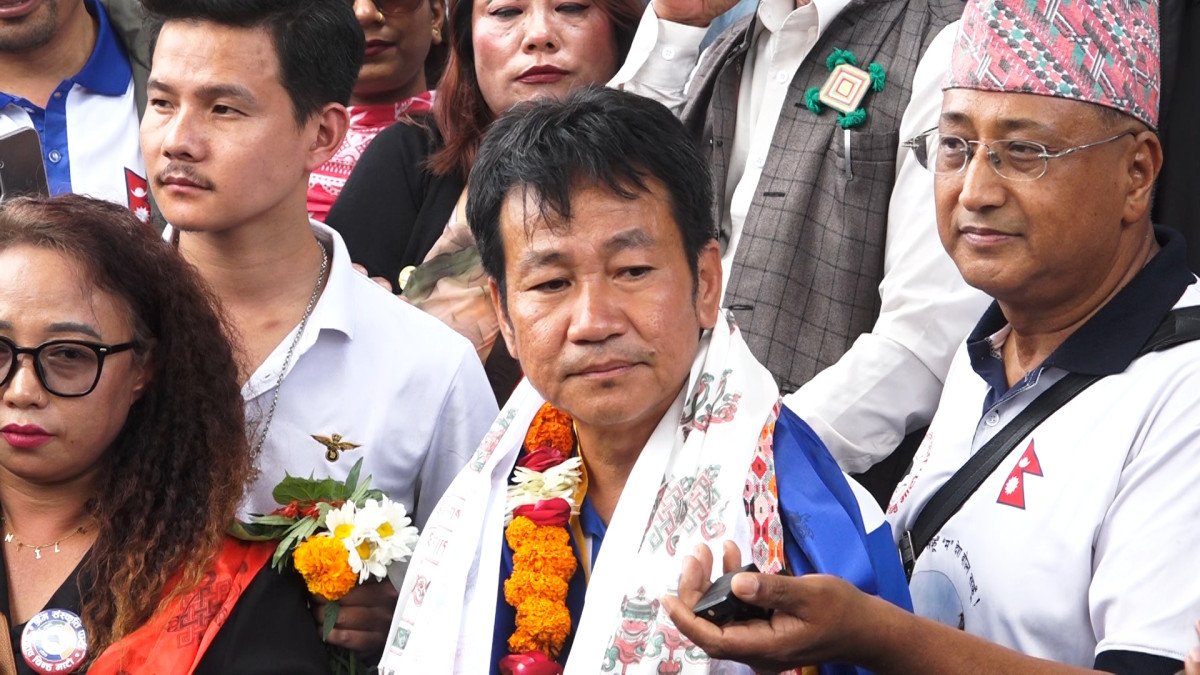
Kathmandu. With the Constitutional Council led by Balen Shah choosing the fourth-ranking judge Manoj Kumar Sharma, acting Chief Justice Sapana Malla Pradhan has been prevented from becoming the Chief Justice of the Supreme Court. The Constitutional Council, in its meeting held on Thursday, by bypassing the order of precedence, recommended Sharma for Chief Justice, shattering Sapana's dream of becoming Chief Justice based on seniority.
Earlier, the Judicial Council had recommended the names of 6 judges of the Supreme Court for the post of Chief Justice, and today Sharma's name has been recommended for appointment as Chief Justice.
After Chief Justice Prakashman Singh Raut retired on Chaitra 18 due to the 65-year age limit, the Judicial Council sent the names of Sapana, the seniormost judge of the Supreme Court, along with Kumar Regmi, Hari Prasad Phuyal, Dr. Manoj Kumar Sharma, Dr. Nahakul Subedi, and Til Prasad Shrestha to the secretariat of the Constitutional Council for the said post.
Who is Sapana, who did not get to become Chief Justice?
Sapana, who spent three decades in advocacy, has spent nine and a half years as a judge of the Supreme Court. She came to the Supreme Court as a judge in Saun 2073 BS and started her career as a corporate lawyer in 1989. She was one of the highest-earning and most successful corporate lawyers of her time. However, seeing the discrimination against women by law, she left the corporate sector and chose the path of social justice. In 1995, she established 'Forum for Women, Law and Development' and started an institutional struggle for women's rights.
She holds a bachelor's degree in law from Tribhuvan University's Nepal Law Campus and a master's degree in law from Delhi University. She holds a master's degree in public administration from Harvard University, USA.
Acting Chief Justice Sapana, who has been active in legal practice since 2045 BS, also has two years of experience teaching law at Nepal Law Campus.
While working as a lawyer, she received the title of Senior Advocate in 2069 BS. She has also written articles in many national/international dailies and journals on various topics such as protection of women's rights, control of violence against women, social justice, investment in women, and women's property rights from the legal field.
While working as a judge of the Supreme Court, she has also established precedents with far-reaching effects in many cases related to gender justice, gender-based and domestic violence, and constitutional matters.
Before becoming a judge of the Supreme Court, she had worked with various international organizations on legal, justice, and human rights issues. Malla, who was a law student, also served as a member of the Constituent Assembly from 2064 to 2069 BS. She also has experience working as an expert member of the United Nations Committee Against Torture.
She has also worked in various positions including Chairperson of SAARC Law Nepal Study, Member of the International Association of Women Judges, Member of the World Commission on Environmental Law, and Member of the Nepal Bar Association.
Acting Chief Justice Malla, who has worked as a senior advocate and a member of the Constituent Assembly, was involved in the development of plans and action plans to be included in the Tenth Plan of the Government of Nepal. She has contributed to many legal fields including legal reform initiatives such as the Human Trafficking Bill, National Women Commission Bill, Succession Rights Bill, Foreign Employment Bill, Anti-Sexual Harassment Law, and Gender Equality Bill.
With Sharma being recommended as Chief Justice by the Constitutional Council meeting, he will now head the Supreme Court if approved by the parliamentary hearing committee.
This specific news has been automatically translated by AI. As a result, there may be some inaccuracies or language errors.