Manoj Kumar Sharma Recommended for Chief Justice


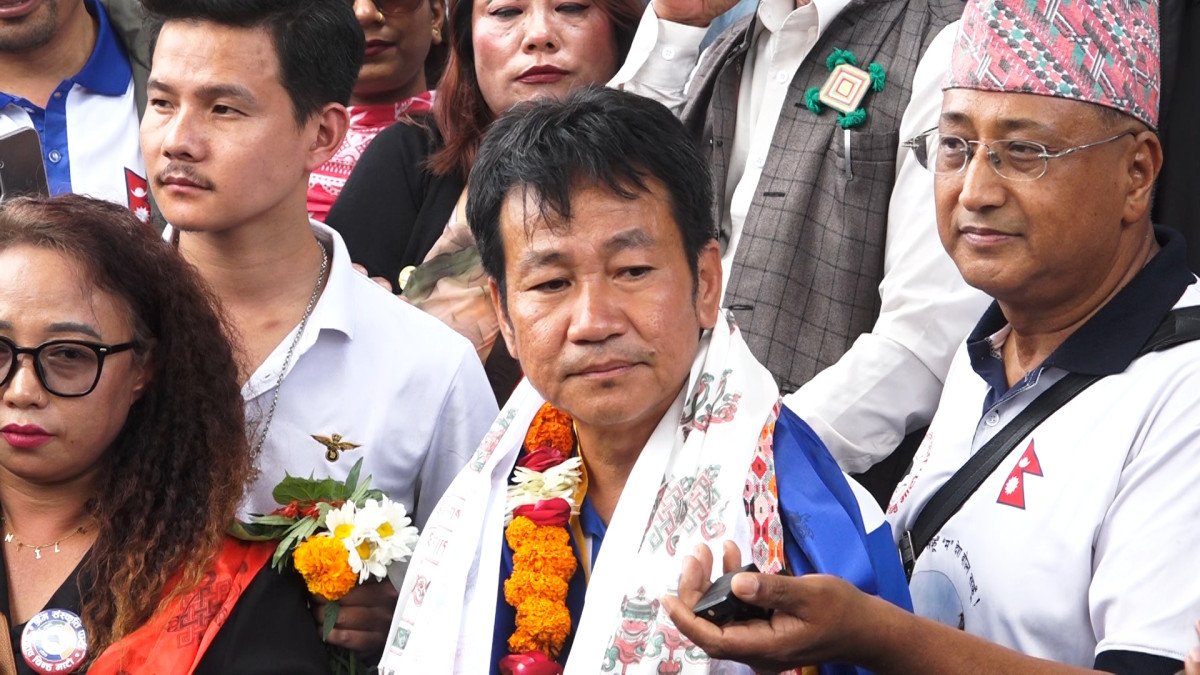
Kathmandu. Judge Manoj Kumar Sharma, who comes from a legal background, has been recommended for the post of Chief Justice of the Supreme Court by the Constitutional Council. If Sharma is approved by the parliamentary hearing committee and appointed Chief Justice, he will complete a full six-year term. If Sharma is also approved by the parliamentary hearing committee, he will lead the Supreme Court until Baisakh 2089 BS.
Sharma, who entered the Supreme Court on Baisakh 6, 2076 BS, was born on Asar 4, 2027 BS in Birgunj, Parsa. Sharma holds a BL from Nepal Law Campus, Kathmandu, and an LLM from Pune University, India. He holds a PhD in Labor Law from Tribhuvan University, Nepal.
Sharma, from a legal practitioner background, served as a legal advisor to various companies and organizations. He served as an additional judge of the High Court from Jestha 27, 2070 BS to Mangsir 26, 2072 BS. During his career, he participated in national and international conferences in Nepal and abroad.
When Sharma becomes Chief Justice, 11 judges of the Supreme Court will retire during his tenure. During his tenure, Sapana Pradhan Malla, Kumar Regmi, Binod Sharma, Abdul Aziz Musalman, Mahesh Sharma Poudel, Nityananda Pandey, Sharanga Subedi, Meghraj Pokharel, and Shrikant Poudel will have retired. Even when Sharma retires as Chief Justice, Judge Hari Prasad Phuyal will have 3 years remaining in his term.
The Supreme Court will get a new Chief Justice after the Janji movement on Bhadra 23 and 24. Sharma faces the challenge of removing the anomalies seen in the judiciary in the current changed context. With the recommendation for Chief Justice, Sharma faces the challenge of creating a harmonious working environment with the judges who are currently senior.
Currently, there are more than 22,000 cases pending in the Supreme Court. Although the hearing of cases pending for five to eight years has started by forming a campaign unit, they have not been effectively resolved. If he becomes Chief Justice, he will have to reduce this during his full term. Similarly, he will have to neutralize the petty bribes and the manipulation of big middlemen in the court. He faces the challenge of delivering justice without controversy by improving the rate of case disposal in coordination with colleagues, and by reducing delays in case hearings. The work of controlling corruption is not easy. Every Chief Justice who has come before has expressed commitment to controlling middlemen and preventing corruption in the judiciary. However, their commitments have not been fulfilled.
The occasional clashes between the Nepal Bar Association (organization of lawyers) and the bench (judges) hinder the delivery of justice. Addressing the protests and demonstrations by the bar regarding the amendment of the Judicial Council rules and the appointment of judges in recent years is the responsibility of the Chief Justice.
The court makes judgments, but the implementation of those judgments is very weak. Billions of rupees in fines are yet to be collected, and thousands of years of imprisonment are yet to be served. Making the Judgment Execution Directorate active and increasing the effectiveness of judgments is a big challenge.
This specific news has been automatically translated by AI. As a result, there may be some inaccuracies or language errors.