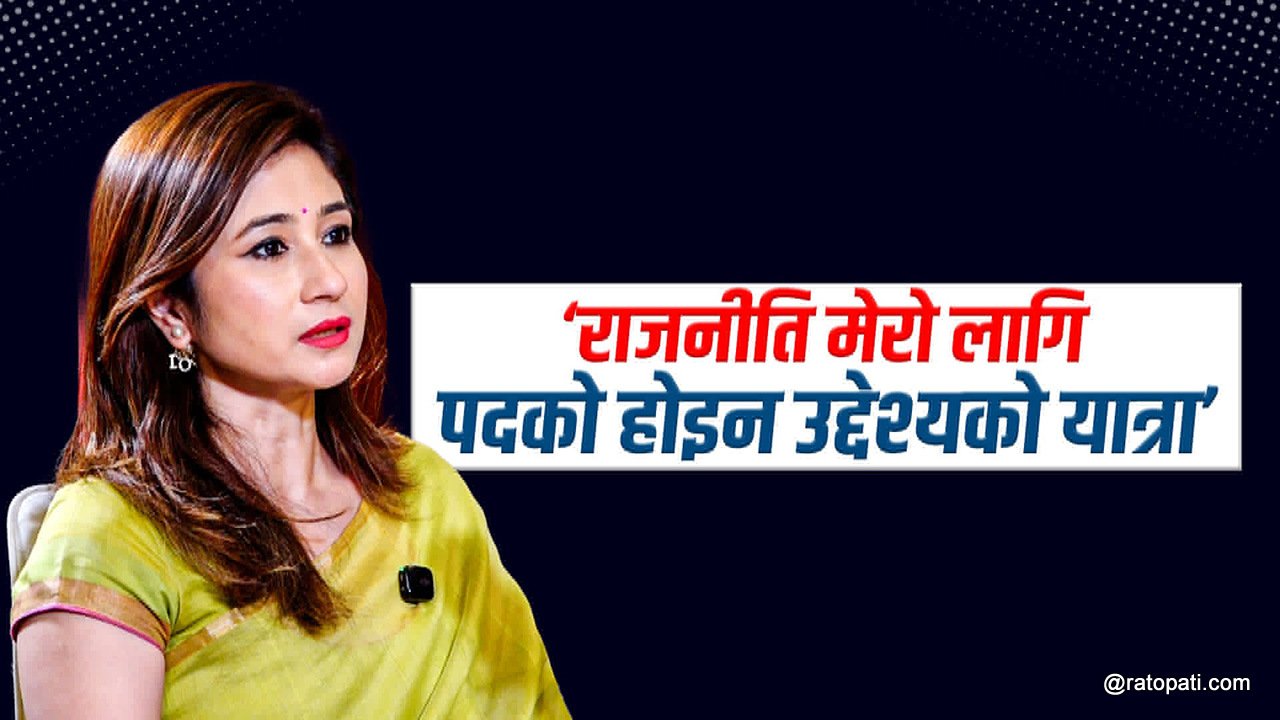
Dr. Bheshraj Ghimire Discusses Political Instability and Internal Party Conflicts in Nepal


Dr. Bheshraj Ghimire, who teaches political science at Tribhuvan University, has closely observed Nepal's politics. He states that due to the lack of democratic culture in old political parties, there have been protests, leading to the current situation in the country.
He believes that the election results also played a role in the internal conflicts within the Nepali Congress, CPN UML, Nepali Communist Party, and Rastriya Prajatantra Party after the House of Representatives elections held on February 21. Ratopati's Madhusudan Bhattarai interviewed Dr. Ghimire about the reasons for these conflicts in the old parties. Here is the edited excerpt of the conversation-
After the House of Representatives elections, there is complete turmoil within the old political parties like Congress, UML, Maoist, and RPP. What is the reason for this turmoil?
There was unhealthy competition within the parties. The parties that were in power also could not deliver properly. Then, the protests on August 23 and 24 gave a message to the public – that the old parties can no longer do anything, and only new parties can take the journey of prosperity and development to its destination.
The election took place when the public felt that way. The old parties had a disappointing result in the election, which we are seeing now. The parties that are called the opposition are in a situation where they have to sit in a small corner of the parliament. Now, after this legacy has been lost, the internal factions within the parties became so active that they could not accept each other.
An situation arose where if leadership is given to the youth within the party, it will work, and if not, it won't. Currently, some people are raising only the issue of generational transition in politics. Some are saying politics is a legacy, while others are asking about their relevance in politics. All this is due to their past incompetence. Currently, due to the status of political parties, dissatisfaction has escalated. Due to the escalation of conflict, parties could not adjust and manage their factions.

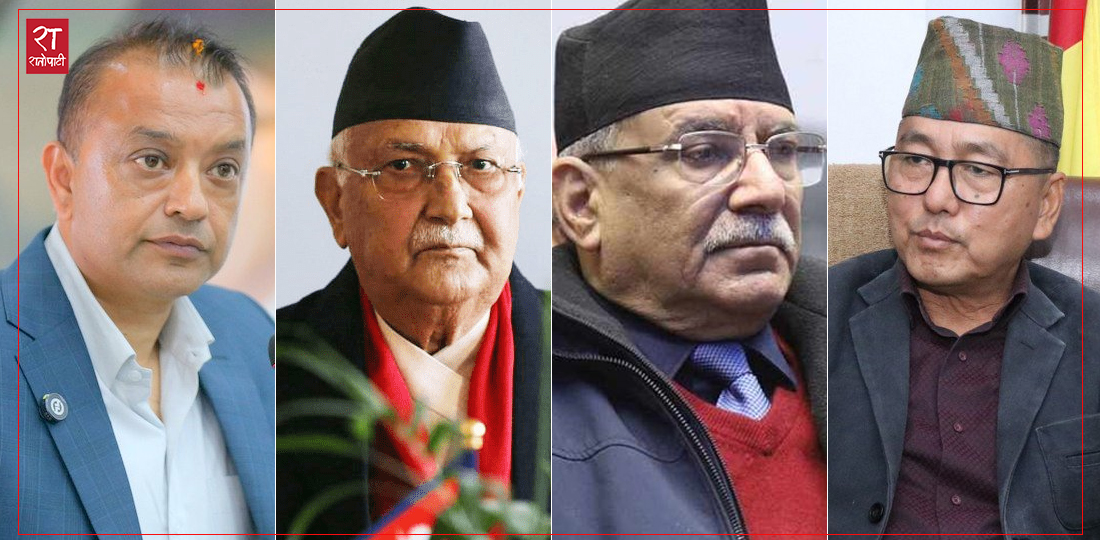
In the Nepali Congress, you see Gagan Ji (Gagan Thapa) and others forcefully defining themselves as youth, which is not sending a good message. If Congress moves forward by sidelining the faction that did not participate in the special convention, it cannot establish itself as a strong party. In the Communist Party too, there are too many leaders. The leaders' past portfolios are large, but their current status is equal to that of smaller parties. After that, due to not getting enough share and opportunities, factions are intensifying. Factions have become strong. There is a tendency not to accept each other. I think all these are the factors causing the turmoil seen in the parties.
The turmoil existed in some parties even before the election, and in some, it started after the election. Although the turmoil should have subsided after the election atmosphere ended, it is escalating further. What is the reason for this?
Culture and tradition are important in politics. We achieved democracy in Nepal from 2007 BS. After the 2062/063 movement, we achieved democracy, but even now, there is no democratic conduct and practice in the political parties of Nepal. This situation has arisen because parties have not been able to establish democratic conduct within themselves. The current situation has arisen because the practice of political culture that should have been practiced within and between parties has not happened.
We say we are practicing within a democratic system, but we are exhibiting authoritarian style conduct. The conduct seen in the leadership of the old parties has not been democratic. That has created the current situation.
Could the turmoil seen within the parties that believe in the old republic and democracy and fought for democracy lead to problems in the democratic system?
Yes, this is the important question now. We should not focus on which party is running the government now, but rather on whether democracy will remain in Nepal. Because the Nepali army is suddenly showing signs of playing a somewhat active role in politics. Citizens, social workers, politicians, and everyone have started discussing such issues. The public is apprehensive that this will cause instability. If a government with a two-thirds majority could not provide stability for five years and could not provide good governance, what is the alternative? Powers cannot be eternal. No power is eternal. It is a cycle of power changes. Therefore, there is a concern that a dictatorial governance system and structure might emerge against democracy.
What needs to be done to allay this apprehension and the current situation, to strengthen the parties, and to strengthen democracy?
Parties need to have patience. Parties need to be trained. They need to be disciplined. It is not enough for the system in the political field to be good. Anarchy is rampant within the parties now. The tendency not to accept each other is increasing within all parties. Due to all these factors, I think parties need to provide training, and parties need to stand on democratic conduct.
Politics without principles is not sustainable or lasting. Populism can lead the country to disaster. Parties need to understand this situation. For the next five years, the opposition parties, Nepali Congress and CPN UML, should strengthen their organizations. Go to the people. Support them in their joys and sorrows. Do not do bad things yourselves. If the government does wrong things, criticize them in a legal manner. But the fact that parties like Congress, UML, and Maoist are fighting among themselves to the point of erasing their existence is the biggest irony for democracy.
Currently, it seems like a trend to remove the old generation and bring in the new generation to leadership in political parties. It is said that politics is also a game of experience. Is that experience and legacy needed in politics?
This is the most dangerous thing now: when we talk about the political legacy of the age group of 25-30 years. This age group does not last anywhere in the political world. It has not happened. It is good for youth to come into politics, but the narrative that youth are all about legacy politics is dangerous. It will never lead democracy to the right destination. The extreme factional conflict within the old parties now is also an immature voice. This voice cannot lead the parties in the right direction.
Politics is not a legacy of age groups. Youth and mature leadership must go together in politics. Leadership that has sense along with enthusiasm is needed. Otherwise, we are in such a geopolitical situation, a critical situation, a transitional phase, that if we cannot strengthen international dimensions, the country will fall into risk. It will fall into crisis. The forceful issue of generational transition within Congress, UML, and Maoist is also a cause of turmoil.
This specific news has been automatically translated by AI. As a result, there may be some inaccuracies or language errors.