Mamata Banerjee Faces Political Uncertainty After Electoral Defeat


Kolkata. For the past 15 years, Mamata Banerjee and her regional party Trinamool Congress (TMC) were established as a political rule in India's West Bengal state, finding ways to survive under any circumstances.
This ended on Monday.
With the defeat of this 'firebrand' leader against the Bharatiya Janata Party (BJP), her ambition to become Chief Minister for the fourth consecutive time has concluded. This victory would have placed her in the league of long-serving regional stalwarts like Jyoti Basu and Naveen Patnaik.
From street protests to the point where the political fortress she built became weak, Banerjee's defeat has pushed one of contemporary India's most remarkable political journeys into deep uncertainty.
With her short stature, simple cotton saree, and rubber slippers, Banerjee did not look like the politician who overthrew the longest-ruling elected communist government in the world.
However, in 2011, she defeated the Communist Party of India (Marxist), which had been in power for 34 consecutive years, overturning the political order that had become the identity of West Bengal. This state, once considered India's intellectual and commercial capital, was going through decades of industrial decline and political fatigue.
_tZFZ1VbD3j.webp)
At that time, The New York Times recalled her as 'a sharp weapon that demolishes its own Berlin Wall,' while Time magazine included her in its list of the world's 100 most influential people.
Banerjee's rise occurred in Bengal's aggressive political culture, where elections often resemble long street wars. Her supporters called her 'Goddess of Fire'.


Born into a lower-middle-class family in Kolkata, Banerjee entered politics through the Congress party's student wing. By the 1980s, she had become the state's most prominent anti-communist face and later split from Congress to form TMC.
Bengal's political violence also played a role in shaping her personality. In 1990, during a protest rally, communist activists attacked her, fracturing her skull and leading to her hospitalization.
This incident gave her a new identity that would last for decades – half street fighter and half martyr. Even in power, she consistently appeared rebellious.
_oJFnkMAqjr.webp)
In 2007, after protesting against the Communist government's proposed Tata Motors car factory in Singur and land acquisition in Nandigram, Banerjee's political stature soared. Presenting herself as a protector of farmers against forced industrialization, she won the unwavering trust of rural and poor voters. However, those movements alienated most of the urban middle class and business houses, who accused her of driving away investment from West Bengal.
Mukulika Banerjee, an anthropologist from the London School of Economics, says, 'Mamata has spent her entire life in politics, just like Prime Minister and BJP leader Narendra Modi.'
According to her, Mamata's opponents were educated, upper-caste middle-class communists of Bengal, who used to look down on her for her dark complexion and lack of 'prestigious' demeanor.
Her initial success further strengthened her commitment to standing up for the common people. Sitting on the ground with businessmen, reaching out to troubled areas, and wearing simple attire became her identity.
In the words of anthropologist Mukulika Banerjee, those early struggles made Mamata fearless and made her realize that if she stood with the people, she could make others feel equally fearless.
Everyone called her 'Didi' (elder sister) because she played that role. According to Mukulika, she was a 'highly protective personality ready to give her life for people'.
_tQXg6ggj5R.webp)
Unlike most prominent female leaders in Indian politics, Mamata rose without any family legacy or the support of a powerful mentor.
Mukulika Banerjee says that no one had ever formed their own party, fought against an invincible force like the communists, removed them from power after 34 years, and held power for three consecutive terms. Unlike other female politicians, she actively promoted other women, according to Mukulika. This election, her party fielded 52 women candidates.
For years, Banerjee's charismatic personality, welfare schemes for women and the rural poor, and Bengal's strong regional identity had held back anti-incumbency waves, corruption charges, and the rise of the BJP.
According to Proma Roychowdhury of Krea University, Mamata's success was based on a balance, where she presented herself as an unyielding street fighter and a simple, motherly figure providing welfare benefits to those living in economic insecurity.
Even critics acknowledged that Banerjee had a natural ability to understand the emotional psychology of her voters. However, a charismatic personality alone cannot sustain a political system forever.
_MOnhGVpUKQ.webp)
Political analyst Dwaipayan Bhattacharya once described Bengal under communist rule as a 'party society,' where the party was intertwined with the daily lives and livelihoods of the villagers. Banerjee's party inherited this structure but transformed it. Unlike the disciplined cadre organization of the communists, Banerjee's party revolved around her own personality and authority.
Bhattacharya termed TMC as a kind of political 'franchise model,' under which local strongmen and grassroots leaders were allowed to expand their influence and often business interests in return for loyalty to Banerjee.
As early as 2023, Bhattacharya presciently wrote that this franchise model had weakened TMC. He believed that the excessive greed of leaders for material gain fueled transactional interests, destroyed the pretense of ethical politics, and damaged the party's relationship with the people.
Under Banerjee's leadership, Bengal was also grappling with a growing economic crisis. The state's debt mounted, and according to the central bank's estimates, just four of her welfare schemes for women consumed nearly a quarter of the state's internal revenue. Vacant government positions, a major scam in teacher recruitment, and growing concerns about women's safety further tarnished the government's reputation.
_1djzcBktGd.webp)
Now, after this defeat, Banerjee faces a different and perhaps even more serious challenge to her political survival.
West Bengal's politics has long been ruthless towards defeated ruling parties, where leaders and local strongmen quickly gravitate towards new centers of power. According to political analyst Sayantan Ghosh, many Trinamool leaders may now shift to the BJP. He suggests that the possibility of a split within the party is increasing as some leave voluntarily and others under pressure.
Roychowdhury argues that the lack of clear ideological unity in TMC could particularly weaken both the party and its leader after this defeat. For Banerjee, who has been at the center of power for decades personally, adapting to this new situation could be very difficult.
Ghosh calls this a difficult phase for Mamata. Since winning her first election in the late 1980s, it has been rare in Bengal's politics to see Mamata without power or authority.
It may still be too early to declare the political demise of this 71-year-old leader. However, this defeat could prove to be a more fundamental and serious crack than the crises she has faced in the past.
_6aaUbrhnbu.webp)
According to Mukulika Banerjee, politicians like Mamata once thrived in a time of 'fair competitive environment.' Hinting at the one-party dominance of Modi's BJP, she argues that such a situation no longer exists. She suggests that Monday's election results reflect not only dissatisfaction but also that imbalance.
This raises some final questions.
Can Mamata Banerjee re-establish herself by returning to the streets as an angry outsider who once captured Bengal's attention? Or will she gradually become an endangered relic of the very political system she fought against her entire life?
Mukulika Banerjee says that it is important to see where Mamata goes, as she has known no life other than politics.
In Roychowdhury's view, one possibility is that Mamata returns to the politics that initially empowered her. She points out that her experience in street protests and opposition politics since the communist era could resurface.
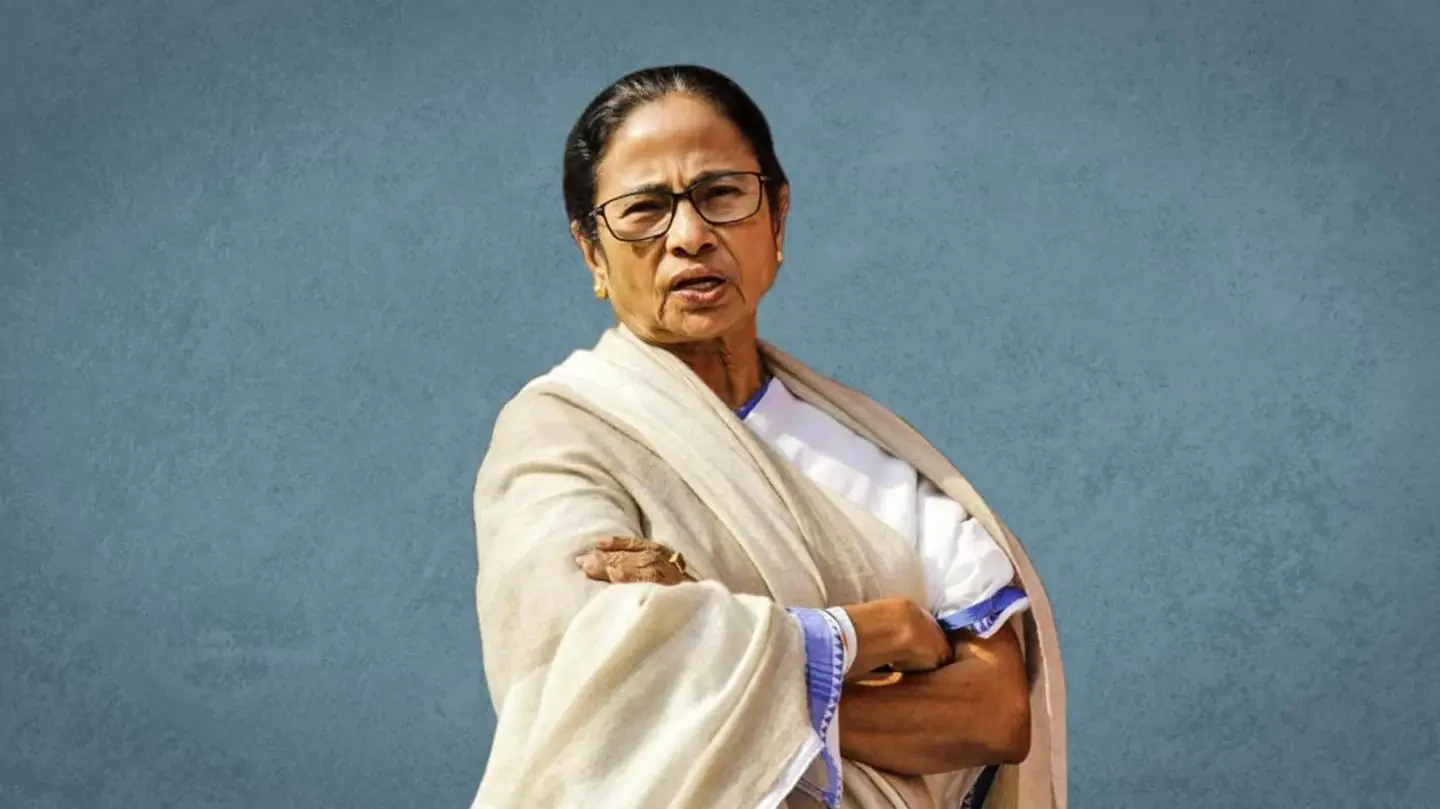
On Tuesday evening, Banerjee herself hinted at returning to that role.
Promising to work to strengthen the opposition 'INDIA' alliance at the national level, she told reporters that she was now an 'independent bird without a seat and a common citizen'.
Accusing the Election Commission of favoring the BJP and warning against 'one-party rule,' Banerjee claimed that the mandate had been snatched from her party. The state's Chief Electoral Officer stated that he would examine the context in which her claim, 'We did not lose the election, they forcibly snatched it from us,' was made.
Then she uttered a sentence that echoed the Mamata Banerjee known to Bengal decades ago:
'I can be anywhere, I can fight anywhere. So I will be on the streets now.'
This specific news has been automatically translated by AI. As a result, there may be some inaccuracies or language errors.