Government Ordinance Abolishes Party-Based Trade Unions in Offices and Student Unions in Universities

Kathmandu. A stir has been created following the government's ordinance to abolish party-based employee trade unions in government offices and student unions in universities.
Two different opinions are being expressed regarding this move by the government. That is, both criticism and welcome are being expressed. However, leaders of employee and student organizations are preparing to go to court seeking legal remedy for the government's said move.
The government led by Rastriya Swatantra Party leader Balendra (Balen) Shah has abolished employee and student unions by amending old laws and enacting new provisions in line with the plan to provide good governance and efficient service delivery to citizens.
Although old political party leaders and cadres have strongly opposed some of the government's initiatives along with trade unions and student unions, ordinary citizens do not seem to have opposed the government's move much.

Prime Minister Shah has attempted to address the division of opinion among citizens regarding the government's recent actions and style of work. Prime Minister Shah appealed to the general public on Tuesday to be assured of every action the current government takes.
‘Be assured, we will do everything for the benefit of the common Nepali people’, Prime Minister Shah stated in a long status, announcing the decision to remove employee trade unions from government offices and student unions from universities through an ordinance.
‘Many journalists, leaders, activists, businessmen, and the general public have been saying the same thing for years – party politics has ruined students and the bureaucracy’, the Prime Minister added, ‘For years, many organizations, and students and employees have become ‘sleeper cells’ of political parties more than serving their own interests. Merit was valued less than connections, and bags and flags were valued more than capability. This has weakened public trust in the system itself.’
However, leaders of employee and student organizations say that they cannot trust Prime Minister's appeal to be assured under any circumstances.
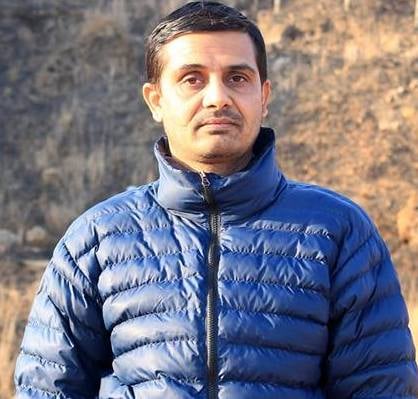
Uttam Katwal, Chairman of the Nepal Civil Service Employees' Association, states that establishing the employee union as a party-based trade union is itself wrong.
‘Firstly, a wrong narrative has been created by the media calling us party-based trade unions’, Katwal told RatoPati, ‘We are not party-based trade unions; we are civil servants working as the permanent government, having taken an oath in the name of the state.’
Katwal says it is wrong to call trade unions registered with the Department of Labor under the criteria set by a democratic government as party-based trade unions. He stated that even though the Prime Minister asked them to be assured and not worry, they cannot be assured when their rights are taken away.
‘The Prime Minister's statement of ‘be assured’ is like offering a full meal before shooting someone’, Katwal said, ‘There is no meaning in saying this.’ Although Katwal does not have the status to argue with the Prime Minister, he stated that trade union rights exist in any country in the world.
He stated that it is impossible to be assured about the abolition of employee unions through an ordinance, citing Article 34 of the Constitution of Nepal, Article 17 regarding the right to form associations, Section 53 of the Trade Union Act for civil servants, and the 2049 (BS) act.
Stating that discussions are underway for legal remedies, Chairman Katwal said that they cannot remain silent when the provisions of the Constitution of Nepal are attacked.
‘The Constitution of Nepal, international standards (ILO) conventions, and our evidence are our basis. We will seek legal remedies using these very things’, said Chairman Katwal.
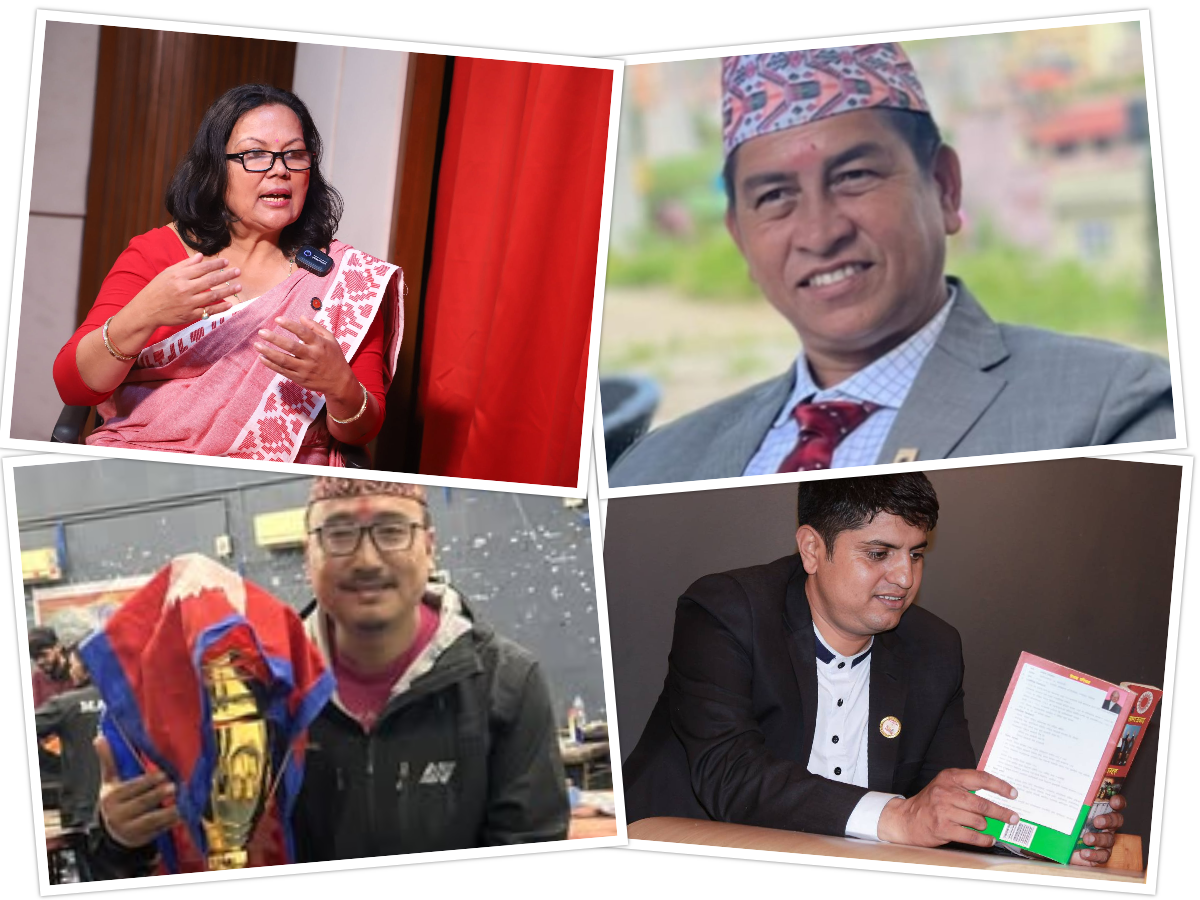
Bhawani Dahal Neupane, Chairman of the Nepal Civil Service Organization, also stated that there is no option left other than legal remedy.
‘We speak for future generations, and the issue of human rights is also connected’, said Chairman Neupane, ‘The issue of abolishing employee trade unions cannot be accepted.’
Neupane stated that they are not in favor of causing trouble to the public while seeking legal remedies. ‘We are not, and were not, in favor of doing anything by causing trouble to the public; as long as there is a legal provision, we will strive for legal remedy’, she said.
She stated that employee trade unions are practiced not only in Nepal but worldwide. ‘In Nepal too, we have been practicing this due to the Labor Act, Trade Union Act, then the constitutional provision, and the Federal Civil Service Act (though it wasn't federal then), the Civil Service Act, and now Nepal being a signatory to the ILO’, said Chairman Neupane.
She stated that the government's claim of having too many party organizations is false, as trade unions are registered with the Department of Labor, not in government offices.
‘We have not completed the procedures at the Department of Labor’, she said, ‘If we, the individuals, have made behavioral mistakes, action can be taken against us. But in a democracy, everyone with a particular belief and ideology exists.’
Similarly, student leaders say that the abolition of student unions from universities is not a democratic practice.
Samic Badal, former chairman of ANNFSU close to CPN-UML, says that the issue of removing student unions from universities is unacceptable.
‘It can be regulated instead’, Badal said, ‘Cutting off the neck is not a cure for dandruff on the scalp.’
Badal suggests that the University Act can be amended to provide for monitoring to make students community-focused for improvement.
‘If students become too focused on party agendas, we can proceed by making rules, but abolishing the organization itself is not democratic under any circumstances and cannot be accepted’, Badal said, ‘Even though the Prime Minister says to be assured, that situation does not exist.’

Saying that students cannot be without ideology, he suggested that the Prime Minister should at least tell students to only talk about the bell.
‘Otherwise, the university is the place to express beliefs and ideas’, former chairman Badal said, ‘They are promoting the idea of destroying our originality by forming various councils and running campaigns in schools.’ Badal states that a university is a place for political debate in addition to studies.
Dujang Sherpa, Chairman of the Nepal Student Union, said that the Prime Minister cannot forget that ideological affiliation is a matter of citizen's freedom.
‘Prime Minister, you also came to power under multiparty democracy and this constitution’, said Chairman Sherpa, ‘But you have failed to understand its core spirit.’
This specific news has been automatically translated by AI. As a result, there may be some inaccuracies or language errors.

_cvUCBlwFTZ.jpg)