MP Kshitij Thebe Highlights Practical Complexities in MRP Implementation


Kathmandu. Member of Parliament Kshitij Thebe has drawn the government's attention to the practical complexities seen in the implementation of Maximum Retail Price (MRP).
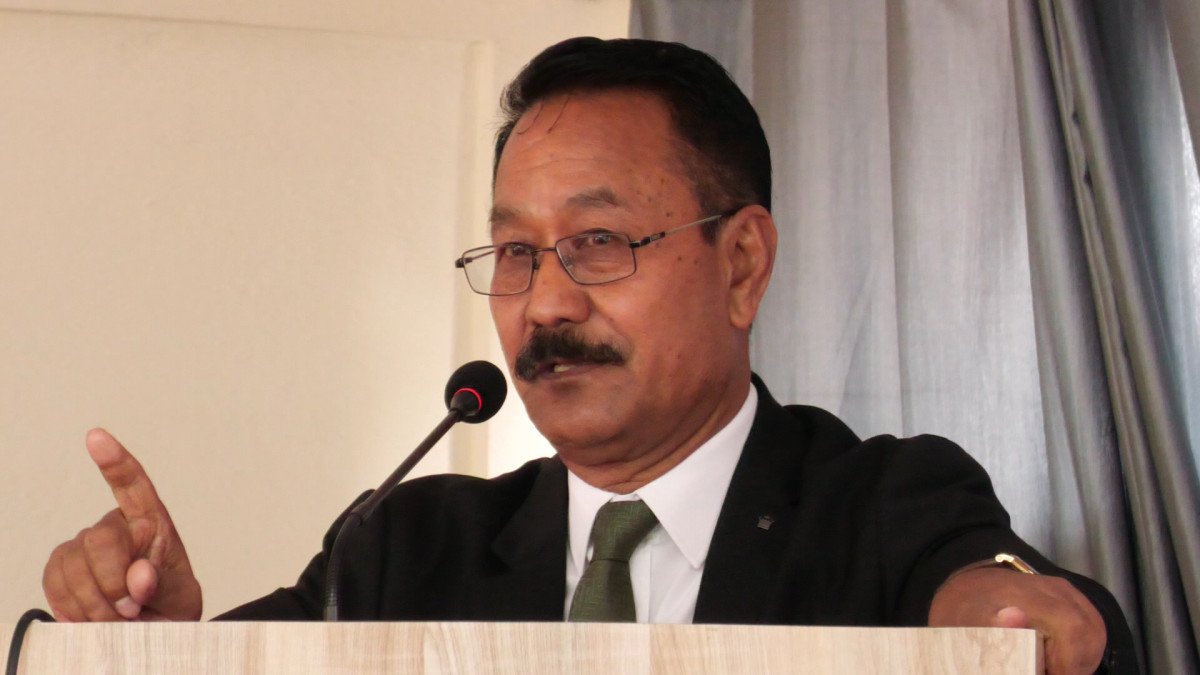
Speaking in the meeting of the Industry, Commerce and Labour and Consumer Interest Committee of the House of Representatives after the ministry's presentation, MP Thebe stated that after the government strictly enforced the provision of making MRP mandatory from May 15, goods have been held up at customs and confusion has arisen in the industrial sector.
MP Thebe pointed out that the 'Consumer Protection Act 2075' does not clearly explain which goods should have MRP and which should not. 'Currently, containers are piled up at the Birgunj, Bhairahawa, and Jogbani customs. Importers and industrialists are in great trouble as MRP is being sought even for industrial raw materials and machinery,' he said.
Arguing that the provision of applying MRP at the customs point itself is not practical, he gave the example of transportation costs due to geographical remoteness. He said, 'How is it possible to sell biscuits, for which MRP has been set at Birgunj customs, at the same price in the market of Birgunj itself and in the markets of Phungling in Taplejung or Darchula, considering the transportation costs? This adds further complexity to market monitoring.'
He suggested that it would be more practical to apply MRP on the 'point of sale' (the final point where consumers buy goods) packet rather than at the customs point.
MP Thebe criticized the government, stating that there is a lack of proper coordination between the Ministry of Industry, Ministry of Finance, and the Prime Minister's Office regarding MRP and 'self-announcement'. He demanded that a list of goods for which MRP is to be applied should be classified immediately. He emphasized that while MRP protects consumers, its implementation process must be clear.
Discussing the country's economy and the expensive electoral system, MP Thebe said that domestic production is the only alternative to end the poverty of the people. 'Unless the poverty of the people is ended, neither will elections become cheaper nor will corruption be stopped,' he said.
He suggested to the Ministry of Industry to restart sick industries that are currently closed within a specified timeline and focus on increasing production.
This specific news has been automatically translated by AI. As a result, there may be some inaccuracies or language errors.