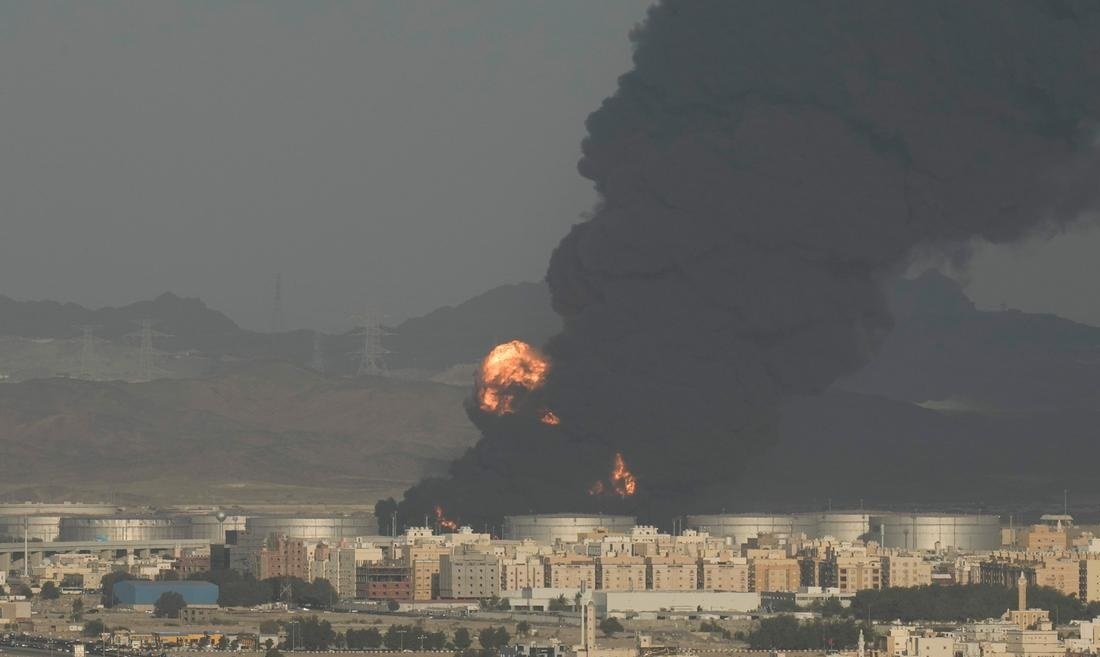
Crude Oil Prices Dip Amidst Strait of Hormuz Developments


Washington DC. Crude oil prices saw a slight decrease in the global market on Tuesday. Oil prices, which had risen by 6 percent in the previous session, declined after the US Navy signaled the opening of the strategically important 'Strait of Hormuz', which had been blocked by Iran.
The possibility of oil supply resuming from the major production region of West Asia has had a positive impact on the market. On Monday, the US announced a new operation aimed at resuming the passage of commercial ships in the Strait of Hormuz.
Meanwhile, shipping company Maersk has informed that its US-flagged vessel 'Alliance Fairfax' has successfully exited the Gulf under US military protection. This incident has somewhat eased the immediate fear of supply disruption.
On Tuesday, Brent oil futures for July fell by 68 cents, or 0.6 percent, to $113.76 per barrel. Similarly, US West Texas Intermediate (WTI) crude traded down $1.59, or 1.5 percent, at $104.83.
According to Tim Waterer, chief market analyst at KCM Trade, the exit of ships under military protection has somewhat reduced the fear of the worst-case scenario, but it does not mean the waterway has fully reopened.
Tensions have not yet fully subsided. Iran carried out various attacks in the Gulf region on Monday in retaliation for the US action. The conflict between the two countries continues for control of the Strait of Hormuz, through which approximately 20 percent of the world's total oil and gas supply passes.
Tehran had blocked this important route after the US and Israel started a war on Iran on February 28. Although a ceasefire was announced in the last four weeks, the Trump administration's attempt to free ships using the Navy is seen as a major expansion of the war.
Due to this disruption in oil supply, the energy crisis worldwide has been deepening. Mike Wirth, Chairman and CEO of Chevron, has warned that the closure of Hormuz will lead to a physical shortage of oil globally.
Goldman Sachs released a report on Monday stating that global oil reserves are nearing their lowest level in eight years, and their management has become a concern. According to market analyst Tony Sycamore, the rapid depletion of crude oil in commercial inventories, strategic reserves, and floating vessels means that the pressure for oil prices to rise again in the future remains.
This specific news has been automatically translated by AI. As a result, there may be some inaccuracies or language errors.