Government Demolishes Slum Settlements, Scavengers See Increased Activity


Kathmandu. The government is running bulldozers to remove slum settlements along the banks of rivers and canals in Kathmandu. Following that, the activity of scavengers (iron-related materials) has increased in the demolished settlements. There is a lot of hustle and bustle of buyers and sellers of iron rods, tin sheets, and other materials coming out of the demolished structures.
Scavenger businessman Rambihari Sah took the contract for the demolition of a three-and-a-half-story house in the Shankhamul slum settlement. He said he bought all the iron for Rs 150,000. "We only took the scrap on contract. But we are incurring losses, not as much material came out as expected," Sah said. "We estimated about five tons would come out, but only three and a half tons came out."
Due to not getting as much material as expected, he is worried about his investment being sunk. According to Sah, who has been in the scrap business in Balkumari for the past 15 years, the price of iron has decreased due to increased supply in the market. Before the bulldozer ran, the iron, which was previously available for Rs 45 per kg, has now dropped to Rs 40.
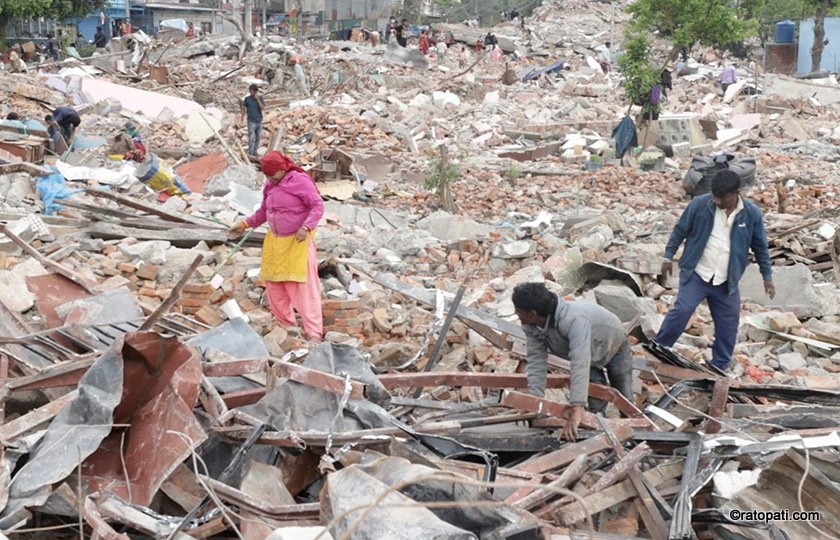
Surat Sah took the contract to collect scrap from four houses after the bulldozer ran in Shankhamul. He, who took the contract for Rs 87,000, said there was not much profit. "The expenses are high. So far, Rs 18,000 has been spent," he says, who has been operating a scrap business in Narephat for 20 years. "Even though the scrap was found cheap, the cost of bulldozing and labor was high." He is preparing to collect scrap from other settlements after Shankhamul. He said that he has provided employment to 10 people by operating this business.
Some people are buying iron-related materials from the demolished slum settlements by the kilo on bicycles and selling them directly to scrap dealers, while others are taking the contract for the entire house's scrap. This business is not as profitable for everyone as expected. Due to the increased supply of scrap, the price of iron has decreased, and the expensive cost of bulldozers has caused worry about losses rather than profits for the businessmen and workers involved in this sector.
Homeowners are stressed about selling scrap materials like iron and tin sheets from their demolished houses. Many slum dwellers are forced to sell their belongings cheaply from their homes and shacks. After the bulldozer ran over his house in Shankhamul, Bhim Subedi said he gave away not only scrap materials but also bricks for free. A crowd of businessmen can be seen in the settlement collecting scrap from morning until late evening.
This is how the scrap cycle works
Small businessmen who collect scrap by cycling around sell the iron collected from settlements to big companies or shops. Suresh Yadav from Sarlahi said that he buys iron at Rs 45 per kg and sells it at Rs 50, making a profit of Rs 5 per kg.
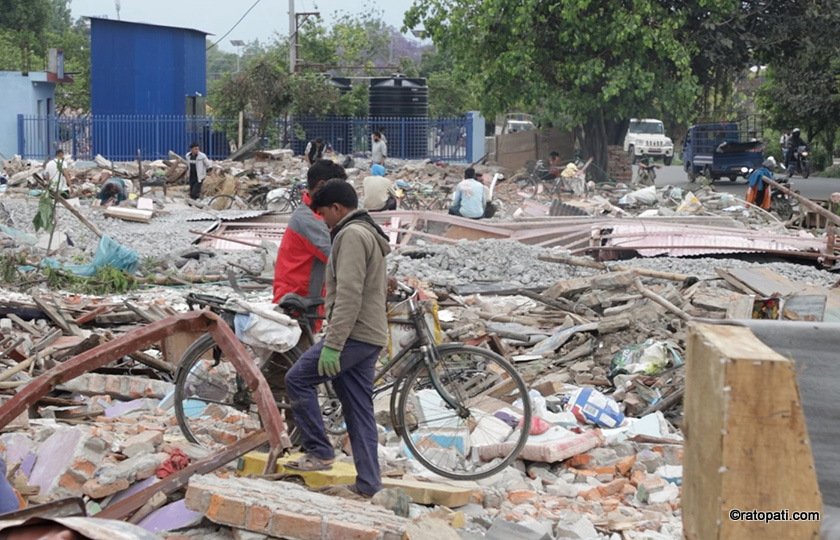
Big businessmen send the collected scrap to various factories within Nepal. "It goes to the factory to be melted, and from that, new rods are made," Sah said. Businessmen say that the collected scrap is consumed within the country, not outside Nepal. Although the scrap business has seen increased opportunities after the bulldozers ran through the slum settlements, it is as difficult as chewing iron for the businessmen and workers involved in this sector to make a profit due to falling prices, high costs, and physical risks.
Expensive Costs and Risky Work
The cost of the scrap business is also equally expensive. Businessman Amir Chand Das bought the scrap of a house for Rs 20,000. He said that the bulldozer rent is excessively high. "The rent for a bulldozer is Rs 4,000 to Rs 5,000 per hour, and after deducting all expenses, there is not much profit," he said.
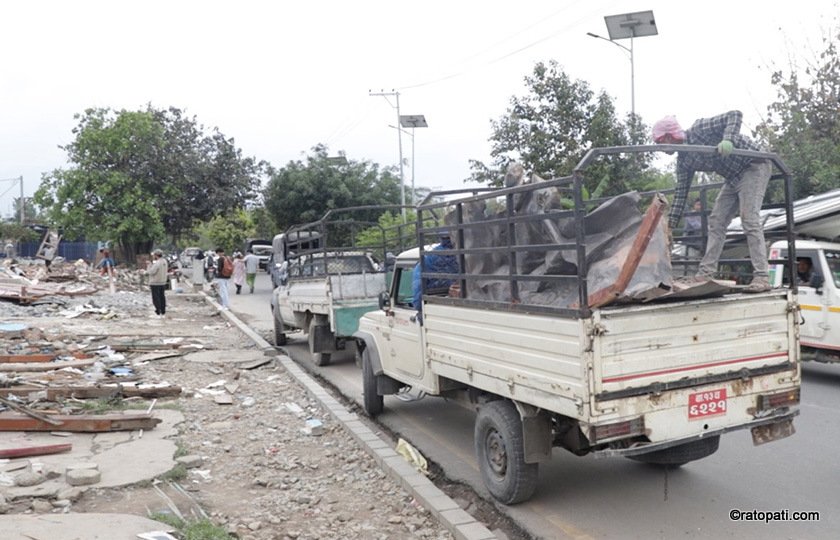
The work of collecting scrap is also very physically risky. Vijay Mishra, who was digging out iron from a house that had been bulldozed, said he was working despite pain from an injury to his hand. Another worker, Sanjay Mahato, expressed similar woes. "We get injured on our feet and hands. Stones hit us while working, iron cuts us, but what can we do?" According to him, after working hard all day, he earns only about Rs 2,000 after deducting all expenses.
This specific news has been automatically translated by AI. As a result, there may be some inaccuracies or language errors.