Government Faces Dilemma Over Unpaid Electricity Bills


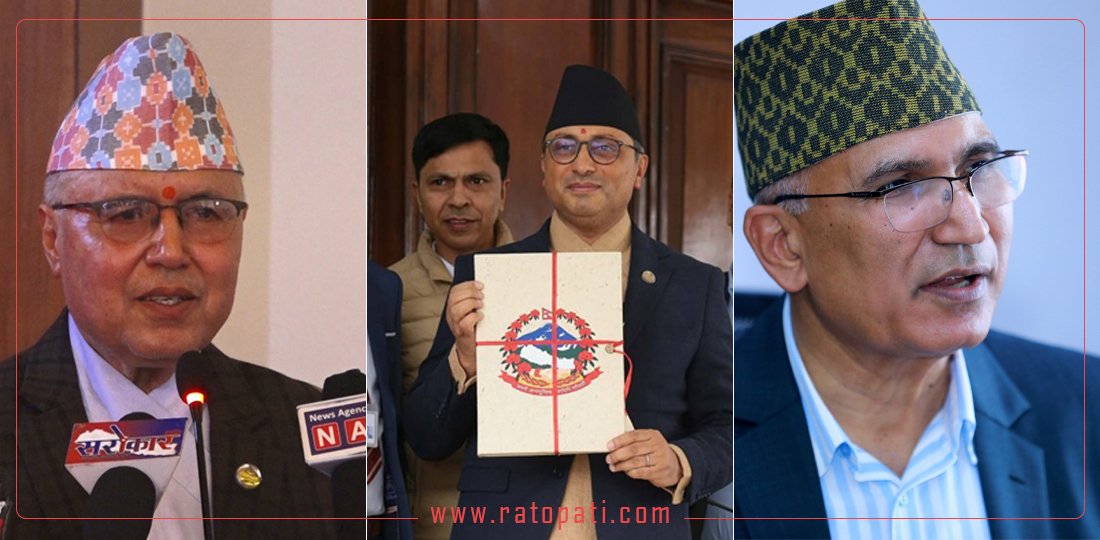
Kathmandu. Stakeholders are keenly observing the decision the current government will take on the long-disputed dedicated and trunk line electricity bills. For the past four months, there had been no significant progress in recovering electricity arrears from industries. However, with the formation of a new government, the Nepal Electricity Authority (NEA) sent letters to industries a week ago to pay their outstanding arrears. Despite the NEA's reminders, industrialists are still not ready to pay the arrears in installments. The responsibility of resolving this dispute, which has been lingering for about 10 years, and recovering 7.5 billion rupees in arrears now falls on Prime Minister Balen Shah and Energy Minister Biraj Bhakta Shrestha. The public is keenly watching how the government, which is close to a two-thirds majority, will recover the approximately 7.5 billion rupees in electricity arrears for the dedicated and trunk lines used by industries during the load-shedding period. Meanwhile, the Ministry of Energy, Water Resources and Irrigation has stated that it has given the Nepal Electricity Authority the autonomy to resolve the dispute over dedicated and trunk line arrears. Energy Minister Biraj Bhakta Shrestha said that the authority and responsibility to recover electricity arrears, a matter of great interest to all, lies with the NEA. He stated that the ministry's policy is to give the NEA autonomous authority to resolve the dispute and recover the arrears. He added that if the dispute cannot be resolved there, the ministry will discuss it with the Auditor General and the Commission for Investigation of Abuse of Authority and proceed. Minister Shrestha said, 'The dispute over dedicated and trunk line arrears is a long-standing one. Therefore, the ministry is assigning the NEA the responsibility to resolve it.' Minister Shrestha clarified that the ministry will take steps based on past decisions, court rulings, and various reports. He stated that the ministry, as an executive body, needs concrete grounds for decisions, hence the NEA is being given autonomy. He said, 'There are reports that some industries have paid. If this issue becomes more complex and difficult, we will discuss it with the Auditor General and the CIAA to reach a conclusion.' He stated that the ministry's policy is to give autonomy to responsible bodies like the NEA and hold them accountable if they fail to perform. 'There are about 17,000 civil servants working under our ministry. But why is the work not being done? Work should be system-based, not individualistic,' he said. Industries owe approximately 7.5 billion rupees for electricity used from January 2016 to April 2018, with an additional 65% premium charge during the load-shedding period. The dispute over these arrears has been ongoing for a long time. No government formed after 2016 has been able to resolve this dispute. However, the then interim government's Energy Minister Kulman Ghising had compelled industrialists to pay the first installment. But even after paying the first installment, the recovery of arrears remained uncertain after Ghising stepped down. At that time, the country was facing severe load-shedding. The NEA provided electricity to industries through special arrangements, keeping ordinary citizens in darkness for up to 18 hours. At that time, the NEA provided continuous electricity to industries for 20 hours via trunk lines and 24 hours via dedicated feeders, with the condition that they pay an additional 65% premium charge. The number of customers availing this facility was more than 250. The premium charge for electricity used by these industries from January 2016 to April 2018 has now reached 7.5 billion rupees. Accordingly, many industrialists have paid the amount equivalent to the first installment, while they are reluctant to pay the second installment. The Office of the Auditor General has also pointed out that this amount needs to be recovered. Various court orders and past cabinet decisions have also supported the recovery of these arrears. The NEA had repeatedly reminded industries to pay the bills based on various grounds in the past and is continuing to do so. Furthermore, the path for review has also opened as per the industrialists' demand. Some industrialists have also gone for review. They have also approached the Electricity Regulatory Commission for justice. The commission has already rejected the applications of some industries. With the commission rejecting the applications, the NEA's path to recover the arrears has been cleared. The NEA had given industries the facility to pay the amount in 28 installments and had set a deadline of November 17. However, within the deadline, only 6 out of 31 industries showed interest in the process, and these were the ones that already had an interim court order. The NEA disconnected the lines of the remaining 25 industries. After the lines were disconnected, a tug-of-war ensued between the industrialists and the government. On November 2, an agreement was reached between the then Prime Minister Sushila Karki, Energy Minister Kulman Ghising, and the President of the Federation of Nepalese Chambers of Commerce and Industry, Chandra Prasad Dhakal. It stated that the industrialists would pay the first installment and the government would proceed with the judicial process. However, the industrialists claimed that the first installment was only a security deposit and did not come to pay the second installment. Consequently, the recovery process was halted from December. Currently, the NEA is once again sending letters to industries to pay the remaining arrears and is urging them to do so. Energy Minister Shrestha informed that some industries have come forward after the NEA's reminders. Following the recent action, 35 industries had agreed to pay installments. However, after Reliance Spinning Mills paid the first installment and obtained an interim order from the court, the remaining 34 industries have not come forward so far, the NEA informed. Including Reliance, seven industries currently have interim orders from the court against the NEA. Currently, a total of 7.5 billion rupees is yet to be recovered from 46 industries, including government-owned, those who have stopped installments, those with court stay orders, and those who are out of contact. According to NEA data, a total of 58 industries were on the list of those who had to pay arrears from January 2016 to April 2018. Out of 58, only 12 industries have fully cleared their arrears. Two government-owned industries have given written commitments to pay their arrears.
This specific news has been automatically translated by AI. As a result, there may be some inaccuracies or language errors.