Nepali Sadhaka's Spiritual Discourse in China Strengthens Nepal-China Relations

Who am I? Spirituality is the process of knowing the self within the self. It is the process of understanding one's body, mind, and thoughts and merging with nature. A flower that blooms in nature is meant to spread its fragrance within nature. Spirituality is the process of making life a vibrant flower, making it mental and natural.
This is a scientific blend of the knowledge of Buddha, Tao, Ram, Krishna, Shiva, Jesus, Kabir, Nanak, and Confucius. Spirituality is the management of meditation, yoga, and practices that make the body and mind healthy and beautiful. This is the science of life.
I am a student of Nepali literature, sociology, law, Chinese language, and tourism. I am a translator of the Chinese language, and a tourist guide. I also do business in Nepal-China import-export. I love to write and travel very much. I have to make time for family and friends.
Coordinating all these fields and moving forward is challenging. I experience a lot of mental stress. But spirituality has been of great help in making all these actions easier. Gurudev Osho Akhand and Oshodhara Sangh Nepal have made a great contribution in introducing me to the 'me' within me, making me feel my inner energy, and guiding me on the spiritual path.
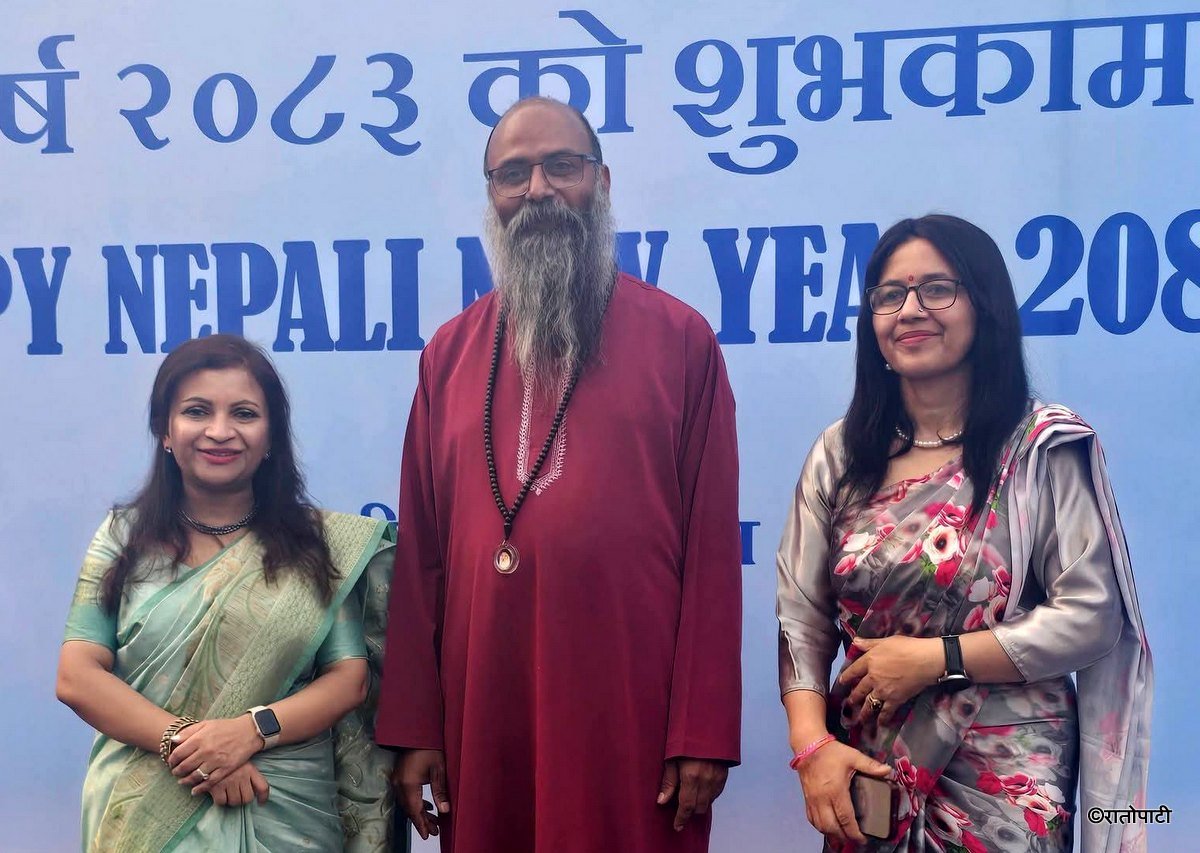
It is my great fortune to welcome my Guru to China. Through the management of Gurudev's visit, I hope to have played a small role in the spiritual relationship, trade expansion, and tourism development between Nepal and China. I am on the path of spirituality. I am trying to know myself.
I am a small flower in this nature. In a time when new horizons of global spiritual dialogue are opening up, the presence of a Nepali seeker in China is not just a personal achievement; it is a profound matter of cultural diplomacy. It is a new thread in the relationship between the two countries.
The spiritual discourse presented in China by Acharya Gurudev Osho Akhand, coordinator of Oshodhara Sangh Nepal and founder patron of Oshodhara Sangh Nepal, Dakshinkali, has elevated the Nepal-China relationship beyond mere economic or material cooperation to a spiritual and philosophical level.
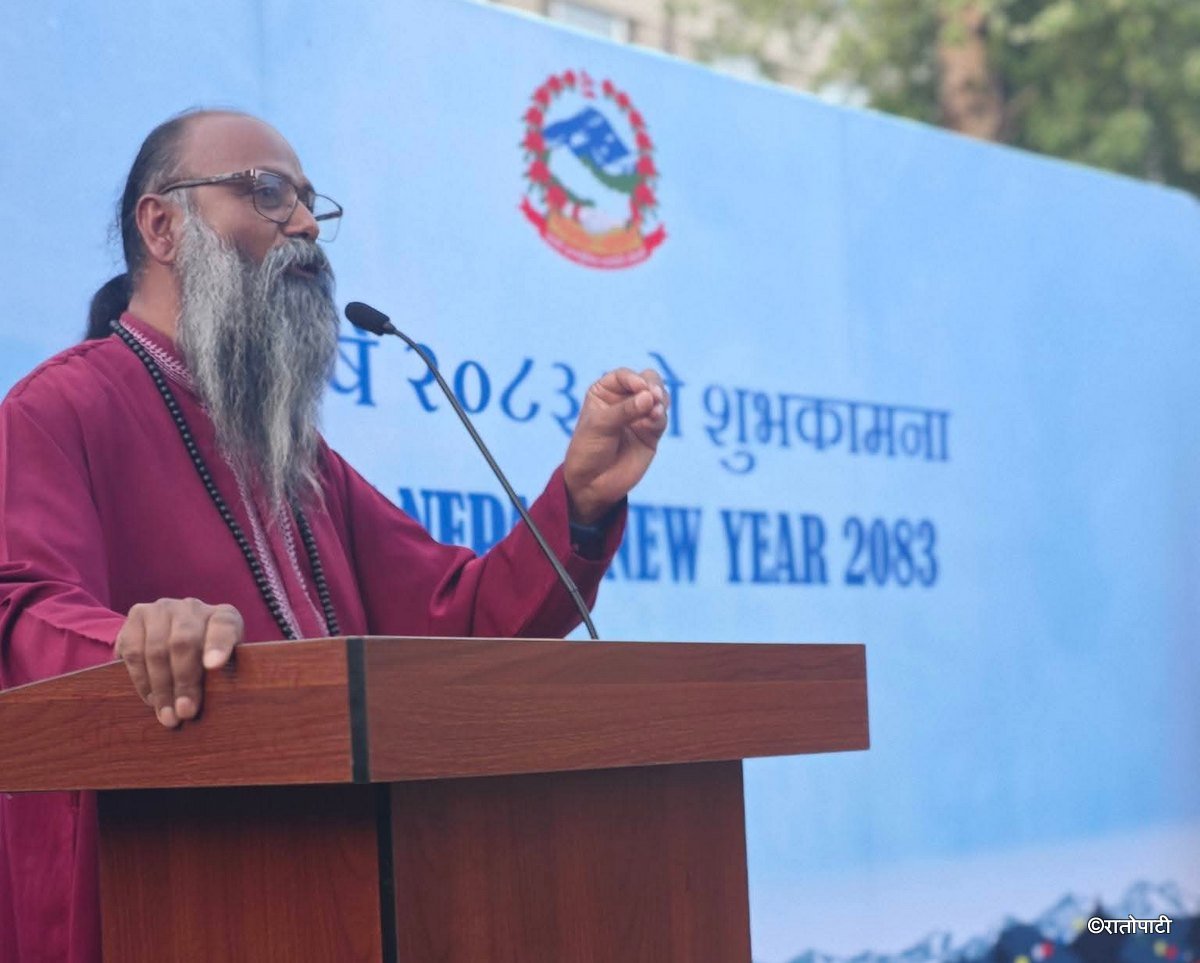
At Nepal's proposal, the United Nations General Assembly declared April 15 as 'International Day of Yoga'. On the eve of Nepali New Year 2083 and International Day of Yoga in Beijing, the capital of China, on April 12, 2026, Gurudev delivered a discourse and conducted a short meditation session at a goodwill exchange program organized by the Nepali Embassy.
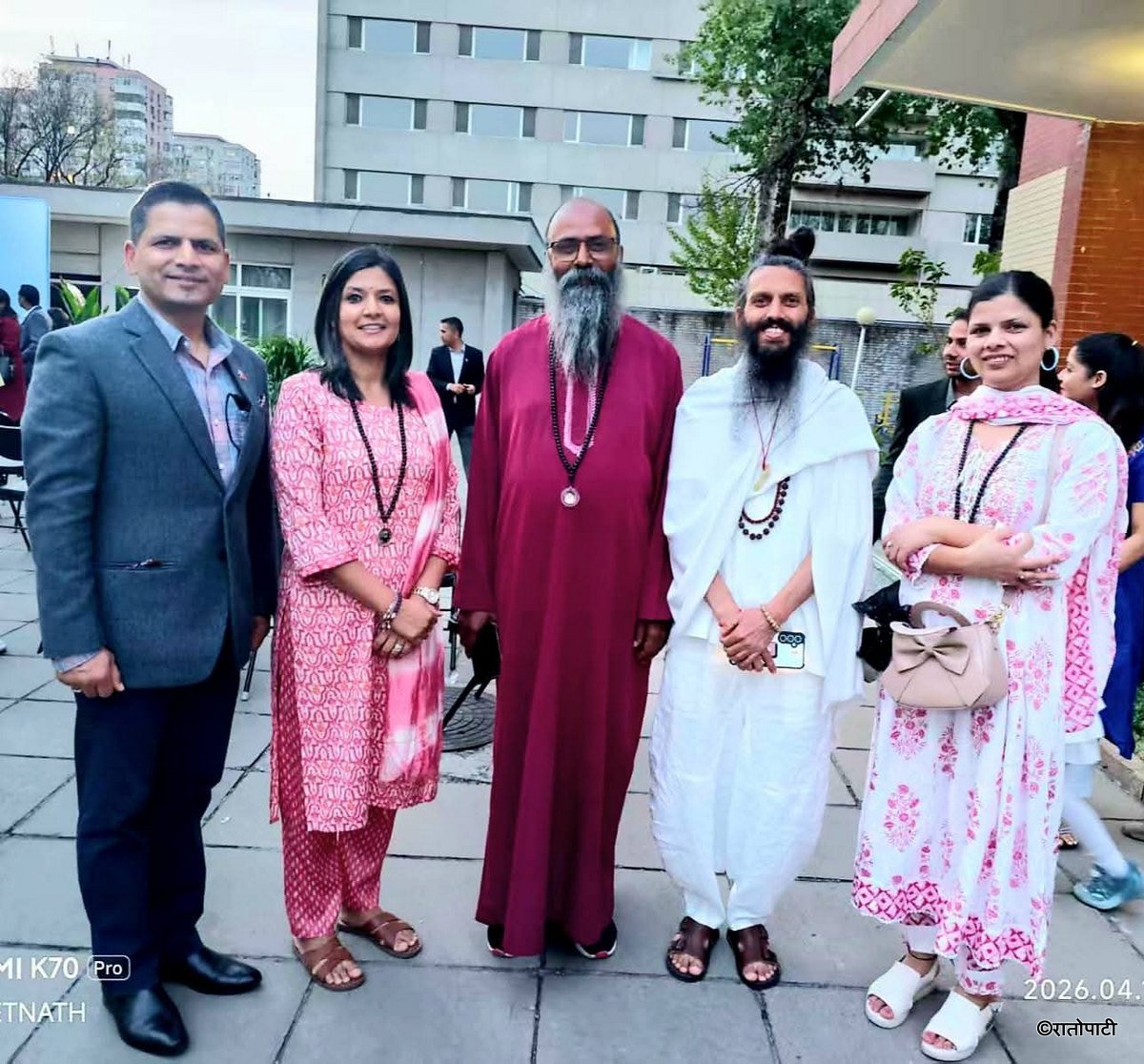
On that occasion, Roshan Khanal, Acting Ambassador of the Nepali Embassy in Beijing, and Economic Minister Parvati Aryal were also present. Ambassador Khanal stated that Nepali yoga, pranayama, spirituality, and lifestyle are very popular and that this visit by Acharya Shri Gurudev Osho Akhand is very meaningful in making them even more popular.
Similarly, Minister Aryal said that since both China and Nepal follow Eastern philosophy, values, and norms, there is a very strong spiritual connection, which will greatly contribute to Nepal's spiritual, yoga, and health tourism.
I am a Nepali woman. I have also experienced the emotions, pain, and struggles of women. I felt proud to see Nepali women leading the Nepali Embassy in China. This is a grand example of women's empowerment. There has been a major political change in Nepal, and we are strong in China.
We are capable of making a unique contribution to the Nepal-China relationship, even beyond the contribution of the Bhrikuti era. Such a presentation is not just a promotion of practice; it is also a process of giving new meaning to the dialogue between civilizations. It is also the foundation of the spiritual and health tourism relationship between the two countries.
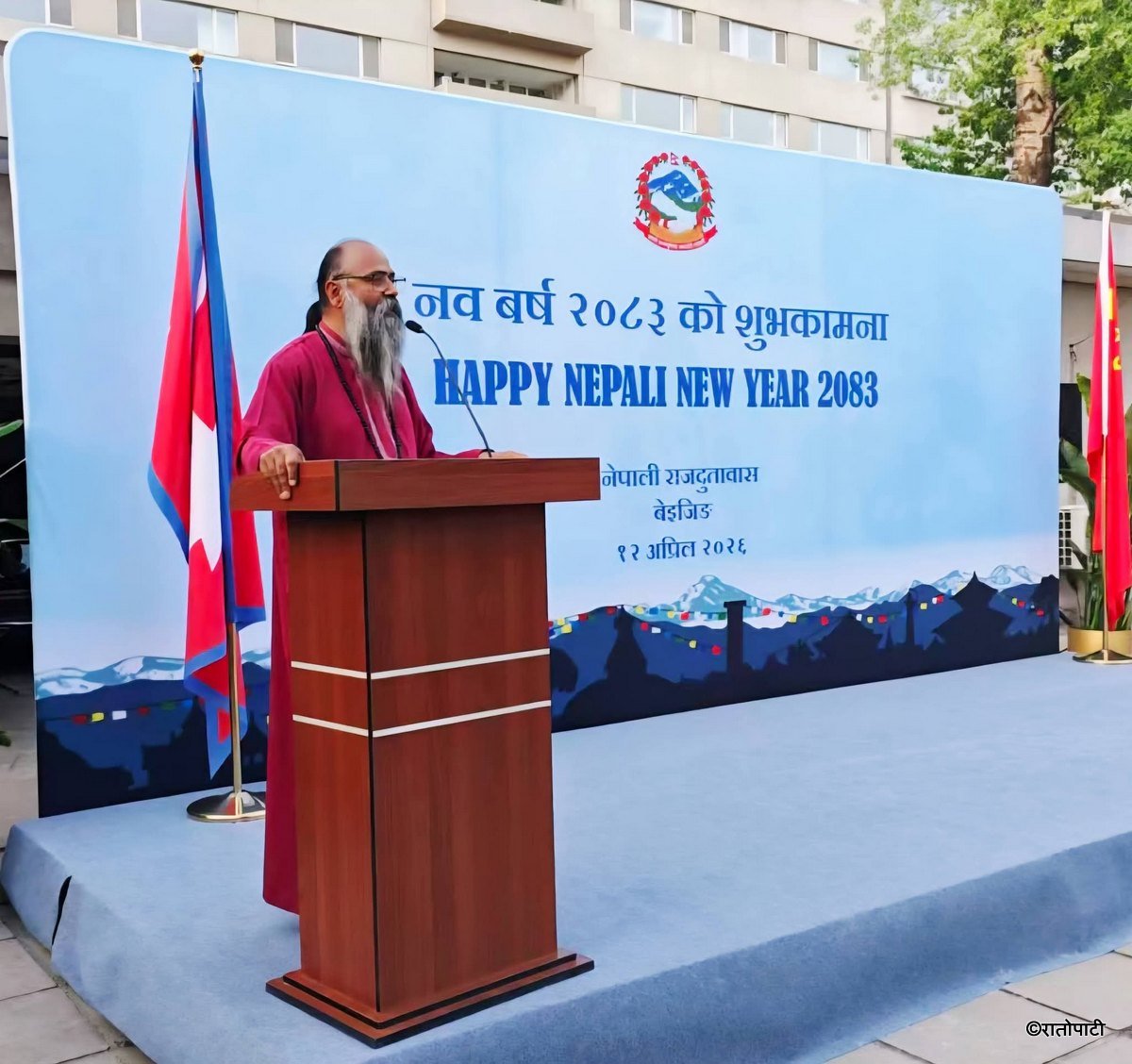
At the program, many Chinese people inquired about Nepal's spirituality, yoga, meditation, practices, and their benefits and challenges. Discussions and conversations took place on various topics such as how to come to Nepal, how to meet the Guru, and how to practice meditation.
The magnificent Boudhanath Stupa, currently on Nepal's UNESCO list, its cultural and social significance, and its relationship with China are all due to the contribution of Princess Bhrikuti. Nepal is the birthplace of Gautam Buddha. Therefore, Nepal has been a center of Eastern philosophy, meditation traditions, and yoga practices since ancient times.
Buddhist philosophy has deeply influenced the cultural and philosophical life in China for centuries. The direct presentation of Nepali spiritual traditions here is a revival of historical continuity in itself. In this context, the presence of Acharya Shri Gurudev Osho Akhand is not just the presence of an individual; it is the re-establishment of the spiritual consciousness flowing from Nepal.
The program was attended by members of the Nepali community in China, professors, doctors, journalists, students, businessmen, writers, scientists, and Chinese citizens.
The Guru's presentation appears to be particularly focused on topics such as meditation, self-awareness, energy balance, and the search for the inner meaning of life. Modern Chinese society has embraced rapid economic development and technological advancement. Simultaneously, the desire for mental peace, inner balance, and the search for the deeper meaning of life is also growing in China.
Explaining China's economic progress, the Guru symbolically said, 'Yoga and spirituality should come in empty containers coming from Nepal and full containers going from China to Nepal.' Quoting Bhagwan Rajneesh Osho, the Gurudev added, 'There are many sorrows in human life, and the only remedy is meditation.'
The architect of peace, joy, and meditation-samadhi in today's era is the enlightened master Osho. Today, almost all the gurus and organizations that have emerged in the name of spirituality have been influenced by Osho's teachings and follow his methods. The only difference is that due to ego, they have not been able to say, 'I am a disciple of Osho.'
Therefore, there is no doubt that Osho's meditation method can be the pure, sacred, and only path, like pure water, for the busy and stressed human world of the 21st century. I am proud that I am a disciple of Osho.
I think Nepal's health tourism should reach every village in China. Health centers should be established in every monastery, stupa, and gompa in Nepal. Chinese citizens should come to Nepal to experience health. In this busy time, most people are seen to have increased mental depression and distress. In such a situation, meditation, yoga, and practices play an important role. In this regard, the Nepali spiritual perspective has immense potential to provide not just an alternative practice but an overall life vision to Chinese citizens.
Nepal is the destination for Chinese spiritual health tourism. Nepal should build tourism infrastructure incorporating Chinese language and culture, and China should cooperate in this goal. Chinese people should visit Nepal out of love for Nepal. China should recognize that there is a mini-China within Nepal.
The presence of Nepal's Oshodhara Sangh in China is not just a spiritual presentation; it is also an opportunity for Nepal to re-establish its cultural and spiritual identity on the world stage.
If this is advanced strategically, it can give new depth to Nepal-China relations. Development will not be limited to infrastructure and trade but will extend to the levels of soul and consciousness. At this point, Nepal's true strength, its spiritual heritage, can become a relevant and necessary voice for the world.
This can deepen the tourism and spiritual relationship between Nepal and China. The Nepal-China relationship can reach new heights. I am a flower of this soil. I want to bloom as a beautiful flower and spread my fragrance. I want to grow like a small bud in the garden of Nepal-China relations, bloom, and fall.
This specific news has been automatically translated by AI. As a result, there may be some inaccuracies or language errors.