How to Identify Chemically Treated Watermelons

Kathmandu. As the temperature rises, it is important to stay hydrated to escape the heat. Watermelon is a fruit that helps us stay hydrated.
It is not only delicious, but it also helps balance the body's electrolyte levels. However, nowadays watermelons prepared with chemicals are found aplenty in the market. Buying such watermelons without proper inspection can lead to various health problems.
There are some ways to know whether a watermelon is naturally ripened.
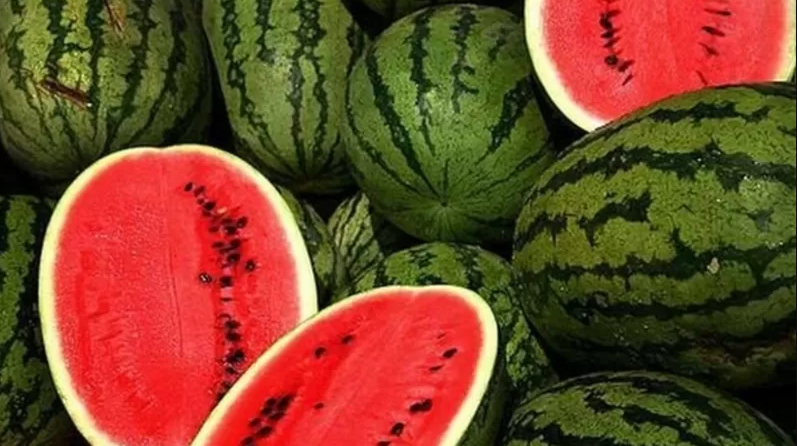
Pay attention to color: The outer part of a naturally ripened watermelon is not shiny. If you see a very shiny surface or a uniform green color on the watermelon, it may have been prepared chemically.
Look at the color of the cut watermelon: When cutting the watermelon, its pulp should be light red or pink. If the watermelon looks very dark red, it may be the color of chemicals. Besides this, be careful if you see white or yellow spots inside the watermelon.
Identify by seeds: The seeds of a naturally ripened watermelon are black or dark brown. If the seeds look white or very light colored, it may have ripened prematurely or chemically.
Identify by smell: A real watermelon has a sweet and refreshing taste. However, if the taste is strange, moldy, or slightly bitter, do not eat them. Watermelons treated chemically also lack natural fragrance.
Test in water: Cut a small piece of watermelon and place it in water. If the water starts to turn slightly pink or red, it may be an indication of added artificial color. Real watermelon does not leave any color in the water.
This specific news has been automatically translated by AI. As a result, there may be some inaccuracies or language errors.