47 Maoist rebels surrender in India following declaration of conflict-free status

Kathmandu. Nearly a month after the country was declared free of a decades-long conflict, 47 Maoist rebels have surrendered, Indian police said on Saturday.
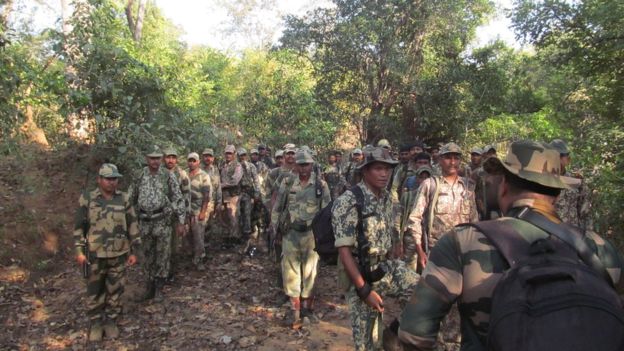
India has been conducting an operation against the 'last remnants' of the Naxalite insurgency for the past two years. The Naxalite movement was named after a village called Naxalbari at the foothills of the Himalayas, where a Maoist-inspired rebellion began about six decades ago. In the past, this group claimed to be fighting for the rights of marginalized indigenous people in the mineral-rich forests of central India.
Police in the southern state of Telangana stated, "47 Maoist members have surrendered, deciding to join the mainstream."
"Almost all the key underground leaders have now retired from the movement," the police said.
India's Home Minister Amit Shah declared the country Naxal-free on 30 March.
Since some villagers rebelled against their feudal lords in 1967, more than 12,000 rebels, soldiers, and civilians have been killed.
The movement reached its peak in the mid-2000s. The insurgency had amassed an estimated 15,000 to 20,000 trained armed fighters in various parts of the country, but it has weakened significantly in recent years.
Police have appealed to the remaining members to lay down their arms. Officials said they are planning to provide the surrendered rebels with new civilian identities through vocational training and rehabilitation programs.
The 47 surrendered Maoists will be given a total of 159,000 US dollars for their rehabilitation, with each Maoist receiving approximately 3,400 US dollars.
Clearing hundreds of landmines planted by the rebels in jungle paths remains a major challenging task for the government.
This specific news has been automatically translated by AI. As a result, there may be some inaccuracies or language errors.