The Persistent Crisis of Landless Squatters in Sudurpashchim


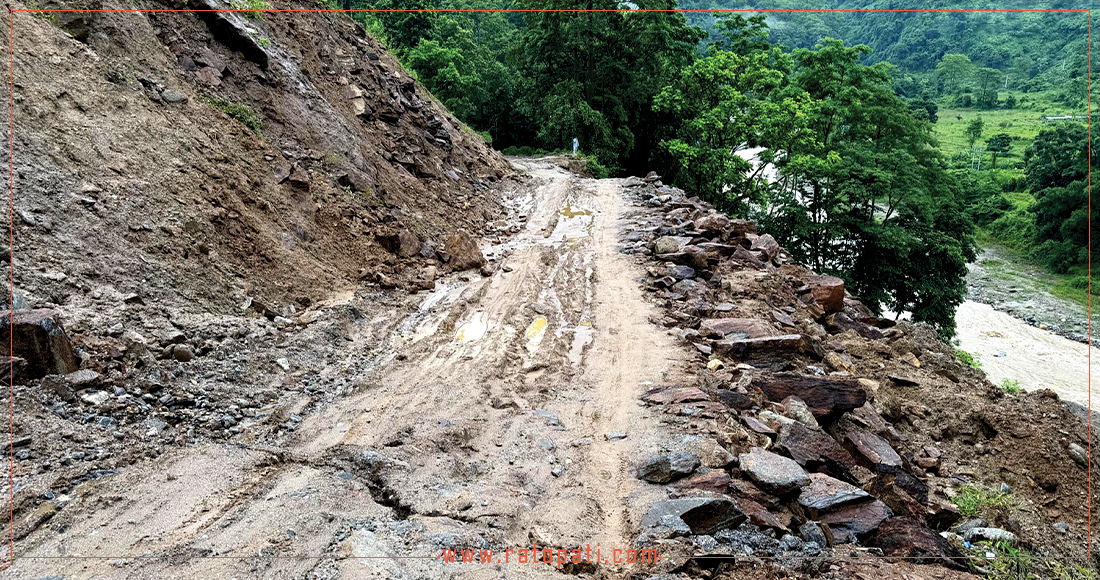
Dhangadhi. The problem of squatters, landless people, and reserve-affected victims in Sudurpashchim has been festering for decades. Displaced by natural disasters like floods, landslides, inundation, erosion, and earthquakes, communities such as the Badi, Dalits, and freed Kamaiyas, who have lived as squatters for generations, are still waiting for secure housing. Some are living in government forests, others in unsafe settlements along riverbanks, and some are living in tents pitched on the roadside.
Even within Dhangadhi, the only sub-metropolitan city in the province, there are hundreds of such families who have been using land for years but do not hold legal land ownership certificates.
Pune Chaudhary of Dhangadhi Sub-Metropolitan City-14, Khedaha, was once a Kamaiya and is now a squatter. After the government freed the Kamaiyas, he was given land, but after the Mohana River eroded it away, he became a squatter again.
'The government gave us land, but the river took it; where should we go now?' he asks.
Like Chaudhary, millions of squatters are currently living in unsafe places. They are demanding either land ownership certificates for the places they currently occupy or to be relocated to safe areas and granted land ownership.
_QHcuFHQCIe.jpg)
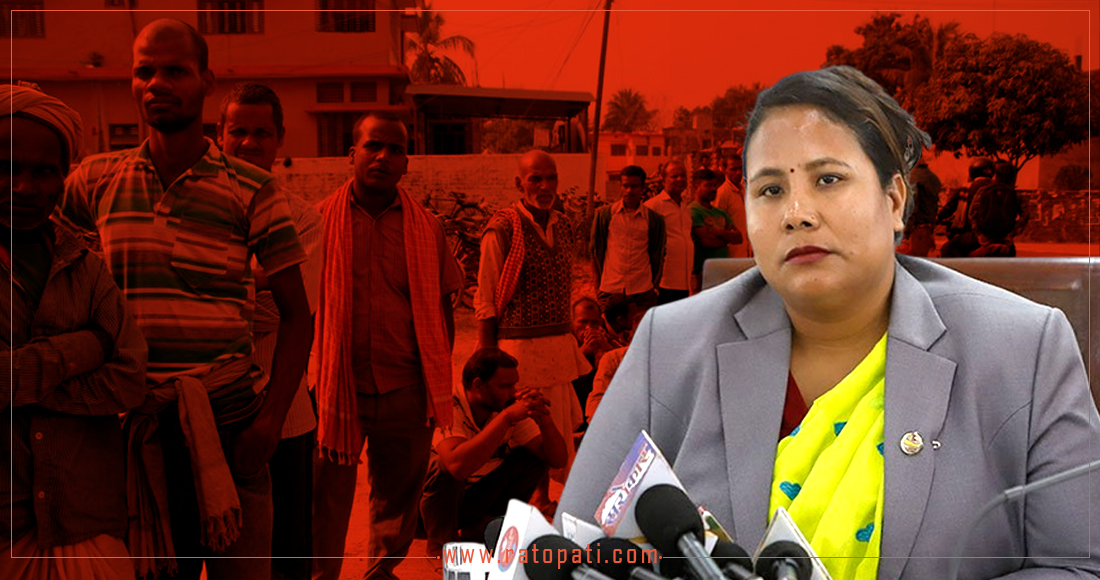
Recently, the government's plan to remove squatter settlements in Thapathali and Gairigaun, Kathmandu, and to identify and provide long-term management for genuine squatters has become a topic of discussion. With this initiative from the central government, the squatters of Sudurpashchim are filled with both hope and anger. They are now seeking concrete results, not just assurances.
'We have always been treated as mere vote banks,' said Arjun BK of the Bhetghat camp in Krishnapur Municipality-1, Kanchanpur. 'Now it must be a decisive outcome. The government cannot keep leaving us in this state of limbo.'
In Kanchanpur, the problem of reserve-affected victims is becoming even more severe. Demanding proper management for years, they recently staged a semi-nude protest in front of the District Administration Office in Kanchanpur. They are pressuring the government, stating that the future of their children and families remains in darkness.
Some reserve-affected victims are still living a miserable life on open land in front of the District Division Forest Office.
The state of squatter settlements and forest encroachment in Sudurpashchim is alarming. In Kanchanpur alone, there are over 25,000 landless and squatter individuals. According to the Division Forest Office, Kanchanpur, out of the 77,630 hectares of forest in the district, 3,195 hectares are completely under encroachment. Squatters, landless people, reserve-affected victims, and those displaced by floods and landslides are living there.
The situation in Kailali is even more dire. According to applications filed at the District Administration Office, there are over 130,000 landless and squatter individuals in Kailali. More than 21,000 hectares of forest land have already been encroached upon here. The 10,000-hectare forest area of the Basanta Corridor, considered a vital wildlife route, has now turned into a dense settlement. Squatters reside in all 13 local levels of Kailali, and they are currently waiting for the government's new plan.
Government officials have their own concerns regarding forest conservation and squatter management. According to Bharat Shah, a forest officer at the Bani Division Forest Office in Kanchanpur, the data on forest encroachment is challenging.
'Forest encroachment flourished because squatter management could not be handled in the past. Local politics and the game of vote banks appear to be the main culprits. The problem has worsened due to the tendency of leaders to visit camps during elections to distribute promises of land certificates, only to never look back after winning,' he said.
Not only this, local governments have also been allocating budgets for roads, electricity, and water supply in illegal settlements, ignoring the Forest Act.
'When the ward office installs electricity poles in a forest settlement, the encroachers feel that this land has now become their private property,' said Shah.
_17FC3tJG5n.jpg)
It is also claimed that land brokers are playing a role in clearing forests in the name of squatters and bringing new people into the camps. Sources say that in some places, money is collected in the name of development fees and passed on to local leaders.
The trend of migration from the hills to the Terai seems to have increased after dozens of squatter problem resolution commissions formed in the past started filling out land survey forms. Data shows that the forest area of Sudurpashchim has been depleted by nearly 40 percent compared to 30 years ago.
'Our forests would only be saved if genuine landless people were identified and managed accordingly; otherwise, this trend will not stop,' he said.
Kewalpati Chaudhary, who lives in the Basanta camp in Kailali, is a flood victim. After the flood washed away her home and land, she is now taking refuge in the forest. 'The government should investigate who the real squatters are. We came here after losing everything to the flood. We should be moved to a safe place; it is not that we want to live in the forest,' she said.
The family of Bhawana Karki from Chure, Kailali, has also been living under a tarpaulin on the roadside for a long time. They moved to the Terai after landslides destroyed their home in the hills. There are also squatters in Chure due to flood victims.
There are many squatters in the seven hilly districts of Sudurpashchim who have become homeless due to earthquakes and floods/landslides. Rithe BK of Gaumul Rural Municipality in Bajura said that they should also be managed.
'The government should either manage us or tell us what our status is. We haven't received anything so far; we are in great distress,' he said.
This specific news has been automatically translated by AI. As a result, there may be some inaccuracies or language errors.



_gcmnFrn8Po.jpg)