Karnali Government Struggles with Budget Execution Despite Efforts

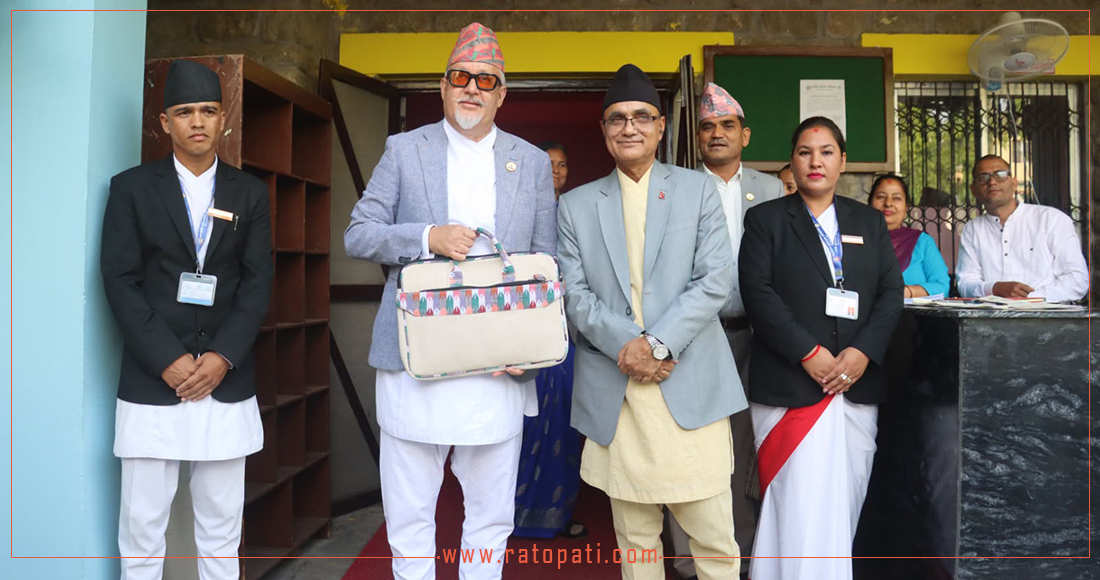
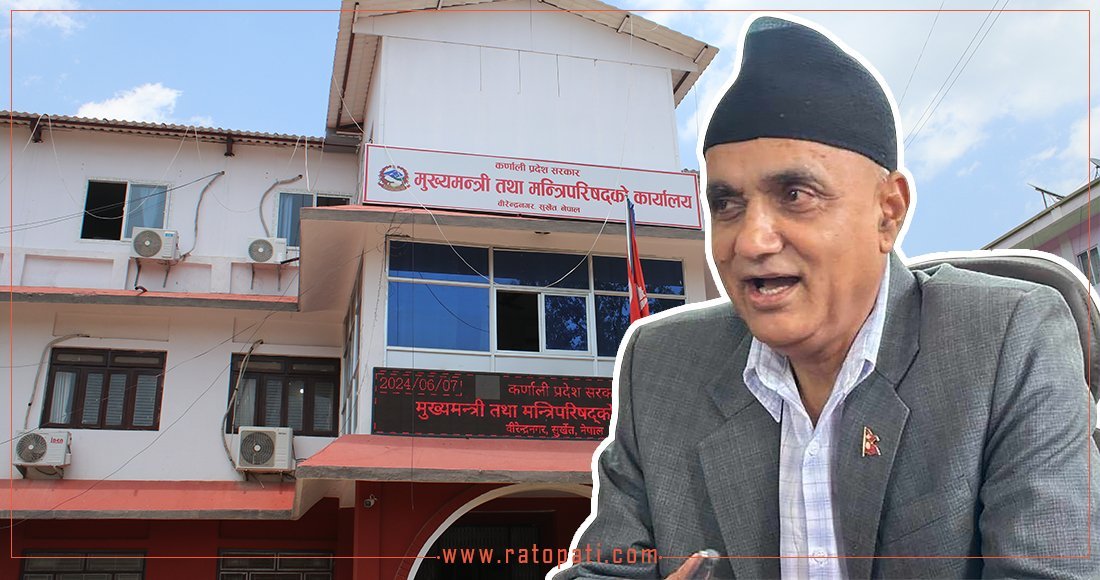
Surkhet. Like the previous governments of Karnali, the government led by Chief Minister Yamlal Kandel has also failed to improve budget expenditure. Kandel was appointed Chief Minister on Chaitra 27, 080 BS. Since then, the government led by him has implemented the budget for two financial years. However, the budget implementation status in both financial years is even weaker than before.
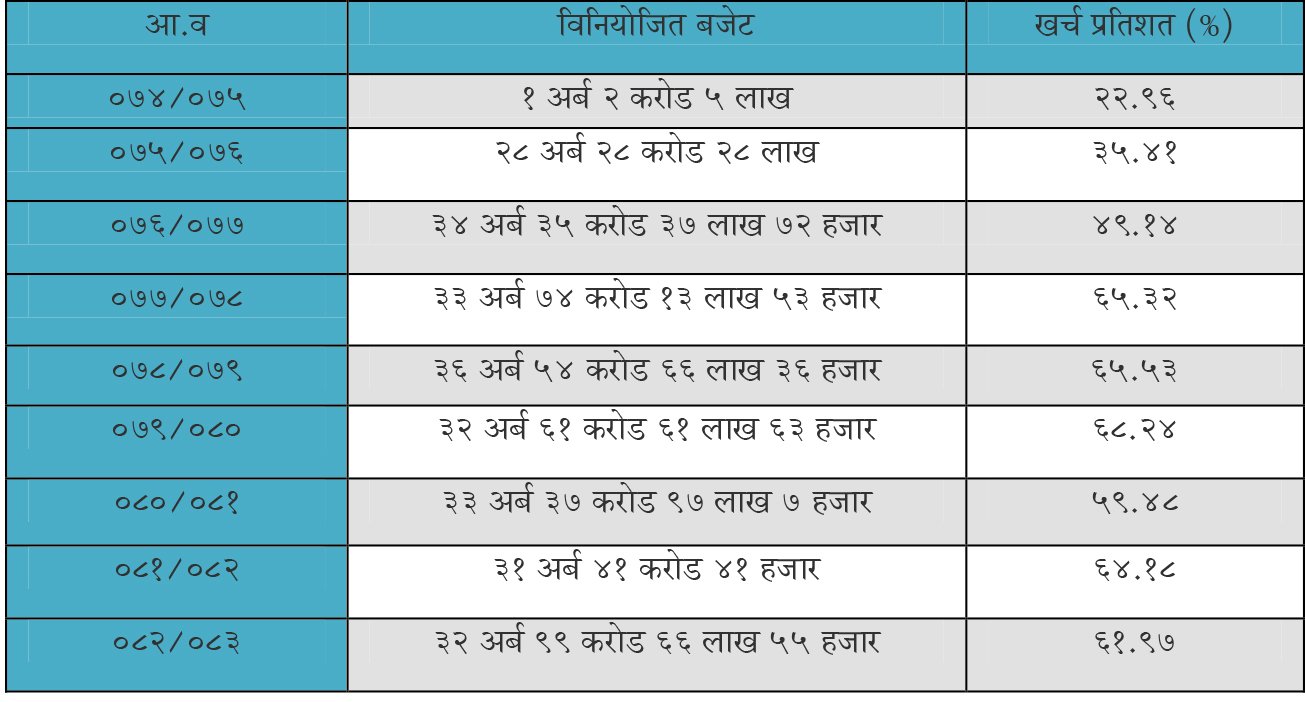
After Kandel became Chief Minister, Mahendra KC, who was the Finance Minister from Maoist, initially brought the budget for the financial year 081/082. KC, who brought a budget of 31 billion 41 crore 41 thousand, left the government in Sawan 081 before being able to implement the budget. With the formation of a power coalition between CPN-UML and Congress at the center, Rajiv Vikram Shah of Congress became the Finance Minister. However, Shah could not bring improvement in budget implementation.
In that year, the provincial government's budget implementation was only 64.18 percent. After that, Shah brought a budget of 32 billion 99 crore 66 lakh 55 thousand for the current financial year (2082/083). There was no improvement in the implementation status of that budget. According to the details provided by the Provincial Treasury Controller's Office, only 61.97 percent of the total budget, equivalent to 20 billion 57 crore 12 lakh, has been implemented this year.
Among these, the data shows that the capital or development budget is in an even weaker state. The government had an annual capital budget of 19 billion 98 crore 27 lakh in the current financial year, but by the end, only 55.74 percent, equivalent to 11 billion 13 crore 93 lakh rupees, was implemented. This year, more than 8 billion in development budget and a total of 12 billion 62 crore 24 lakh 46 thousand rupees have been frozen.

- Status of Karnali's Budget Implementation
Compared to the last two financial years, the budget implementation was relatively better before that. The government, which implemented 22.96 percent of the budget in the first year of the province's establishment, brought 65.32 percent of the budget into implementation in the fourth financial year (077/078 BS).
The budget implementation rate in the subsequent two financial years is the highest so far. The financial year 079/080 BS was an election year. At that time, Jeevan Bahadur Shahi was the Chief Minister and Bindaman Bisht was the Finance Minister. Bisht brought a budget of 32 billion 61 crore 61 lakh 63 thousand. In that year, the highest ever, 68.24 percent of the budget was implemented.
However, the budget implementation rate has declined in the subsequent financial years. Rajkumar Sharma of the then Maoist party became the first Chief Minister of the second term of the Provincial Assembly. In his tenure, a large portion of the budget was frozen as the Karnali Prosperity Project, worth more than 1 billion, was not implemented, and even 60 percent of the total budget was not spent.
After that, the government led by Kandel also does not seem to have improved budget implementation.
This is the allocated total budget and expenditure status so far
- Why were Kandel's efforts unsuccessful?
As soon as he took office as Chief Minister, Kandel emphasized budget implementation. However, he has not been able to bring improvement in budget implementation.
According to a parliamentarian from the ruling party CPN-UML, in the beginning of the province's establishment, there were no structures, a lack of employees, and no laws were made. However, he said that the budget implementation status at that time was satisfactory.
He states that it is a matter of concern that the government has not been able to improve budget implementation even when there are no problems like lack of employees or laws.
Kandel seems to have made efforts to improve budget implementation. He has repeatedly issued directives and made commitments. He has also signed agreements with ministers and employees.
In Sawan 082 BS, Kandel also made employees and ministers take a 10-point commitment to improve the implementation of the current financial year's budget. Even though a law was enacted for project selection, the ministers themselves are violating that law, which has neither ended the irregularities in project selection nor improved budget implementation.
'It seems that the Chief Minister alone cannot do it; ministers and employees do not follow or heed the instructions,' says a source close to Kandel, 'Moreover, it is difficult to convince the current Finance Minister.'
Due to weak performance, Kandel has repeatedly given instructions to the ministers, but employees and ministers have not followed those instructions, says a source close to the Chief Minister.
In particular, Chief Minister Kandel is dissatisfied with the performance of the current Finance Minister. A minister close to the Chief Minister said that the implementation status has been weak because Finance Minister Shah has not been able to effectively implement the policies for budget implementation improvement included in the budget.
'If we take action, it is a coalition government; if we do nothing, the performance is dire,' says a source close to Kandel.
Former Finance Minister Bindaman Bisht says that the government has no clear vision to improve budget implementation. 'The government has already failed in this matter, and economic anarchy is equally prevalent,' he added, 'The government is capable in all aspects now, but the results have worsened compared to the past.'
Bisht believes that such a trend is raising questions about the provincial structure. In his understanding, a performance-based system should be implemented.
Karnali annually receives more than 95 percent of its budget as federal grants. The fact that even that budget is not implemented by 70 percent raises serious questions about the leadership of the government.
- The trend of 'Asare' (June spending) has not ended
By the end of Jestha (mid-May) of the current financial year, i.e., 11 months, the government had implemented only 36 percent of the total budget, but in the 25 days of Asar (mid-June to mid-July), 25 percent, or nearly 9 billion, of the budget was spent. The provincial government adopted a policy three years ago to discourage the 'Asare' trend of development. However, there has been no improvement. Most of the budget spent in Asar is for development.
Former Finance Minister Mahendra KC says that there is a problem in creatively implementing the policies made by the government. 'It seems that the ministries have not worked seriously on their subjects,' he said, 'For example, we say that the budget is not spent because we don't have large projects or preparation, but that is not entirely true. DPRs for multi-year projects are completed beforehand, and source assurance is also obtained in Mangsir-Poush (Nov-Dec), but work only starts the following year. This is the weakness of the ministry.'
He stated that the budget implementation is hindered by delays in signing agreements for small projects (15-40 lakh) and the ministry or district office not paying attention if there are disputes. He said that the practice of hastily implementing the budget in Asar continues.
- Blame game between ministers and employees
In Karnali, ministers blame employees and employees blame ministers for the lack of improvement in budget implementation.
Government spokesperson Vinod Kumar Shah says that no matter how many policies or directives the political leadership brings, the expected results cannot be achieved because the bureaucracy does not work.
He claims that employees tend to avoid work by citing the fear of the Commission for Investigation of Abuse of Authority. 'This causes files not to move forward and hesitation in making decisions, which directly affects budget expenditure,' Shah told Ratopati.
Even if the government makes policies, programs, and laws, the main body for their implementation is the bureaucracy. The situation where the federal government still has to be relied upon for the recruitment and administrative leadership of employees remains. Shah also said that ministries cannot work effectively due to the delay in sending employees and the tendency of those sent to be on temporary assignment only.
Shah admitted that budget expenditure has decreased slightly this year compared to the past. He said that problems were also created by the 'Genji' movement along with the employees. 'We made plans for project selection and procedures with the aim of bringing the plans into the correct system, but there is a problem with the feasibility study and cost estimation not being prepared on time during project selection,' he added, 'Since these processes take a lot of time, construction work starts late, and budget expenditure is low.'
Chetan Kumar Timilsena, Undersecretary and Spokesperson of the Ministry of Finance, says there are many reasons for the lack of improvement in budget implementation. He states that there is a lack of effective coordination between laws and programs.
Regarding the accusation by political leadership that employees do not work, he said, 'It is not possible to say exactly what the reason is. There is a tendency for elected representatives and the bureaucracy to blame each other, but it also seems that there is a lack of effective coordination between laws and programs.'
He also said that the imbalance between the expenditure in projects by development agencies and the progress achieved is also a problem.
According to Timilsena, specifically, the law stipulates that the period for obtaining source consent for multi-year contracts is until the end of Magh (mid-February). Since time is spent in the process of obtaining consent by the end of Magh, it is seen that the expected achievements have not been made in the subsequent implementation.
In terms of human resources, while administrative manpower appears to be almost sufficient, there is still a shortage of technical manpower, he said. 'Although the number has increased compared to the past, technical manpower is still not sufficient according to the need,' he said.
According to him, even though the budget and resources are more available than before, the Ministry of Finance has now put forward two new programs to address why the financial progress is weak.
'Under this, measures to achieve the budget targets are being sought through interaction with the legislature, provincial secretaries, and division chiefs,' he said, 'Furthermore, the process of linking performance contracts with performance evaluation is also being advanced.'
This specific news has been automatically translated by AI. As a result, there may be some inaccuracies or language errors.