
Former PM Dr. Baburam Bhattarai on Kathmandu's Squatter Crisis and Urban Planning


Disorganized urbanization in the Kathmandu Valley, encroachment on riverbanks, and the squatter problem have been at the center of political and administrative debates for decades. In 2068 BS, under the leadership of then-Prime Minister Dr. Baburam Bhattarai, concrete steps were taken for road expansion in Kathmandu, Bagmati river cleaning, and squatter management.
To relocate squatters from riverbanks to organized housing, multi-story apartments were constructed in Ichangu Narayan, Nagarjun. However, even after a decade and a half, those apartments remain unused, while the cycle of bulldozing riverbank settlements and subsequent clashes continues.
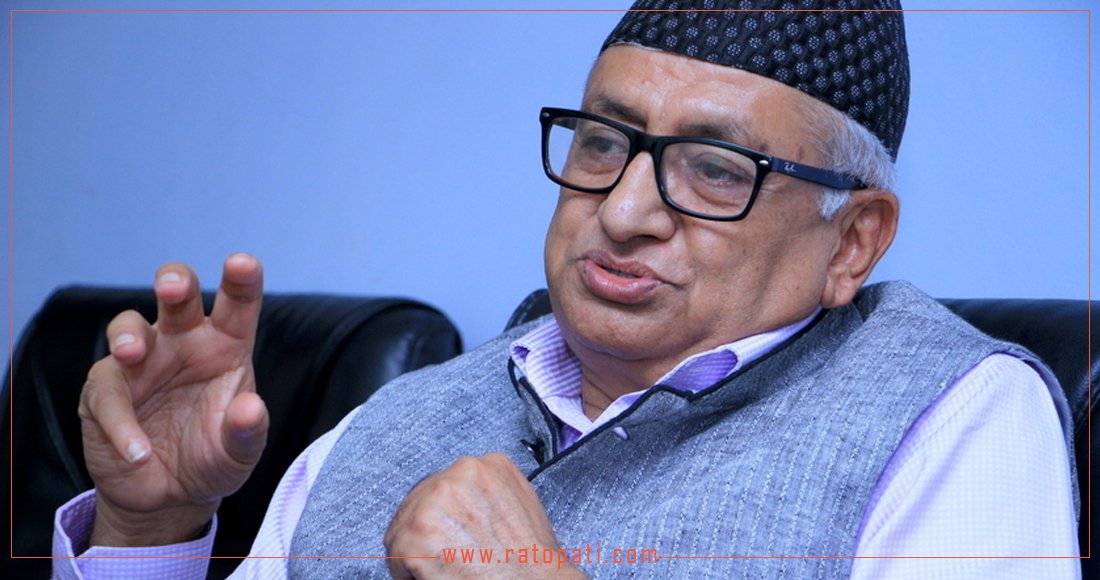
Why have the structures built by the state with billions in investment not been utilized? What is the nature of the politics and land mafia manipulation occurring in the name of squatters? And what is the long-term solution? Here are the edited excerpts of a conversation with former Prime Minister Dr. Baburam Bhattarai focusing on these contemporary issues:
- You were Prime Minister for a short term in 2068 BS. At that time, you put forward three major agendas: expanding narrow roads in Kathmandu, organizing chaotic urban settlements, and cleaning rivers. Road expansion was implemented, but the concept of organized apartments brought to solve the squatter problem has not been implemented even after the buildings were completed. Where exactly does the problem lie?
This needs to be viewed holistically. I am also a student of architecture and urban and regional development planning. In that capacity, as an agrarian economy like ours moves toward industrialization, urbanization increases rapidly. I established the Ministry of Urban Development precisely because I knew that if it were not organized from the beginning, the city would become chaotic. Since Kathmandu is the largest city in the country, a separate body called the Kathmandu Valley Development Authority was created for its integrated development.
Only then were the plans for road expansion, squatter management, and river cleaning moved forward. Many say we only expanded roads, but that is not true. We had moved forward with a comprehensive plan through the Authority to organize urbanization and manage polluted rivers by freeing them from sewage. Our plan included road expansion, management of settlements, purification of rivers, and the creation of parks in 84 open spaces in the valley. Parks like Naxal's Narayan Chaur were built during that time.
However, I only had a short period of 18 months. It was extremely necessary to relocate the squatter settlements on the banks of rivers like Bagmati, Bishnumati, and Manohara in Kathmandu. The trend of people coming from all over the country and living in a disorganized manner had increased due to a lack of housing in the city. I had the ministry conduct a survey. A committee was formed to distinguish between real squatters and those occupying land.
After an investigation lasting two to three months, it was decided that the government would build housing on public land for the real squatters. As the first phase of that, construction of housing began in Ichangu Narayan, Balaju. We gave those who were not real squatters three months to vacate. To ensure they did not face immediate difficulty, the government also provided them with 15,000 rupees each as three months' rent.
But, in the meantime, something unexpected happened; without my knowledge, a bulldozer was used there. I think there was also manipulation by land mafias. After finding out, I went there myself the next day. I said, 'It should not be demolished like this until an alternative arrangement is made; this is a mistake.' We had planned to move them to the vacant land in Chobhar (the place before the dry port was built) until the housing was constructed. But the perspective on viewing squatters here is very poor. A narrative has been created that 'squatters are thieves and land grabbers.'
At that time, an elite class that had just emerged from the Maoist movement and communist leaders did not allow the squatters to be kept in Chobhar for their own interests. Later, when we tried to keep them in a large field on the banks of the Bagmati in Lalitpur, I was pressured under the leadership of communist lawmakers there as well. They protested, saying, 'You call yourself a leader of the proletariat, and yet you bring squatters to live next to us?' While this dispute was ongoing, our government fell, and the plan was left in limbo.
Therefore, my request to the current government, the Prime Minister, and the Mayor of the Metropolitan City is not to remove them by using bulldozers all at once. Let us look at the work done previously and the records. If necessary, let us conduct an investigation again with the help of the local level. Only after separating the fake and real squatters and arranging for the rehabilitation of the real ones should they be removed from there. This problem cannot be solved just by using bulldozers. Building on the work we started, the real squatters should be relocated with dignity. If necessary, the government should also provide the relocation expenses. This should not be complicated.
- The construction of that apartment in Ichangu Narayan was started during your government's tenure. But why have subsequent governments not been able to put it into use? If it could have been put into use, the problem would have been solved to a great extent!
During my time, that apartment was not fully completed; it was finished later. The mischief here is, can one say that people should not be moved there after the state has built buildings on government land with its own investment? There are some land mafias there who incited the locals, fearing that the price of their land would decrease if a squatter settlement arrived. A narrative was created that 'squatters are thieves and crooks, they should not be brought here.' Local leaders of political parties supported this for the sake of vote bank interests and left the squatters in limbo.
This is absolutely wrong. Buildings that can accommodate about 300 families have been built in Ichangu Narayan. Arrangements should be made to keep them there, and the remaining ones should be moved by making similar arrangements elsewhere. Children and the poor should not be kept in an inhumane manner in the dirty and unsafe environment of the riverbanks. The government should take immediate action and give the apartments built for squatters to them. Saying that they will not be allowed to move into a building built on government land is a state of lawlessness, isn't it? Does the law of the state not apply in Nepal? It must be implemented strictly.
- Since the advent of the Republic, about a dozen governments have been formed. But the squatter problem remains the same. As you said, there are also 'Hukum-basi' (those with influence) in the name of squatters. The party mechanism is also entangled in this, and squatters have been used as a vote bank. What is your suggestion to the current government for a long-term solution to this problem?
The path to a long-term solution is to make the local level responsible. Currently, local governments are empowered. They should form a team to identify the real squatters. The right to manage the poor and the destitute and to provide them with housing is written in the Constitution itself. Therefore, the real poor cannot be left in limbo. According to the law and the Constitution, the state must manage them.
In the long term, organized urbanization must be done. That is why I created the Kathmandu Valley Development Authority. At that time, there was no parliament, so the law could not be made; now there is a parliament. Now that authority should be made more empowered. Since local levels have been formed, the authority should be restructured to include representatives of all municipalities within the valley. If that is done, the urbanization of the Kathmandu Valley can be organized.
With disorganized urbanization like the current one, Kathmandu will not be livable after some time. There is no open space, no place for children to play, no greenery. Therefore, the long-term path is to develop the city in an organized manner and solve the squatter housing problem through the policy guidance of the central government and the direct initiative of the local level. My suggestion is that the current government should follow this path.
- Especially regarding the removal of the squatter settlement in the Thapathali area, there is talk that some interests might be clashing. It is also heard that money has come from foreign donors there. Do you feel that it is being targeted more due to some interest?
That happens everywhere. Our society has become so distorted that wherever you poke, it smells. There are certainly some non-governmental organizations (NGOs) and party people who cheat and do business in the name of squatters. That has been identified. But at the same time, we must also explain to the squatters. We must explain that living in an unsafe place on the riverbank, where there is a risk of children being swept away during floods, is fatal for them as well.
I urge them not to follow the people who incite and provoke them. Once the real squatters are given an alternative, they will understand and be ready to go. There are records that have already been identified, which can be verified again. If the work is moved forward with alternatives, this problem can be solved easily.
This specific news has been automatically translated by AI. As a result, there may be some inaccuracies or language errors.



_Eqo5W0NMVM.jpg)