Delays in New Federal Parliament Building Construction Spark Lawmaker Concern


Kathmandu. The meetings of the new House of Representatives are currently being held temporarily in the multipurpose hall of the Federal Parliament's own modern building complex.
The main hall of the House of Representatives is not yet fully prepared. Due to the incomplete status of the main hall, sessions are being conducted in the multipurpose hall within the parliament complex.
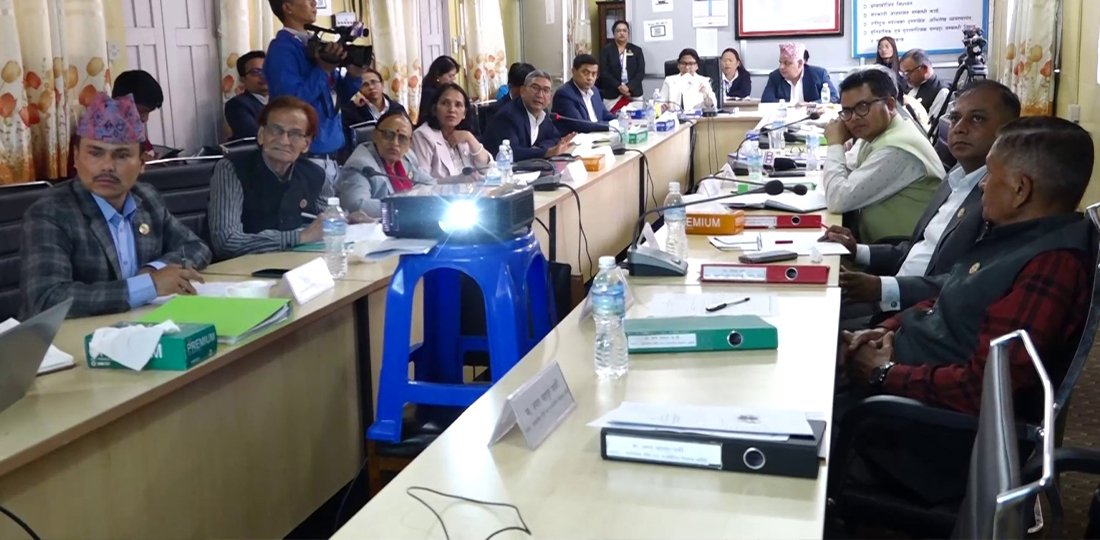
Following the fire at the International Convention Centre in New Baneshwor during the Janajati movement, meetings were shifted to the new parliament building in Singha Durbar, but the main structure remains unfinished. The Department of Urban Development and Building Construction stated that the building will take more time to complete. This information was shared during a discussion on the progress of the parliament building held by the Committee on Public Policy and Delegated Legislation under the National Assembly on Tuesday.
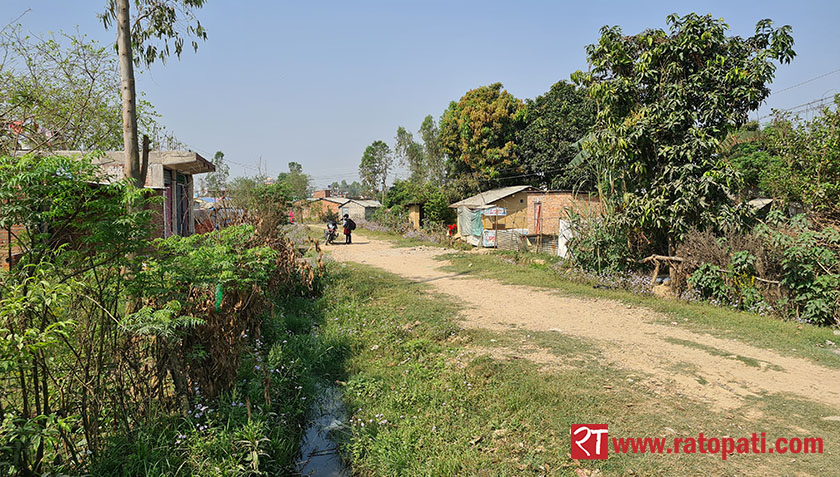
The federal parliament building is being constructed on 156 ropanis of land within the Singha Durbar premises. Although the five-story structures have been erected, the overall construction progress is only 94 percent. In today's meeting, most lawmakers demanded that the budget for the upcoming fiscal year be presented in the new parliament building. National Assembly member Gomadevi Timilsina expressed her desire to hear the upcoming budget speech from the new parliament building. She complained to the government that work which should have been completed in 3 years has not been finished even after 6 and a half years.
Similarly, another lawmaker, Ranjit Karna, held government officials responsible for the parliament building not being ready after 6 and a half years. He complained that costs have increased as the timeline was extended. He stated, 'Construction must now be accelerated so that we can sit in the new building for the upcoming budget. Government employees must speed up their work in line with the spirit of recent changes.' He also demanded that the upcoming fiscal year's budget be heard from the new parliament building.
Likewise, lawmaker Somnath Poudel questioned the tendering process and the delays. He expressed sadness over the delays in project construction within Singha Durbar itself. He also demanded that the next budget be heard from the new parliament building.
Although the building, for which the foundation stone was laid on 2076 Ashoj 1, has not been completed even after 6 years, Director General of the Department of Urban Development and Building Construction, Rabindra Bohora, informed that the construction work of the new federal parliament building at Putali Bagaicha in Singha Durbar is moving forward at a rapid pace.
He hinted that work is being done to ensure the upcoming fiscal year's budget can be presented from the new building. However, while he mentioned that the goal is to hold the budget speech in the new building, he did not provide a definitive confirmation. Director General Bohora stated that they are working continuously to finish the work as soon as possible. He said, 'Work is underway to ensure the upcoming fiscal year's budget can be presented from the House of Representatives hall of the new parliament building, but internal work is currently ongoing.'
Similarly, the head of the Federal Parliament Building Construction Project, Roshan Shrestha, claimed that by correcting past mistakes and weaknesses, the main construction work would be completed by the end of Ashad.
He stated that the physical progress of the building's main civil works has reached 94 percent. He informed the committee that financial progress is only 84 percent due to pending payments to construction contractors.
He said, 'To complete such a large and sensitive project quickly, the work has been moved forward by signing contracts in three separate packages. The physical progress of this work, which began with an agreement on 2076 Ashoj 16, is at 93.5 percent, nearing completion.'
According to him, 50 percent of the work on interior decoration, furniture, information technology (IT), air conditioning systems (HVAC), and security system installation has been completed. He stated that since most of the materials have already arrived at the project site from abroad, the installation work will now gain momentum.
The roofing work is currently at 25 percent physical progress. He mentioned that since work on the dome is ongoing, floor tiling has been paused. He informed that tiling will begin as soon as the roof work is finished. Project Head Shrestha said, 'Currently, 430 to 450 workers are working day and night at the site. Specifically, the false ceiling work in the House of Representatives building has been completed.'
Why was there a delay in the work?
According to the initial agreement, this building was supposed to be completed within 3 years. However, Project Head Shrestha stated that there are various serious technical, managerial, and practical reasons why the work has not been finished even after 6 years.
He said, 'Looking at Nepal's construction practices, if we had given a 5-year deadline initially, the contractor would have taken 8 years to finish. We strategically set a 3-year deadline only to keep the contractor under pressure and ensure faster work. However, due to COVID and site clearing, this time extended to 6 years. It is natural for such an international-level building to take 5-6 years to build.'
He mentioned that problems arose when construction began with only the exterior (architectural and structural) design prepared. Project Head Shrestha informed that a major problem occurred when there were no designs for mechanical, electrical, plumbing, and air conditioning during the interior work phase.
Director General Bohora of the Department of Urban Development and Building Construction stated that the main factor for the delay in construction was the 'low bid'. 'We estimate that it will cost 100,000 rupees according to government standards. But contractors engage in unhealthy competition and submit bids saying they will do the work for 60,000,' he said, 'After taking the contract at 40 to 70 percent below the estimate, the contractor faces cash flow problems.'
Bohora stated that the trend of contractors leaving work in limbo after taking contracts at extremely low prices and then extending deadlines with various excuses has increased. He pointed out that since the Public Procurement Act mandates awarding contracts to the lowest bidder, infrastructure construction problems will not be solved until this is amended.
What is the reason for the 1 billion cost increase?
Lawmakers raised questions, claiming the building's cost had doubled or increased excessively. In response, Director General Bohora explained that the initial civil contract was signed for 5 billion 67 million 27 lakh rupees. He clarified that the cost has now reached 6 billion 29 million rupees through variations, and this increase is due to variations, not price inflation.
'We provide for price escalation during the 3-year contract period as per the agreement. However, the main reason for the cost increase is the increase in quantities when the actual designs for items initially kept as lump sums were finalized, and the addition of new technological materials.'
This specific news has been automatically translated by AI. As a result, there may be some inaccuracies or language errors.