Calls for Restructuring Local Levels Gain Momentum in Kaski

Pokhara. The federal government has initiated preparations for the restructuring of local levels. Based on the restructuring criteria, the government is collecting necessary suggestions from the lower levels.
In this process, local levels and provinces will provide their own recommendations, and suggestions are also being submitted from the citizen level.
In this context, voices have been raised in Kaski to increase the number of local levels. A debate has begun on the necessity of establishing at least 7 local units in Kaski. Back in 2073 BS, a structure proposing 7 to 9 local units had been recommended.
Later, under the concept of 'Greater Pokhara,' many areas were merged to form the Pokhara Metropolitan City. Covering 464 square kilometers, it is the largest metropolitan city in terms of area and the second largest in terms of population (after Kathmandu).
The former Lekhnath Municipality and more than 10 Village Development Committees were merged into Pokhara. Now, there is a demand to separate Lekhnath Municipality from Pokhara and form a separate sub-metropolitan city that would also include Rupa Rural Municipality; the Lekhnath area has 8 wards, while Rupa has 7.
Residents of Lekhnath are demanding the formation of a Lekhnath Sub-Metropolitan City, citing sufficient population and infrastructure.
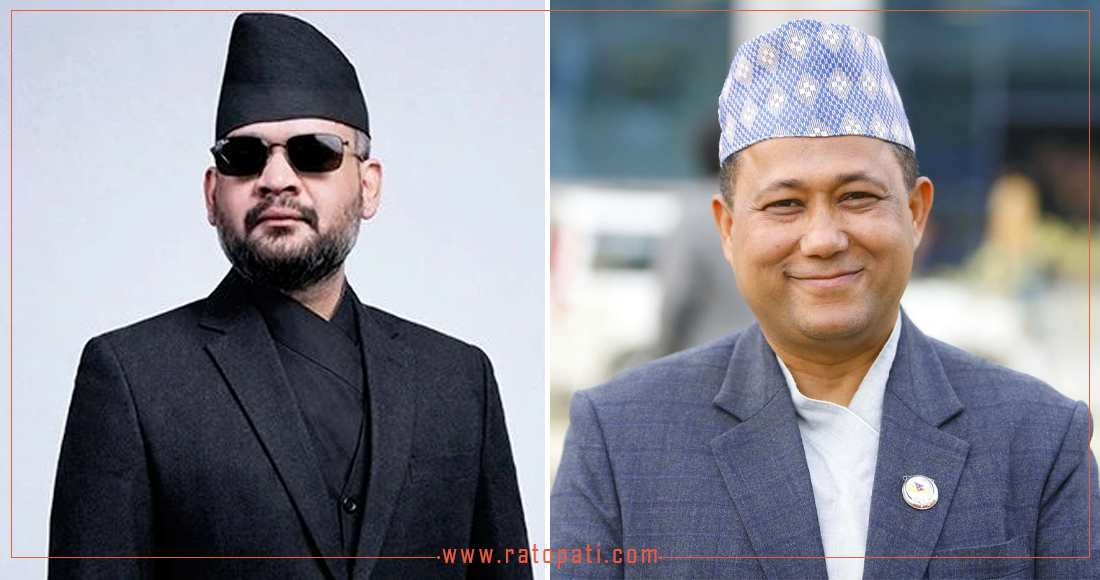
Pokhara Metropolitan Mayor Dhanraj Acharya, a permanent resident of Pokhara-33, has also suggested forming 7 local units. Since the current constitution allows for the restructuring of local levels, a constitutional amendment would be required before any changes are made. Mayor Acharya suggested that Kaski should consist of 1 metropolitan city, 1 sub-metropolitan city, 1 municipality, and at least 3 rural municipalities.
'A detailed discussion is needed on where and how to restructure. Let us start an open debate,' he said. 'In the current situation, Pokhara is geographically about 14 times larger than Lalitpur Metropolitan City and about 10 times larger than Kathmandu Metropolitan City, making this structure practically challenging.' He emphasized that the debate on restructuring should be centered on the long-term interests of Kaski as a whole, rising above regional and short-term interests.
Similar to Lekhnath, demands have been raised for a separate municipality in the Hemja area. Many have suggested maintaining the current Annapurna, Madi, and Machhapuchhre rural municipalities, alongside a Pokhara Metropolitan City, a Lekhnath Sub-Metropolitan City, and a municipality in the Hemja area. This requires a population of over 300,000 for a metropolitan city, 100,000 to 300,000 for a sub-metropolitan city, 40,000 to 100,000 for a municipality, and 10,000 to 40,000 for a rural municipality.
The federal government and parliament play a major role in the restructuring process.
Is it possible?
It is not impossible to restructure in Kaski, but the practical feasibility is quite low. Experts say it will be very difficult to increase the current 5 local units to 7 or more.
The process of the government forming a new commission to redraw the entire map is unusual. Kaski currently has one metropolitan city and four rural municipalities. Experts suggest that instead of changing the structure entirely, it would be appropriate to improve the existing one. In 2073 BS, it was recommended to create 7 local units, proposing the former Pokhara Sub-Metropolitan City as a metropolitan city and Lekhnath as a separate municipality.
Similarly, it was recommended to form a municipality by merging Hemja, Machhapuchhre Rural Municipality, and Purunchaur, to create two units out of Madi, and to keep Rupa as it is. It was also suggested to form one local unit by merging Sarangkot and Dhikurpokhari, and another by merging Kristy, Nirmalpokhari, and Bharatpokhari.
The remaining geography, after removing Dhikurpokhari, was recommended as the current Annapurna Rural Municipality, but discussions did not progress after the structure was built.
Although there has been some pressure from Lekhnath, it has not taken shape. Civil society leaders and representatives of political parties here have concluded that reducing the number of local units was a mistake. 'According to the spirit of federalism, the number of local units should have been reduced. At that time, we were swayed by the concept of Greater Pokhara,' says CPN-UML Kaski Chairman Bain Bahadur Adhikari. 'We could have had 9 units. Looking at resources and budget, it seems necessary to add a few more local units.' He also suggests creating at least 7 units.
Nepali Congress Kaski President Kishordatta Baral also says that a discussion on the number of local units should be held. 'It has not been formally introduced in the party yet. Many have demanded an increase,' he said. 'It should be an institutional matter rather than an individual one. Decisions should also be made institutionally.'
The CPN-UML has already initiated discussions within the party. Chairman Adhikari mentioned that a meeting held on Sunday, attended by provincial assembly members and local unit chairpersons, reached an understanding to begin discussions on this matter. It is reported that informal discussions have also started in other parties.
This specific news has been automatically translated by AI. As a result, there may be some inaccuracies or language errors.