Nepal Faces Fertilizer Crisis Amid West Asia Conflict and Supply Chain Disruptions

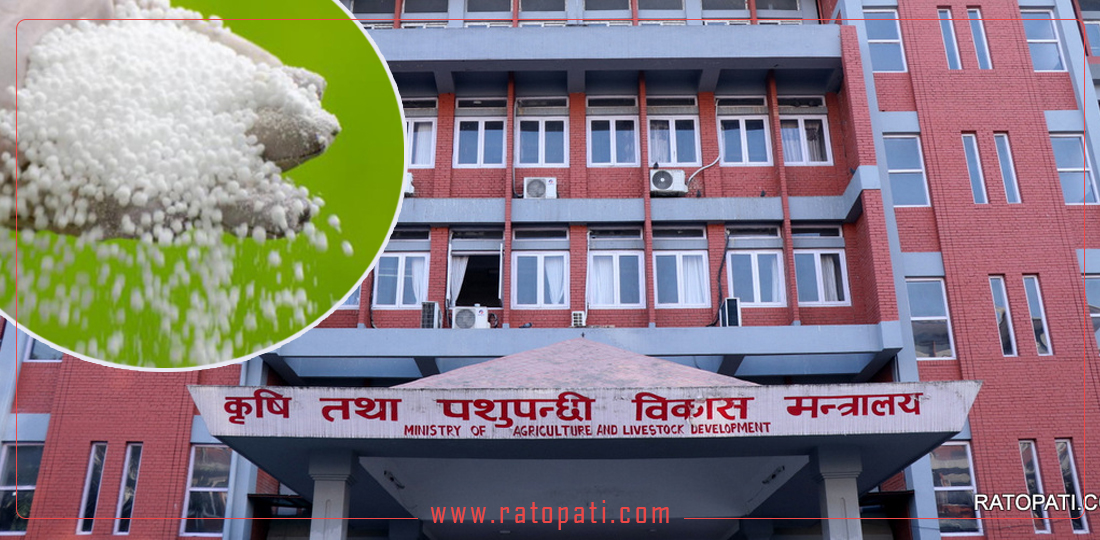
Kathmandu. The ongoing conflict in West Asia has triggered price hikes and supply chain disruptions in the international market, leading to a deepening chemical fertilizer crisis in Nepal. Recent attempts to import urea have failed as shipping companies did not submit bids for government tenders.
According to Bishnu Pokharel, head of Agriculture Inputs Company Limited, two tenders for urea were unsuccessful, and a subsequent 21-day re-tender also failed to attract bidders. The crisis is attributed to the difficulty in sourcing fertilizer in the international market due to the West Asia conflict, with prices surging by 25 to 30 percent. Pokharel notes that the price of chemical fertilizer has increased by $104 per ton in just one week.
Stockpile sufficient only until Ashar
The Ministry of Agriculture and Livestock Development currently holds approximately 150,000 metric tons of fertilizer, which is only sufficient until Ashar. Joint Secretary Dr. Ramkrishna Shrestha stated, 'We have enough fertilizer to last until Ashar, but the situation thereafter appears challenging.'
With other supply routes blocked, the government has sought assistance from neighboring India. Two weeks ago, the government sent a letter through the Ministry of Foreign Affairs requesting the supply of 100,000 metric tons of urea and 50,000 metric tons of DAP under a G2G (government-to-government) agreement.
Following the letter, Indian Ambassador to Nepal Naveen Srivastava has held discussions with the Minister of Agriculture. However, India remains dissatisfied as Nepal failed to collect fertilizer on time according to previous agreements.
Why was fertilizer import from India halted?
In Falgun 2078, the then Agriculture Secretary Dr. Govinda Prasad Sharma and India's Secretary of the Ministry of Chemicals and Fertilizers Rajesh Kumar Chaturvedi signed a five-year G2G agreement.
The agreement stipulated the purchase of 150,000 metric tons of fertilizer in 2022/023, 210,000 metric tons in 2023/024, and 210,000 metric tons in 2024/025. However, the purchases were not made according to the agreement.
Despite repeated reminders from Indian companies to collect the fertilizer, the Nepal government refused, citing a lack of funds. An official from the Ministry of Agriculture said, 'We had to pay in advance to bring fertilizer from India, and at that time we lacked funds, which made it difficult to import, although some supplies did arrive.'
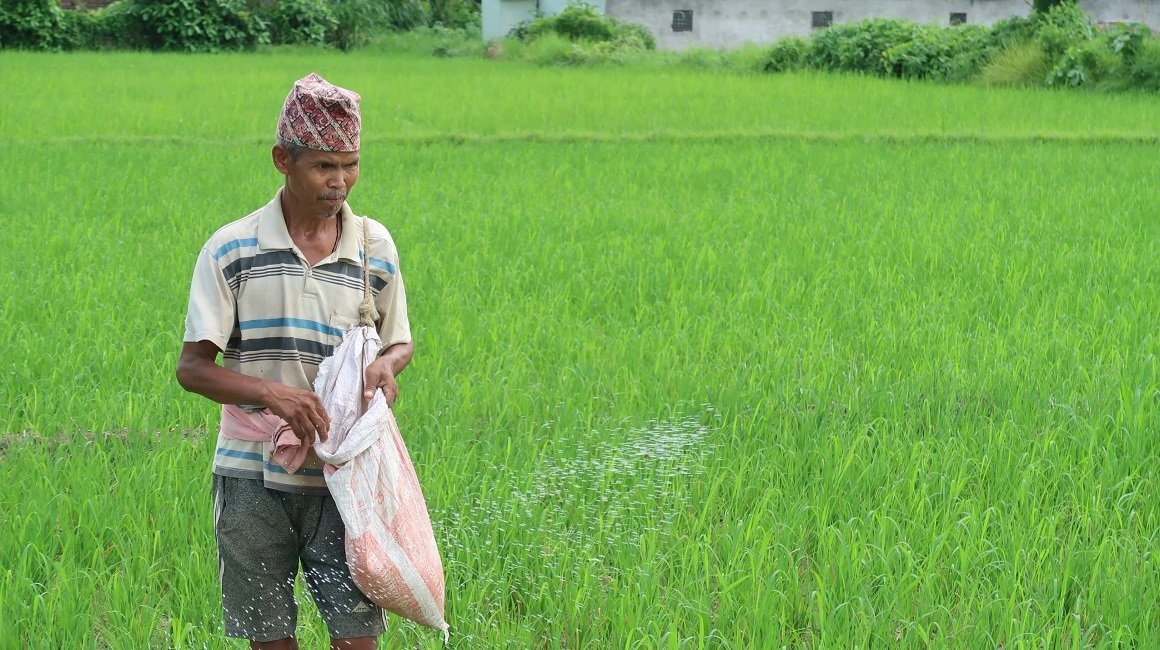
The government has now requested India to provide fertilizer under the same agreement. Shrestha mentioned that if there had been no conflict in West Asia, there would have been no problem this time, as all processes were moving forward, but the sudden conflict has increased challenges.
Although the government announced the purchase of 600,000 metric tons of fertilizer for the current fiscal year, it later decided to import only 550,000 metric tons. The Ministry of Agriculture had prepared to purchase 440,000 metric tons, with 29 billion rupees allocated. While some was purchased, the Ministry of Agriculture later requested the Ministry of Finance to ensure additional resources, but funds were not provided due to election preparations.
A Joint Secretary at the Ministry of Agriculture said, 'If the Ministry of Finance had provided the funds then, all the fertilizer would have arrived in Nepal, and we would not be facing the current problem.' He noted that even with funds available now, the situation makes it difficult to import.
According to him, 85,000 metric tons out of the 440,000 metric tons remain to be imported, and repeated tenders for this have failed.
Impact on global supply chain
Natural gas is the primary raw material for chemical fertilizer production. West Asia is a major global producer of natural gas. The Ministry of Agriculture states that the conflict in this region has increased production costs, leading to a sharp rise in fertilizer prices.
Key maritime routes in West Asia, such as the Strait of Hormuz and the Red Sea, are affected. The Red Sea route is blocked due to the conflict, causing delays for fertilizer-carrying ships, while those rerouting via Africa face increased shipping costs.
The Strait of Hormuz is also restricted by Iran, which has warned against its use. Just yesterday (Saturday), Iran attacked an Indian ship. That route is now completely blocked. If the Strait of Hormuz opens, the problem could be largely resolved, but there are no signs of that happening currently.
Countries like Iran, Saudi Arabia, Qatar, and Oman are producers and exporters of fertilizer and are also affected by the conflict, impacting their production plants and causing a major disruption in the global supply chain.
The Russia-Ukraine war has also impacted the global food supply chain.
This specific news has been automatically translated by AI. As a result, there may be some inaccuracies or language errors.




_Hd6sr8PGgB.jpg)