Rising Inflation Hits Nepali Households Amid Global Economic Pressures

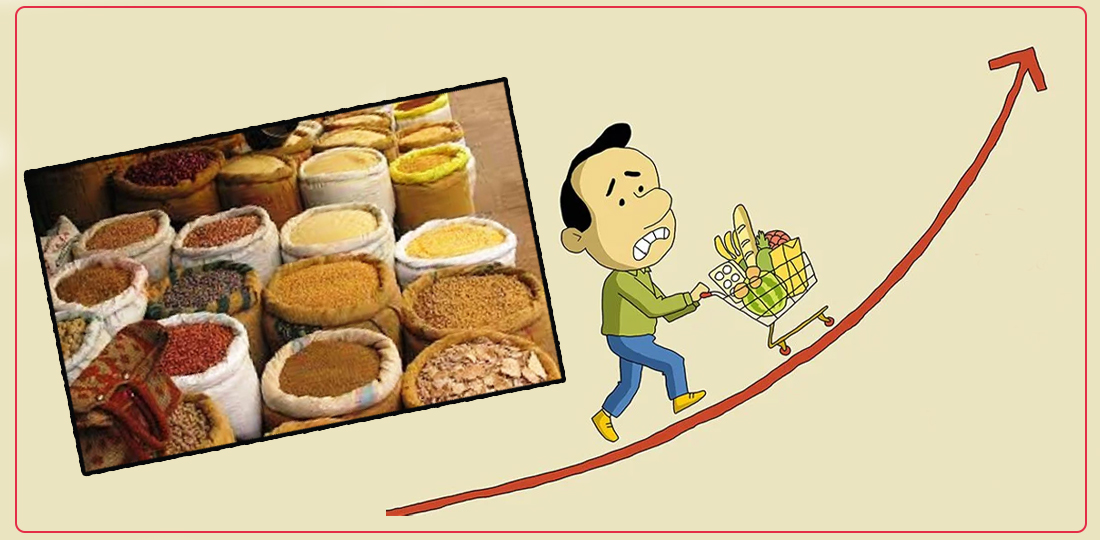
Kathmandu. The ongoing conflict in West Asia is having a direct impact on Nepali kitchens. With the rise in the dollar exchange rate in the international market and increased fuel prices, the subsequent hike in transportation and public transit fares has left ordinary consumers struggling under the burden of severe inflation.
Similarly, there has been a sharp increase in the price of cooking gas, which is heavily used in households. This has directly affected consumers living in urban areas. Furthermore, significant price hikes have recently been observed in food grains, vegetables, and fruits.
An analysis of the market over the last six months (from Mangsir 2082 to Baisakh 1, 2083) shows an abnormal increase in the prices of essential food items, oil, and vegetables. Data collected and published by the Retail Trade Association of Nepal and the Kalimati Fruits and Vegetable Market Development Committee indicate that market prices are spiraling out of control.
Basmati rice prices rise, pulses and legumes show mixed trends
A detailed analysis of retail food prices over the last six months reveals significant fluctuations in the cost of essential kitchen staples. According to the price list published by the Retail Trade Association of Nepal, while the prices of edible oil and Basmati rice have seen a sharp increase during this period, the prices of sugar and some pulses have shown slight declines or stability.
Regarding staple rice, the prices of Jira Masino, Sona Mansuli, and Trishuli Pokhareli rice have remained stable for six months. Jira Masino is being sold at 95 rupees per kg, Sona Mansuli at 75 rupees per kg, and Trishuli Pokhareli rice at 120 rupees per kg. However, the price of long-grain Basmati rice has increased. Priced at 170 rupees per kg in Mangsir, it rose to 175 rupees on Falgun 15 and has been fixed at 180 rupees since Chaitra 15.
The prices of pulses and legumes show a mixed impact. A decline in the price of gram dal has provided some relief to consumers. Having been 170 rupees per kg in Mangsir, it dropped to 150 rupees by Baisakh. Similarly, white peas decreased from 140 to 135 rupees.
Conversely, the prices of mung beans and mung dal have increased by up to 20 rupees per kg. The price of kidney beans (rajma) has also risen from 250 to 260 rupees. The price of small chickpeas reached 140 rupees in Magh but has remained stable at 130 rupees since Chaitra.

Source: Retail Trade Association
Sunflower and soybean oil prices up by 45 rupees
Over this six-month period, consumers have been most burdened by the rise in edible oil prices. 'Raw mustard oil,' which was available for 360 rupees per liter on Mangsir 15, remained stable through Poush and early Magh but began to rise after Magh 15. By Baisakh 1, it reached 375 rupees per liter.
Similarly, roasted mustard oil, which was 430 rupees per liter in Mangsir and Poush, saw a 10-rupee increase in Magh. Although it remained stable until Chaitra, it increased by another 10 rupees in Baisakh. Comparing the six-month period, this oil has seen a total increase of 20 rupees per liter.
Likewise, the prices of sunflower and soybean oil have seen extreme increases. Sunflower oil, which was 250 rupees per liter in Mangsir, dropped to 245 rupees in Poush, but has since risen steadily to reach 295 rupees by Baisakh. Over the six-month interval, sunflower oil has increased by 45 rupees per liter, directly impacting the kitchens of ordinary citizens.
Soybean oil has also seen a 45-rupee increase. The price of this oil remained stable from Mangsir to Magh. Once the price of sunflower oil began to rise, this also followed suit. However, the association did not publish its price in Falgun. Since Chaitra, it has been fixed at 290 rupees.
The price of Nepali ghee has remained completely stable at 1400 rupees per kg over this six-month period. Sugar prices have shown some fluctuations. Priced at 105 rupees in Mangsir and Poush, it dropped to 100 rupees from Magh 15 to Chaitra 1, but rose again to 105 rupees on Baisakh 1. No changes have been observed in the prices of spices such as cumin, coriander, and turmeric powder during this period.
Traders point to the ongoing conflict in West Asia, the rise in the dollar's value in the international market, and disruptions in shipping routes as the main reasons for the price hikes in edible oil. They state that large ships carrying crude oil from countries like Argentina and Indonesia are being delayed, and increased shipping costs have driven up prices.
Here are the prices of oil products:

Source: Retail Trade Association
The price list published by the Retail Trade Association only applies to a limited number of shops. In the open market, traders often use transportation costs and international market trends as excuses to set arbitrary profit margins, leading to increased exploitation of consumers.
For families with fixed incomes and those in the lower class, this inflation, which makes daily survival difficult, is making life increasingly arduous. Consumers complain that the government has failed to take effective steps to control the abnormal price hikes and black marketeering occurring under the guise of fuel price increases and international impacts.
Vegetable prices rise by over 200 percent
An analysis of wholesale price data from the Kalimati Fruits and Vegetable Market from Mangsir 1, 2082 to Baisakh 1, 2083 (Mangsir 1, Poush 1, Magh 1, Falgun 1, Chaitra 1, and Baisakh 1) shows significant volatility in market inflation. Some vegetables and fruits have become up to four times more expensive over the six-month period. While vegetable and fruit prices fluctuate seasonally, traders say that the increased transportation costs due to the West Asia conflict have caused additional price hikes.
Chayote (skus) has seen the highest price increase during this period. With an average price of just 12 rupees per kg in Poush, it reached 55 rupees on Baisakh 1, an increase of 358.33 percent.
Similarly, there has been a sharp surge in the price of green leafy vegetables. Chamsur greens, which were 25 rupees in Falgun, increased by 280 percent to reach 95 rupees. Spinach and green round pumpkin also saw a 200 percent increase.
With the onset of the summer season, the prices of lemons and fruits have seen high growth. Lemons, which were 90 rupees per kg in Magh, increased by 229.63 percent to reach 296.67 rupees in Baisakh. Among fruits, banana prices saw a 200 percent increase, and avocado saw a 154.55 percent increase. Avocado, which was 275 rupees in Mangsir, reached 700 rupees per kg in Baisakh.
The price of green chilies, essential in the kitchen, saw an increase of 180.94 percent, while bell peppers became 127 percent more expensive. Among legumes, the price of yardlong beans increased by 214.29 percent and string beans by 193.33 percent.
These vegetables and fruits have become more than 100 percent expensive

Source: Kalimati Fruits and Vegetable Market Development Committee
According to data from Mangsir 2082 to Baisakh 1, 2083, the prices of items including beans, kiwi, pineapple, and green leafy vegetables have increased by 50 to 100 percent.
Market data shows an 84.62 percent increase in the price of kidney beans (rajma). Rajma, which was 65 rupees per kg in Chaitra, reached 120 rupees in Baisakh. Among green leafy vegetables, mustard greens and rayo greens saw increases of 75 and 53 percent, respectively. Mustard greens and long green pumpkin, which were only 20 rupees per kg in Falgun, reached 35 rupees in Baisakh. Similarly, Jiri greens, which were 35 rupees in Chaitra, increased by 57.14 percent to 55 rupees. Green peas, which were 45 rupees in Chaitra, became 55.56 percent more expensive, reaching 70 rupees.
Among fruits, the price of pineapple has also increased by more than 80 percent. Pineapple, which was 85 rupees in Poush, reached 155 rupees. The price of kiwi increased by 53.06 percent to reach 375 rupees per kg in Baisakh.
Vegetables and fruits that increased by more than 50 percent but less than 100 percent

Source: Kalimati Fruits and Vegetable Market Development Committee
This specific news has been automatically translated by AI. As a result, there may be some inaccuracies or language errors.