Questions Raised Following the Deaths of Two Children


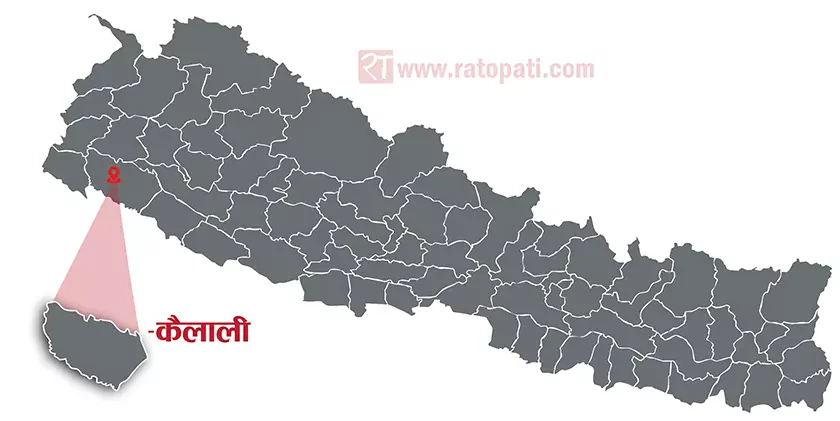
Kathmandu. Five-year-old Deepak Tamrakar and his 8-year-old brother Bhim from Chure Rural Municipality-3, Kailali, passed away on Saturday during treatment after consuming meat from a dead broiler chicken. Their 28-year-old mother, Radhika Tamrakar, and three-year-old brother, Dipesh Tamrakar, who consumed the same meat, are also critically ill and are undergoing treatment at Seti Provincial Hospital.
This is not the first such incident; there have been repeated cases in the past where people lost their lives after consuming meat from dead chickens. In Mangsir 2081, 15-year-old Kamal BK from Bayala, Kamal Bazar Municipality-3, Achham, died in a similar incident. Likewise, in 2076, 15-year-old Pushpa Parki from Jarsaun, Purchaudi Municipality-2, Baitadi, died, and nine other members of the same family fell ill in the same incident.
Despite these recurring incidents, there are complaints that the government does not appear serious, which is why such events are increasing.
What does the government say?
Director General of the Department of Livestock Services, Dr. Umesh Dahal, stated that while it is too early to comment on past events, no issues were found at the farm in the Kailali case. He said, 'As soon as we learned about the children's death after eating the meat, an expert team investigated the farm. Nothing was found during the testing of the chickens and feed there.' He also mentioned that the police are conducting further investigations, and the cause of the incident will be revealed through the findings.
Claims by stakeholders
Various doubts and suspicions are being raised regarding chicken production. It is claimed that drugs are being used in chicken farms to increase weight and make them ready for consumption quickly. During a program on 'Controlling the Excessive and Harmful Use of Antibiotics in Chicken Meat' held last Poush, Sulakshana Rana, Head of the Livestock Department at Animal Nepal, stated that antibiotics are being used in chicken meat. She expressed the view that studies are needed on the dosage and its impact on human health.
The indiscriminate use of antibiotics in chicken meat in Nepal has increased the risk of 'antimicrobial resistance.' After risks to human health were identified from chicken meat, the government completely banned the use of antibiotics in chicken feed starting in 2016. However, various studies have shown that it is still being used on chicken farms.
Arbitrariness of farms
Director General Dahal claimed that antibiotics are only allowed to be used as medicine under a doctor's advice and are banned in any other form. 'There is a provision for legal action if antibiotics are found to be used without a doctor's advice,' he said, claiming that they have not found antibiotics being used in feed anywhere.
However, reports suggest that farm operators and farmers use various types of drugs to increase the weight of chickens. Sources claim that some farms provide drugs not only in feed but also by mixing them in water. A veterinary expert said, 'It has been found that farm operators and farmers are not only using feed and water but in some places, they are even injecting the chickens to make them grow faster.'
He mentioned that since farming is often done by watching social media and YouTube, there is a search for what drugs to use as growth promoters for chickens. 'They use whatever YouTube says. This is why there is a risk in broiler chicken meat,' he explained. 'Even though the use of pesticides in vegetables is banned, vegetables in Kalimati do not appear fit for consumption, and various drugs are being used in chickens as well.'
What kind of drugs are used?
Such drugs are easily available in veterinary pharmacies in Nepal. According to a study by the 'Journal of Advanced Veterinary and Animal Research,' more than 70 percent of veterinary medicine sales occur through retail shops. The top seven antibiotics used in Nepal include tetracycline, enrofloxacin, neomycin-doxycycline, levofloxacin, colistin, and tylosin.
Ampicillin, amoxicillin, ceftriaxone, and gentamicin are the most misused drugs. Similarly, tetracyclines, penicillins, macrolides, streptogramins, aminoglycosides, and sulfonamides are antibiotic groups that should not be used, yet various studies show they are being used in Nepal. Streptogramins are the most commonly used for growth promotion.
Dr. Navraj Shrestha, who worked as a poultry expert at the Department of Livestock Services, says that even though the government has completely banned the use of antibiotics, some small farmers make feed at home, which escapes government oversight. 'It is not possible to go to every farmer's farm and test the feed they make,' he said. 'The government has banned the use of any kind of medicine except on a doctor's recommendation.' He claimed that he has worked in this field for the last 12-13 years and has never found indiscriminate use of drugs during inspections. He said, 'Thousands of samples are tested in laboratories, and it is normal to find such cases in one or two. The government is aware of this and has recommended action against such offenders.'
Global ban
After the indiscriminate use of drugs in chickens under the name of antibiotics began, the European Union banned it as early as 2006. Nepal implemented it only 10 years later.
The World Health Organization has also recommended stopping the use of growth promoters to prevent antibiotic resistance. In the United States, the use of medically important antibiotics as growth promoters has also been banned.
India has banned the use of colistin (an antibiotic) as a growth promoter since 2017. However, the use of other important antibiotics as growth promoters is still ongoing, which the World Health Organization has already recommended banning.
A study has shown that antibiotic use is significantly higher in India than in Nepal. India is the main market for Nepal, and large quantities of chickens, chicks, and eggs are being imported illegally from the border areas.
This specific news has been automatically translated by AI. As a result, there may be some inaccuracies or language errors.