Sher Bahadur Deuba's Political Downfall: From Astrological Hopes to Legal and Party Crisis

Kathmandu. The year 2082 BS proved to be highly 'inauspicious' for former Prime Minister Sher Bahadur Deuba, who is a firm believer in astrological fortune.
During the Gen-Z movement on Bhadra 24, the 79-year-old Deuba was assaulted along with his wife Arzu Rana inside his own residence in Budhanilkantha, and his luxurious home was reduced to ashes. Beyond these disasters, he was stripped of his chairmanship through a legitimate rebellion within the Nepali Congress. Currently abroad for 'medical treatment,' Deuba faces another hurdle: a money laundering case, for which he is on the police's wanted list.
Around Kartik 2074, one of Deuba's statements was quite famous: 'Astrologers have told me that I will become Prime Minister 7 times.'
This statement reflects his deep reliance on astrologers, a trait also evident in his working style and behavior.
To increase his count of terms as Prime Minister, he ignored dissenting voices within his party, forming power alliances sometimes with a rival party like the CPN-UML and other times with the then CPN-Maoist Centre. He became Prime Minister for the fifth time in 078 BS. However, since then, he has been lost in anticipation.
During the Gen-Z movement on Bhadra 23 and 24, Deuba was in collaboration with the UML. Even as a large faction within his own party, led by Gagan Thapa, protested, Deuba did not listen and remained a power partner with UML Chairman KP Sharma Oli.
Prime Minister Oli used to say that he would hand over power to Deuba after running the government for 18 months. Deuba was delighted by the plan to become Prime Minister with a near two-thirds majority after the handover, run the government for a year and a half, and oversee the 2084 elections himself. But that dream of Deuba turned to ashes along with his Budhanilkantha residence during the Gen-Z movement.

After youths took to the streets carrying issues of extreme mismanagement, corruption, and nepotism, Oli's government collapsed within 27 hours, and Deuba's mission to become Prime Minister 7 times was suddenly shattered.
In the current context, the predictions made by his astrologers have also failed. Instead, the rebellion that sprouted within the party after that movement became the main reason for Deuba being ousted in the special general convention held in the last week of Poush. He had a tragic exit from party politics.
To increase his count of terms as Prime Minister, Deuba ignored dissenting voices within his party, forming power alliances sometimes with a rival party like the CPN-UML and other times with the then CPN-Maoist Centre. He became Prime Minister for the fifth time in 078 BS. However, since then, he has been lost in anticipation.
If Deuba had any concern for the party's future, he would have understood the sentiments and demands of Gen-Z and paved the way for a smooth leadership transition. He could have made himself an exemplary leader, an historical opportunity he missed.
In a democratic party that has been able to carry a long legacy due to the contributions of Congress stalwarts like BP Koirala, Krishna Prasad Bhattarai, and Ganesh Man Singh, Deuba should have presented himself accordingly, but he failed repeatedly.
Unable to rise above the circle of his faction, Deuba devised various schemes to distract the group demanding a special or timely general convention for party transformation. Even after setting a date for the regular convention, Deuba postponed it. Consequently, the then General Secretaries Gagan Kumar Thapa and Bishwa Prakash Sharma were forced to organize a special general convention at Bhrikutimandap in the last week of Poush, as demanded by the convention representatives according to the party statute.
The special general convention replaced Deuba. Electing Thapa as chairman with the support of more than 54 percent of the convention representatives was like a magnitude 10 earthquake for the status quo figures and tendencies of the Congress. Yet, the Deuba faction sat as if 'it was not an earthquake at all' and was in no way ready to accept the power and decision of the special general convention. The Election Commission recognized Thapa's working committee on Magh 3. The very next day, Deuba went to knock on the doors of the Supreme Court along with Purna Bahadur Khadka, whom he had given the responsibility of acting chairman.
But with the Supreme Court's ruling on Friday night that Thapa's working committee is legitimate, Deuba has been tragically ousted from party leadership. However, another question and problem arise within the Congress: will the Congress remain intact? Will it move forward united without splitting?
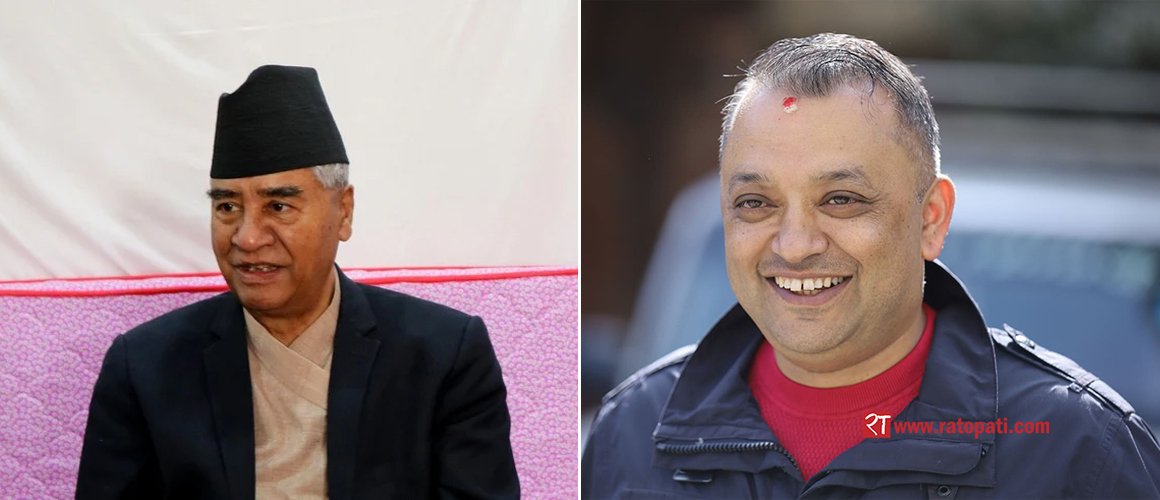
Although in their initial reactions following the verdict, Congress leaders have responded with restraint.
Chairman Thapa has stated that the Supreme Court's decision is not a matter of victory or defeat, but a matter of procedure, process, and democratic practice.
'This decision has created an environment to move forward on a common journey to make the party strong again by uniting all friends of the party,' Thapa wrote on social media, 'I believe that party members and well-wishers, whether inside or outside the country, will now play a positive role for the unity and renaissance of the party with more responsibility from their respective places.'
However, within the party, activities have clearly been divided into two groups over the past 3 months. Leaders of the Deuba faction are unable to accept Thapa. In the meantime, the then acting chairman Purna Bahadur Khadka himself has been issued a clarification.
The meeting of the Congress Disciplinary Committee held on Baisakh 2 had asked for a seven-day clarification. Stating that the clarification asked by the Central Disciplinary Committee is meaningless and ridiculous, Khadka has already signaled that he will not respond.
In such a situation, political analyst Puranjan Acharya believes that even if the Supreme Court rules in favor of Gagan, he does not feel the party will move forward intact until at least the 15th General Convention.
Now, how the establishment faction includes the Deuba faction and what kind of behavior it shows towards them will determine the form of the party's future unity. If the establishment moves forward by presenting a sense of unity rather than victory or defeat, it may be easier to solve political problems.
'Yesterday one dispute was settled, but when the judiciary settles the disputes of political parties, it weakens the political parties; this will remain in history for a long time,' he told Ratopati on Saturday morning.
He believes that while the court's decision has settled the legal dispute, the political dispute remains. Chairman Gagan Thapa has given an initial reaction to take everyone along, but Acharya does not see the dispute subsiding immediately. According to him, such disputes should have been resolved politically before the court's decision came.
_QmnTgWvxnF.jpg)
'The dispute will not end now. If it ends through the general convention, that is the best. If the dispute had been resolved before the court's decision, it would have taken a certain path,' Acharya told Ratopati, 'After the court's decision, politics does not accept it, but the cadres have to accept it.'
He argues that after the Supreme Court's decision, the main responsibility of taking the party along has now fallen on the shoulders of the establishment faction. Acharya said, 'After the Supreme Court's decision, the establishment faction will have the biggest role in bringing everyone together.'
As Acharya said, now how the establishment faction includes the Deuba faction and what kind of behavior it shows towards them will determine the form of the party's future unity. If the establishment moves forward by presenting a sense of unity rather than victory or defeat, it may be easier to solve political problems.
Leader Bimalendra Nidhi, who was defeated as a candidate with a ticket signed by Chairman Thapa in the House of Representatives election held on Falgun 21, has already expressed that he cannot accept the Supreme Court's decision. 'I was not in favor of the special general convention yesterday and I am not in favor of the special general convention today, my point is clear,' he says. Like Nidhi, many leaders are unable to accept the working committee elected from the special general convention.
Similarly, another leader Dr. Prakash Sharan Mahat says that although the court's decision did not come as expected, there is no alternative but to accept it now, and the responsibility of uniting the Congress has now fallen on the shoulders of Chairman Thapa. 'There is still a question mark on how the Nepali Congress party will move forward politically,' says Mahat, 'If a common formula of understanding acceptable to all can be put forward for the 15th General Convention and the convention preparation committee can be formed with everyone's understanding, then the party can be united. The responsibility to take the initiative for that is theirs (Gagan Thapa's).'
General Secretary Pradeep Paudel, elected from the special general convention, says that including internal unity within the party and the sentiments of well-wishers is the main need of the hour. Reacting to Ratopati immediately after the Supreme Court's decision, he mentioned that the main responsibility of the leadership is to take all the cadres of the party and well-wishers who have faith in the Congress along. He said that they would take the initiative for that.
But there are two sides to a coin; if the Deuba faction continues its series of past mistakes and takes an unnecessary stand, how will the problem be solved!
If the Deuba group, which showed undemocratic character by ignoring the special general convention mandatory according to the party statute, does not accept the Supreme Court's decision, it is proven that they do not believe in the rule of law, and the place that will lead the Deuba group to is the second version of 'Nepali Congress Democratic'.
Is Deuba destined to bear the stigma of splitting the party for the second time? I wonder what the 'astrologer' would say?
This specific news has been automatically translated by AI. As a result, there may be some inaccuracies or language errors.