Two Decades On: Nepal's Transitional Justice Remains Unresolved

Kathmandu. Nearly 20 years after the signing of the Comprehensive Peace Accord between the then-rebel 'CPN-Maoist' and the state, 16 governments have been formed in the country. However, the work related to transitional justice, as mentioned in the peace accord, has yet to reach a conclusion.
With the Rastriya Swatantra Party (RSP) securing a comfortable majority in the House of Representatives election held on Falgun 21, the traditional parliamentary parties that actively supported the peace process, including the Maoists, have faced a significant defeat. Consequently, there is growing concern about how the issue of transitional justice will proceed.
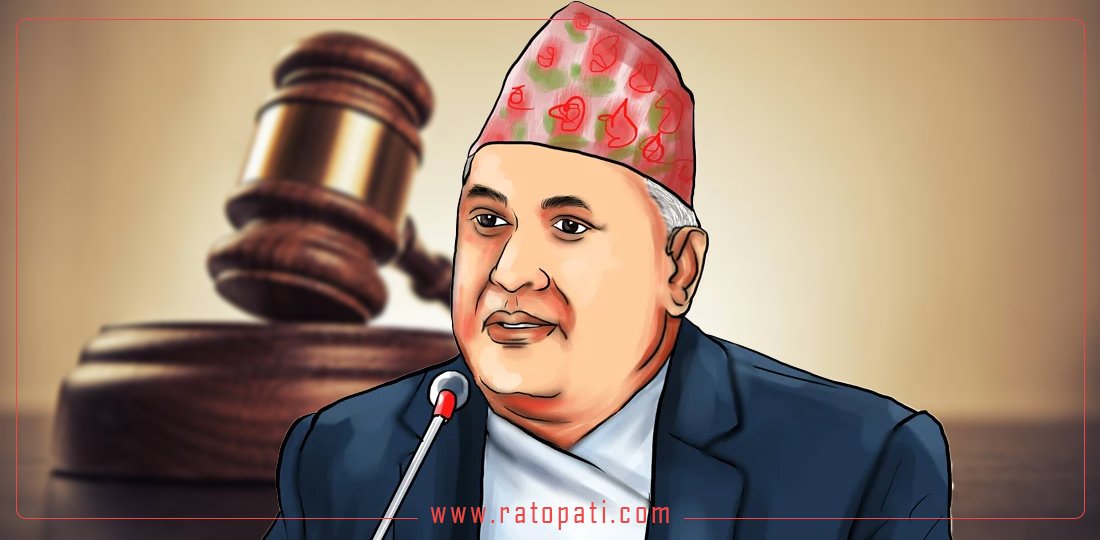
Former Prime Minister Dr. Baburam Bhattarai stated that the Comprehensive Peace Accord is not the concern of any single party but a responsibility of the state. He emphasized that the government should not fail to complete the transitional justice process quickly.

'The work of the Truth and Reconciliation Commission and the Commission of Investigation on Enforced Disappeared Persons, formed according to the Comprehensive Peace Accord after the armed struggle for the establishment of a federal democratic republic in the country, has not been completed even after nearly two decades,' said former Maoist leader Bhattarai. 'As a result, tens of thousands of martyrs, disappeared persons, the injured, the disabled, and their families have been deprived of justice and reparations until now. This is not just the responsibility of one party but the entire state. Therefore, this government, with full authority, should not fail to take ownership and complete it quickly.'
On Falgun 1, 2052, the armed conflict against the state was launched under the leadership of the then-Maoist Chairman (currently the coordinator of the Nepali Communist Party) Pushpa Kamal Dahal 'Prachanda'. During the ten-year (2052-062) armed conflict, approximately 17,000 people lost their lives. Hundreds were disappeared and thousands were injured or disabled during that period. To end the armed conflict, a 12-point agreement was signed between the seven parliamentary political parties and the Maoists on Mangsir 7, 2062. Based on that agreement, the People's Movement of 2062/063 ended the autocratic monarchy.
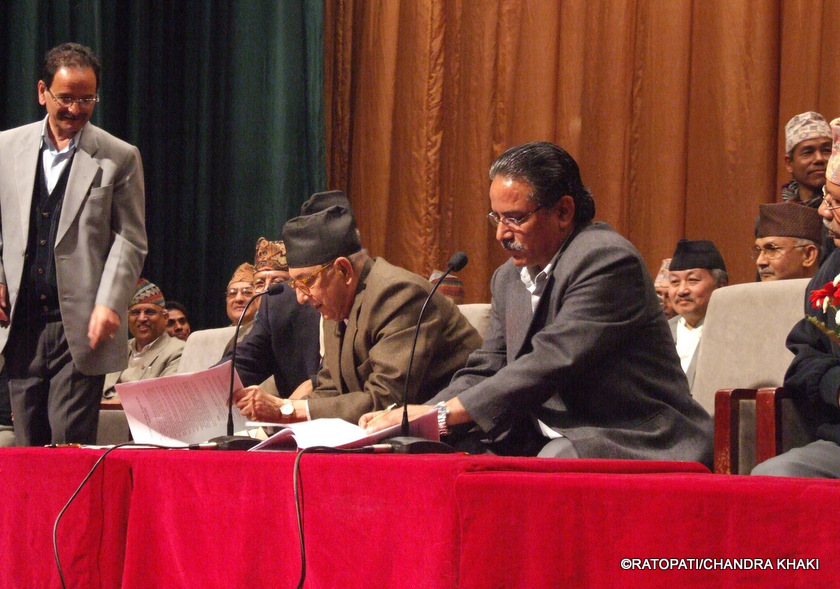
The Comprehensive Peace Accord was signed between both parties on Mangsir 5, 2063, to manage the Maoist army, handle weapons, and rehabilitate conflict victims into society. Although the integration of Maoist combatants and the management of weapons were completed, even after 20 years, the families of those killed during the armed conflict and the injured/disabled have not received proper relief and management.
Over the last two decades, almost every government has pledged to conclude transitional justice, but the work has failed to gain momentum. There is growing concern about how the government led by the new party, RSP, will resolve the issue that the partners of the peace process and the signatories of the peace accord could not complete in 20 years.
However, the RSP has included the completion of the remaining work of transitional justice in its election manifesto. 'We will immediately start work to complete the remaining tasks of transitional justice and implement the 'Judicial Fund Act, 2046' in a timely manner,' it is mentioned in point no. 12 of the manifesto.
- We have started the homework: Burlakoti
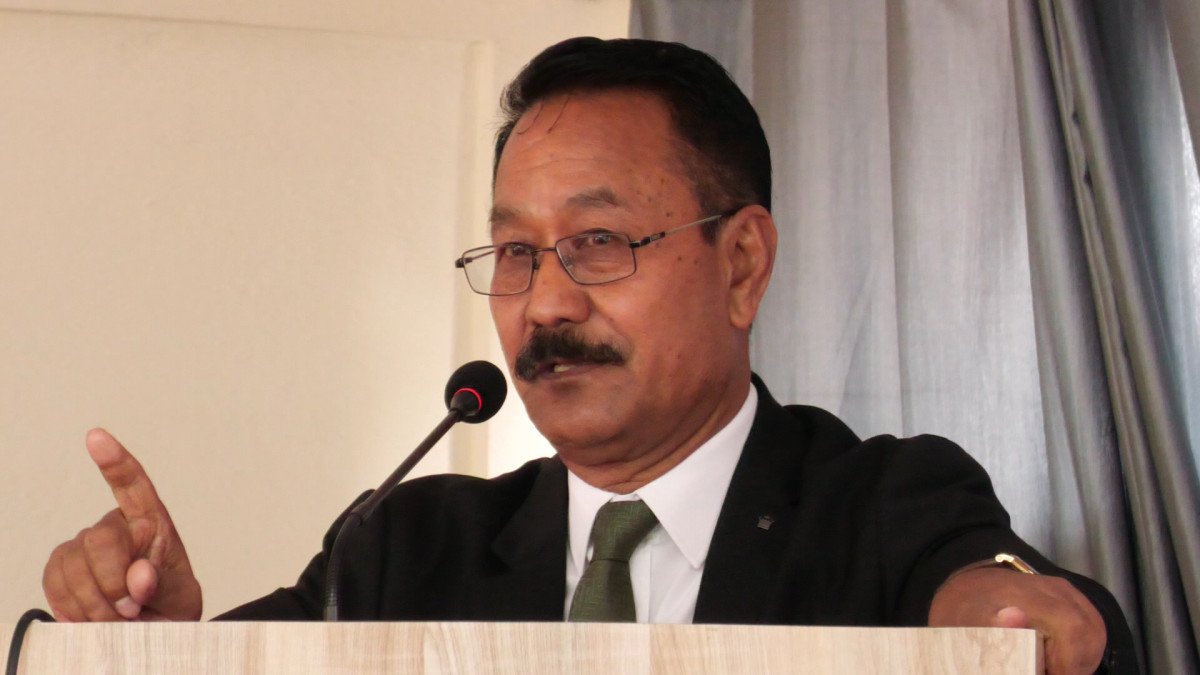
RSP General Secretary Kabindra Burlakoti clarified that although the issue of completing the remaining work of the peace process was missing from the agenda made public by the government, it would be included in the next phase. He informed that internal discussions are ongoing to provide a mandate to the government from the party's side.
'We have started the homework to bring transitional justice to a quick conclusion. We have not formed a task force just to discuss with the conflicting parties, but the party and the government will work on this by taking it seriously,' said Burlakoti.

16 governments have been formed since the Comprehensive Peace Accord. On behalf of the government, the then-Prime Minister Girija Prasad Koirala signed the peace accord. Prachanda signed on behalf of the Maoists.
Former Congress President Koirala passed away in 2066. Since then, Sushil Koirala from Congress became Prime Minister once, and Sher Bahadur Deuba twice. Similarly, Prachanda from the Maoists became Prime Minister three times and Baburam Bhattarai once. From the UML, Madhav Kumar Nepal and Jhalanath Khanal became Prime Minister once each, and KP Sharma Oli four times.
Former Chief Justice Khil Raj Regmi and Sushila Karki became interim Prime Ministers. During this period, the integration of Maoist combatants and the management of weapons were completed under the mediation of the United Nations, but none of the governments formed previously showed interest in the management of conflict victims. However, in Baisakh 2071, the Commission of Investigation on Enforced Disappeared Persons and the Truth and Reconciliation Commission were formed to collect complaints.
About 60,000 complaints have been filed with the commission. The commission, which was given a four-year term, became inactive without completing the peace process. Since then, the Congress, UML, and Maoists have used it as a tool for political interest, leaving thousands of conflict victims deprived of judicial resolution. The bill to amend the Commission of Investigation on Enforced Disappeared Persons and the Truth and Reconciliation Commission Act, 2071, was approved by the parliament and certified in Bhadra.
The cabinet meeting held at the end of Baisakh 2082 appointed officials for both commissions, but the then-government led by KP Oli fell due to the movement in Bhadra. Even before that, the peace process could not be concluded despite the appointment of commission officials twice.
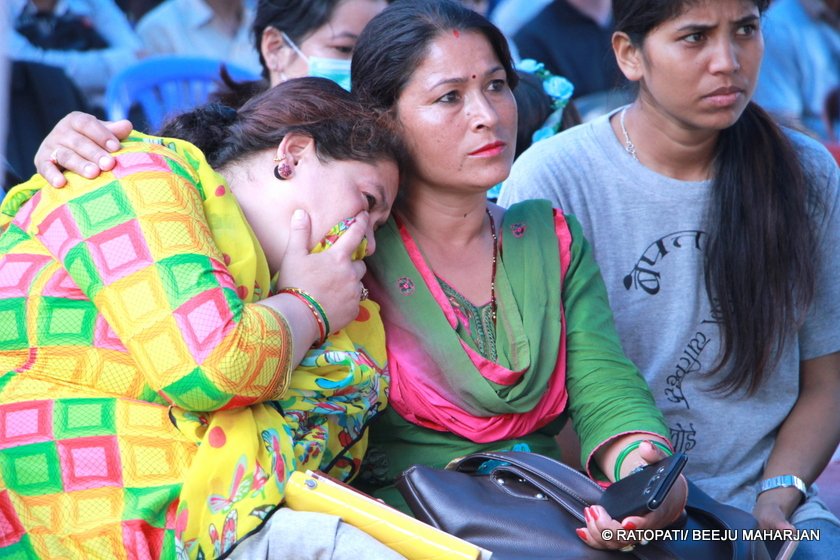
- Victim families say - We are waiting for justice
Ram Sunuwar from Kavre is a member of a family that was a victim during the 10-year armed conflict. His sister, Maina Sunuwar, was taken from their home in Kavre to an army barracks on Falgun 5, 2060, where she was tortured and killed.
Ram said, 'We have been in pain for a long time. We have not been able to feel justice yet.'
He mentioned that they are not in a condition to live in the village. 'We have not been able to cremate my sister's body yet. Her skeleton is still at the Teaching Hospital. We are still waiting for justice,' he said.
He shared that sometimes government officials come and poke at their wounds. 'No one is asking what kind of pain we are going through,' he said, 'The case is still pending in the Supreme Court. We are living in the hope that we will get justice one day.'
Ram believes that victims must get justice. He said, 'Our desire is for a peaceful and harmonious society. We are not the only ones in society; everyone is equal. No one should have to face oppression and injustice.'
He shared that their future has been ruined due to not getting justice for a long time. 'The family has been shattered. Our pain is with us. Still, we are waiting for justice,' he said, 'It was a happy family with mom, dad, brothers, and a sister. Everything was destroyed. We have hope for justice from the current government.'
Hundreds of families like Ram's are waiting for justice.
- 'Stalled due to political interest'
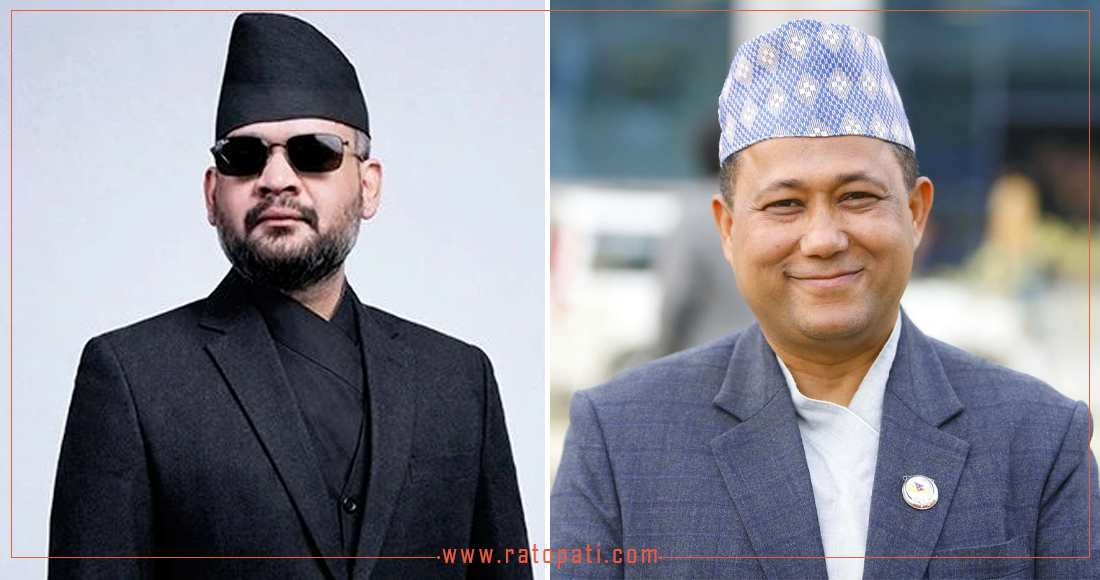
Former Minister and conflict expert Rajendra Singh Bhandari clarified that victims have not been able to get justice due to the tendency to keep the issues of the movement on hold.

'There was a tendency to always keep the issues of the movement on hold instead of resolving them. There was a tendency to end things by going into negotiations to get all parties to agree before the situation became favorable,' said Bhandari, 'Suddenly, it also worked to change the political course of the country.'
As an example, he mentioned that the then-Maoists had launched an armed movement with 40 demands and said they would establish the dictatorship of the proletariat, but after ending up in an agreement, such important aspects were overshadowed.
Bhandari's analysis is that the transition period has been prolonged mainly due to political interest. He clarified that if it does not turn into a contribution to the country's prosperity or judicial resolution, the transition period will always remain a transition period.
'Basically, political interest is the main factor. First, they raise issues aggressively. Later, as their revolutionary spirit weakens, they become centered on power. Once centered on power, it becomes a matter of depending on the balance of power. When talking about the balance of power, there are three sides: the government side, the opposition, and the rebel side,' said Bhandari.
Former Minister and Congress leader Purna Bahadur Khadka said that since the commission has been formed after amending the act, the commission should move the process forward according to the law. Admitting that there was a delay in concluding the peace process during the previous governments, Khadka suggested the government work in a way that victims get justice and reparations.
'The Truth and Reconciliation Commission has been formed. Victims must get justice. There must be a provision for reparations. There was some delay from previous governments in concluding the peace process. The commission has been formed, rather than just the government and the conflicting parties. Now it will act according to the law,' said Khadka.
Meanwhile, Nepali Communist Party spokesperson Agni Prasad Sapkota said that if transitional justice does not reach a conclusion for a long time, questions could be raised about the nation's prestige. He claimed that the Maoist-led government had taken initiatives multiple times to complete the remaining work of the peace process, which is why the TRC bill was passed by the parliament and became an act.
Sapkota said that the responsibility of concluding the remaining work lies on the shoulders of the current government. 'The government has just been formed. The government should discuss with the parties and bring transitional justice to a conclusion,' he said, 'Since it is a matter connected to the nation's prestige, our goal is to reach a logical conclusion by discussing with all stakeholders, including the government, political parties, and civil society.'
This specific news has been automatically translated by AI. As a result, there may be some inaccuracies or language errors.