Supreme Court to Hear Nepali Congress Legitimacy Dispute


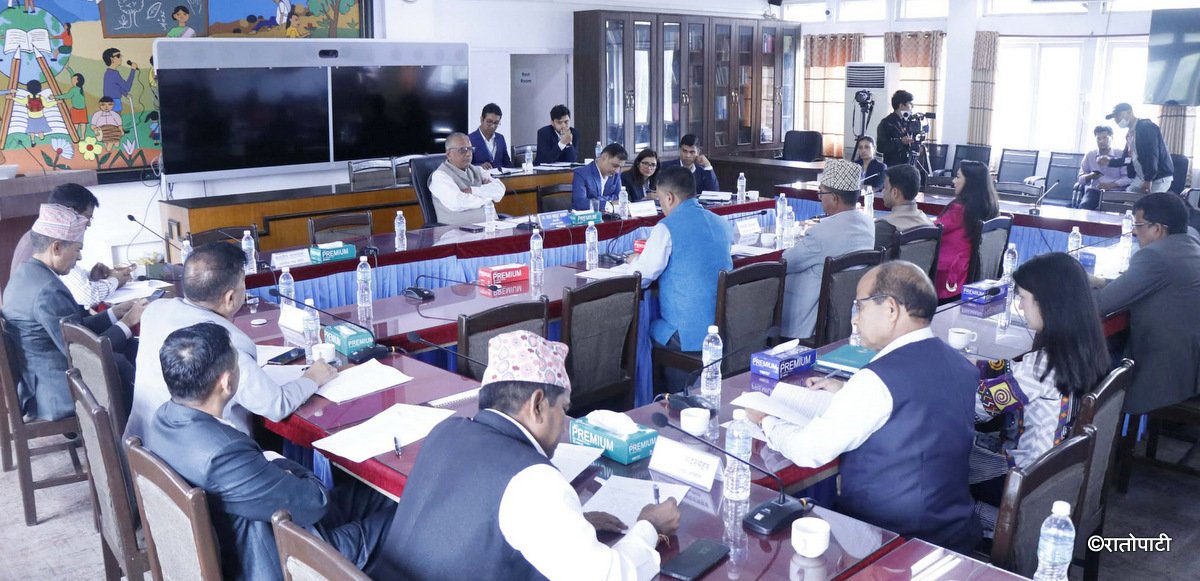
Kathmandu. The Supreme Court is set to deliberate on six key constitutional and legal complexities regarding the legitimacy dispute within the Nepali Congress. The case is being heard today by a joint bench of Justices Sharanga Subedi and Nripadhwaj Niraula.
Following the Election Commission's decision to recognize the leadership of Gagan Thapa, elected during the Nepali Congress special general convention, the faction led by Sher Bahadur Deuba filed a writ petition against the Commission. While a single bench of the Supreme Court initially declined to issue an interim order, it raised significant constitutional and legal questions.
Previously, a single bench of Justice Sunil Kumar Pokharel had ordered the respondents to provide written responses regarding these six constitutional and legal issues:
1. Whether a special general convention called by the General Secretaries under Article 27 of the party statute—after the Central Working Committee failed to convene it within three months as requested by 40 percent of representatives under Article 17(2)—is valid and can obtain legitimacy under Section 51 of the Political Parties Act, 2073.
2. Whether decisions made by a special general convention, even if the process of calling it is questioned, can be updated under Section 51 of the Political Parties Act, 2073.
3. Whether the petitioners, whose four-year term had expired and was extended under Article 43, can challenge the majority decision of the very representatives who elected them on 2078.8.28, and whether an order can be issued against the Commission's decision.
4. Given the lack of an appellate provision against Election Commission decisions under the Political Parties Act, 2073, whether this court can exercise its extraordinary jurisdiction to review the factual findings of the Commission's decision made under Section 51(1)(2).
5. Whether it is appropriate to issue an order to halt election processes for the House of Representatives due to a leadership dispute within a political party (Nepali Congress).
6. To what extent can this court, through its extraordinary jurisdiction, intervene in the decisions made by the Commission under Sections 48 and 51 of the Political Parties Act, 2073, while considering the guidelines set by Article 269(4)(a) of the Constitution of Nepal?
This specific news has been automatically translated by AI. As a result, there may be some inaccuracies or language errors.