Siruwa Pawani Festival Begins with Enthusiasm in Eastern Nepal

Jhapa. The 'Siruwa Pawani' festival, the largest and most prestigious celebration of the indigenous Rajbanshi community in Eastern Nepal, has begun today with great joy. Celebrated annually on Baisakh 1, 2, and 3, this festival is a shared celebration for the Rajbanshi, Tajpuriya, and Gangai communities.
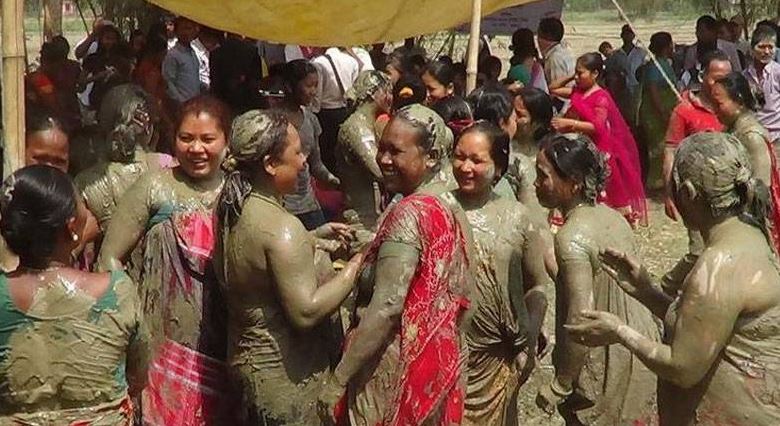
The three-day festival is marked by 'Jal Siruwa' on the first day, 'Kado Siruwa' on the second, and 'Rang Siruwa' on the final day. According to Atmaram Rajbanshi of Gaurigunj, the first day, Jal Siruwa, involves splashing water on one another to share intimacy. The tradition continues on the second day with splashing mud (kado) and on the third day with exchanging greetings by applying vermilion.
On the first day, women prepare a special dish by mixing seven types of green vegetables, known locally as 'Saat Sagi'. There is a unique tradition of eating this vegetable, prepared on the first day, with 'Panta Bhat' (leftover rice) on the second day. Additionally, consuming 'Athiya Kera', a banana variety with medicinal properties, is a key feature of the festival. Considered beneficial for digestive issues and diarrhea, this banana is almost mandatory during Siruwa Pawani.
In this festival, which is celebrated with the wish that no one suffers from illness throughout the year, there is a special tradition of building a 'Ghatosari' in public places to sing hymns. Community members visit local Gramthans and riverbanks to perform prayers and participate in various programs that reflect their original culture.
The Rajbanshi community, known for its distinct language, attire, and glorious history, primarily resides in Jhapa, Morang, and Sunsari. According to the 2078 census, the total population of the Rajbanshi community in Nepal is 132,564. This festival has further strengthened the social harmony and cultural diversity of the region.
This specific news has been automatically translated by AI. As a result, there may be some inaccuracies or language errors.