Cuba: A Nation Caught Between Imperial Pressure and Revolutionary Legacy

Last month, when the power went out in Cuba, ten million people were plunged into darkness. At that time, American media repeated the same old narrative – a failed communist state, a crumbling regime, and an opportunity. They failed to see Cuba as it sees itself. They could not see what we lose when the logic of solidarity is replaced by the logic of occupation.
Last week, the sanctioned Russian oil tanker Anatoly Kolodkin arrived at the port of Matanzas in Cuba. This was the first oil supply in three months, discharging 730,000 barrels of crude oil. However, this is only enough to cover Cuba's energy needs for 10 days. Another Russian tanker, 'The Sea Horse', which was heading toward Cuba, diverted to Venezuela.
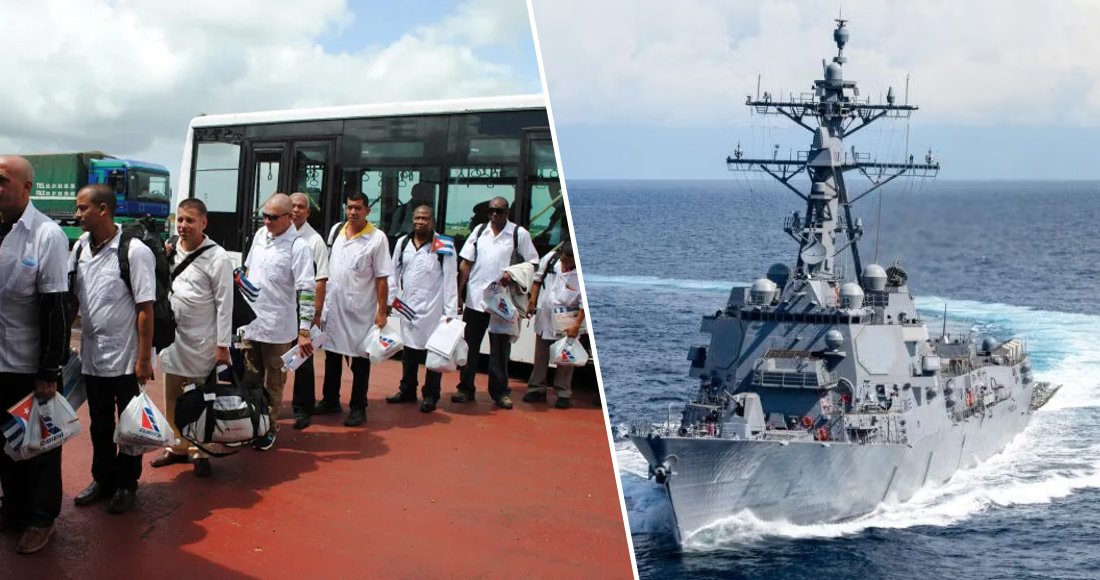
The United States continues its blockade on Cuba, deploying warships and other military vessels in the Caribbean Sea.
US President Donald Trump, embroiled in sexual assault allegations, has declared his expectation of gaining the honor of taking control of Cuba. He stated, 'Whether I liberate it or occupy it – I think I can do whatever I want.' While this sounds crude and politically manic, Trump has merely brought the hidden imperialist agenda to the surface.
The US blockade is not just killing a failed state; it is crushing a six-decade-long history of a small island that considered the freedom of others its own responsibility.
This is a master-slave mentality, and not coincidentally, it is also the mentality of a rapist. Historically, the US has applied this same mentality for over a century to an island 90 miles from Florida that always sought ways to reject American dictates. With the help of Secretary of State Marco Rubio (whose primary desire is exactly this), it seems Trump has finally obtained the 'honor' of bringing Cuba to its knees.
This is the most important thing to understand about why American official and journalistic analysis is failing: the problem is not information. The problem is the imperialist perspective that views Cuba not as the protagonist of its own story, but as a small pawn to be played by others.
I first arrived in Cuba in the late 1990s. I was a young anthropologist interested in Latin American studies, having read that class is more important than race in this region. But Cuba shattered this illusion within a few days. Walking the streets of Havana, Cuban police repeatedly stopped me and asked for my 'ID card'. My physical appearance clearly placed me in the category of a young Black Cuban man – who was subject to surveillance. This logic was familiar to me. I already knew the fate of driving in the Deep South of the US or walking while Black in America.
When American policymakers and casual observers look at Cuba, they often see only a simple postcard. The Cuba of the postcard was not the Cuba I documented.
In Cuba, the risk was slightly lower. There was no fear of police choking me or shooting me point-blank as in my own country (the US). But the trend was the same: the state was questioning a Black body and deciding who he was before he even spoke. I went to see Cuba, but Cuba was already watching me.
The state apparatus that interrogated me, the watchful eyes of hotel security and university officials, and most importantly, the conversations with Black Cubans and Black exiles who embraced me, created another perspective on Cuba.
When American policymakers and casual observers look at Cuba, they often see only a simple postcard. The Cuba of the postcard was not the Cuba I documented. The Cuba I knew was filled with people like 'Domingo' (a pseudonym). He struggled in Havana's informal economy - selling fake cigars or doing other work to earn Euros/Dollars. Meanwhile, his wife was barely managing the household.
They were familiar with both types of blockades: one, the blockade imposed by the US since 1962, and the other, the blockade felt from the Cuban government against its own people - the silence of racial and economic discrimination, which the revolution covered with slogans of equality but never fully respected.
Racialized migration meant that most white Cuban families who left the country after the 1959 revolution sent plenty of remittances to their relatives.
I asked Cubans (both academics and ordinary people) countless times: 'If the revolution made everyone free, why are Black people still marginalized and why is their presence in the state apparatus and good professions so low?' The answer came from hardcore materialists. The language was Marxist. The situation was said to be created by capitalism, but the blame for failure was placed on Black people themselves. They would deflect. 'It is not determined by the state,' one woman said, 'it is their own tendency.'
This analysis was not just a perspective I encountered during fieldwork; it was structural. Although the Cuban government does not release official racial statistics, a 2020 survey of over a thousand Cubans by sociologists Katrin Hansing and Bert Hoffmann confirmed my conclusion. Anyone living in Cuba could see: structural inequalities based on racial lines, similar to pre-revolutionary times, were returning.
Racialized migration meant that most white Cuban families who left the country after the 1959 revolution sent plenty of remittances to their relatives. The gradual opening of private enterprise benefited those who had capital to invest, and this was directly linked to race.
In July 2021, I was stunned when Cubans (mostly Black people from poor neighborhoods) took to the streets of Santiago de Cuba and Havana. This was the largest protest since the revolution. Mocking the revolutionary slogan 'Patria o Muerte' (Homeland or Death) used to defend national sovereignty, they chanted 'Patria y Vida' (Homeland and Life) and 'Abajo la Dictadura' (Down with the Dictatorship). The Cuban government responded with mass arrests and decades-long prison sentences. Human rights records show that the brunt of this repression also fell on Black Cubans.
Still, to understand what is being destroyed in this crisis, you must look beyond the immediate humanitarian catastrophe to what Cuba did for the world outside its borders.
Due to mismanagement, repression, and surveillance mechanisms that punish dissent, a specific kind of despair and fatigue has emerged as the 67-year-old revolutionary promise slowly hollows out.
This is why many Cubans (including people I know and respect) now expect very little from the Cuban state. Acknowledging this does not mean supporting the US Navy warship chasing ships carrying fuel for Cuban hospitals. Expressing sorrow for the potential of the Cuban revolution (the real and significant progress it made in building an egalitarian society) does not mean welcoming the power coming to replace it.
Still, to understand what is being destroyed in this crisis, you must look beyond the immediate humanitarian catastrophe to what Cuba did for the world outside its borders. You must look at Jamaica, which received over 4,700 Cuban health workers over a 30-year period, who treated over 8 million patients and performed over 74,000 surgeries. Due to US pressure, that agreement has now ended, 277 Cuban health workers have been recalled, and the people dependent on those clinics are forced to silently suffer the consequences.
You must look at West Africa in 2014, when Cuba sent over 300 doctors and nurses to fight Ebola. It was the world's largest single-nation contribution by an island facing a tight blockade, to countries that could offer nothing in return but solidarity.
The Cuban government was and is repressive, racially contradictory, and economically devastated. All those things are true. But it kept American revolutionary Assata Shakur alive and free for decades even after a $2 million US bounty was announced.
You must look at Angola in the 1970s, where Cuban troops fought on the side of liberation movements against apartheid South Africa. That chapter of internationalism defined the entire path of the freedom struggle in Southern Africa.
Nelson Mandela knew this well. One of his first trips after being released from prison in 1991 was to Havana, where he met Fidel Castro and addressed him as a friend of the African people - at a time when supporting Cuba was neither safe nor profitable.
This is what the blockade puts at risk. It is not just the immediate suffering of ten million people that demands urgent attention, but the 60-year-long history of global solidarity standing against the logic of empire that it is tearing apart.
The Cuban government was and is repressive, racially contradictory, and economically devastated. All those things are true.
But it kept American revolutionary Assata Shakur alive and free for decades even after a $2 million US bounty was announced. After Hurricane Katrina, when levees broke in Black neighborhoods in the US, Cuba offered to send its doctors. After Washington refused, Cuba sent its doctors to earthquake-ravaged Pakistan, where they set up 30 field hospitals in remote and poor areas. During the COVID-19 pandemic, when Western pharmaceutical companies were making exorbitant profits, Cuba developed its own vaccines and partnered with the 'Global South' through equitable technology transfer agreements.
Both sides of the story are true simultaneously. The Left is sometimes too romantic about the first truth, Cuba's internationalism. On the other hand, the Center and the Right have shown willful ignorance toward the importance of the second truth. The current time demands a perspective that does not have the luxury of choosing only one of these two.
Cuba was a contemporary and important global actor yesterday and remains so today.
The current crisis can be understood neither through imperialist certainty nor through the eyes of romantic solidarity. Black Cubans are finding a path between these two truths, for whom 'indecision' is not just a philosophical stance, but a necessity of their lives.
The current US administration portrays Cuba as a failed state waiting for 'liberation'. But this narrative does not answer the question, 'Liberation for whom and from what?' From Ronald Reagan to Joe Biden, from times of warming relations to cooling, from the warmth of the Obama era to the coldness of the Trump era - Cuba always refused to extradite Black American revolutionaries like Assata Shakur and Nehanda Abiodun. This refusal was on behalf of those Black people around the world who understand what it means to be at war within their own homes and who respect those who stand to fight.
Cuba recognized those people for whom the US criminal justice system has never represented justice. Cuba had to pay the price for this refusal. The current blockade is, in part, a means of retaliation for that very thing.
The same US administration that tried to kidnap Venezuelan President Nicolás Maduro in January and cut off Cuba's primary oil supply is simultaneously at war in Iran, where the conflict and the obstruction of the Strait of Hormuz have reshaped the global energy market. This situation is why Russian tankers are crossing the Atlantic Ocean carrying oil for Cuba despite US Navy surveillance.
Cuba was a contemporary and important global actor yesterday and remains so today. Only the perspective on Cuba has been distorted - by the 60-year-long blockade narrative, which turned the island's failures into America's agenda and its global solidarity into America's headache.
The solution to the current crisis is not some new deal imposed from above, and certainly not an 'occupation' in the name of 'liberation'. It requires an evaluation of what Cuba saved for its Caribbean neighbors, Africa and the 'Global South', and Black people scattered across the world. At the same time, an honest accounting of what its tired, compromised, and contradictory revolution could not do is equally necessary.
Anatoly Kolodkin stopped in Matanzas. A second Russian tanker is being loaded. 650 people have arrived in Cuba as part of a group called Nuestra America (named after an 1891 essay by Cuban poet José Martí, who imagined an imperialism-free Latin America).
Pan-African movements from three continents have said about Cuba's 60-year record: You did not preach to us; you showed us by doing.
The fist opens on its own terms, and the world that Cuba built through solidarity is still appearing, slower than a warship, with fewer weapons, but steadily moving toward the Cuban island.
Jafari S. Allen is a professor in the Department of African American and African Diaspora Studies at Columbia University. He is the author of two acclaimed works published by Duke University Press: ¡Venceremos? The Erotics of Black Self-making in Cuba and There's a Disco Ball Between Us: A Theory of Black Gay Life.
This specific news has been automatically translated by AI. As a result, there may be some inaccuracies or language errors.