Chaitalo Bhitaulo: A Timeless Tradition of Sibling Bonds in Sudurpashchim

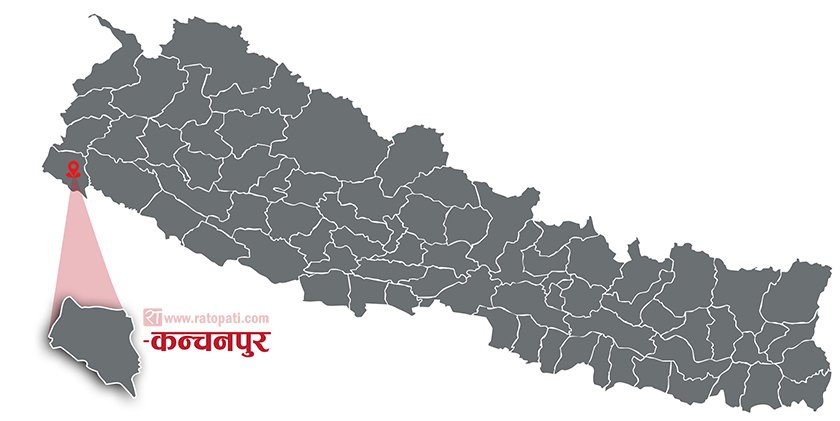
Kanchanpur. The Sudurpashchim region is currently buzzing with the excitement of 'Chaitalo Bhitaulo'. It is a traditional custom in this region to visit sisters during the month of Chait. Following this tradition, a growing number of brothers are seen carrying gifts, including sweets, fruits, and clothing, for their married sisters.
Among the crowd was Suresh Prasad Bhatta, an education officer working in Shuklaphanta Municipality, Kanchanpur. After finishing his office work, he was preparing to head out with gifts for his sisters. "My sisters are nearby, but my heart does not feel at peace without visiting them during this month of Chait, which comes once a year," Officer Bhatta said, expressing his sentiments. "The tradition and blood ties of our Sudurpashchim are such that once Chait begins, we must visit our sisters with gifts. This is not just a gift; it is a strong pillar of our culture."
"I had been watching the road since morning, wondering if my brother would come," said Manju Bohara of Shuklaphanta Municipality-2, emotionally. "I cannot describe in words the happiness I felt when my brother entered our courtyard with a small gift in his hand."
According to her, regardless of the size of the gift, the presence of brothers brings a sense of enthusiasm and affection. She mentioned that she shares joys and sorrows with her brother, cooks delicious food for him, and sends him off.
As the month of Chait draws to a close, this tradition is not only prevalent among the hill communities of Sudurpashchim but is equally popular in the neighboring Indian regions of Kumaon and Garhwal. There, it is called 'Bhitauli' or 'Chhapri'. In Kumaoni culture, 'Bhitauli-Chhapri' is an extremely intimate tradition that defines the sacred relationship between brothers and married sisters.
The word 'Bhitauli' means meeting or gift, while 'Chhapri' (Daliya) is the bamboo basket or container in which the gifts are placed and carried to the sister's home. According to cultural experts, it is believed that this tradition entered Sudurpashchim through Kumaon and Garhwal in India. The origin of Chaitalo Bhitaulo is deeply rooted in the difficult geographical conditions and social structure of that time.
Previously, modern means of communication and transportation were not available. It was customary to marry daughters off far from their maternal homes, into families with similar castes and customs. Due to the lack of road facilities, it was not always possible to meet, as it required weeks of walking up and down hills. In such a situation, this Chaitalo tradition developed as a means to visit the daughter's home at least once a year and inquire about her well-being.
According to Tarkaraj Bhatta, an expert on Sudurpashchim culture, it was very difficult to secure food in the past. Since little grain was produced in the fields and the economic condition was weak, it gained social recognition with the aim of bringing nutritious food to sisters that would last for some time at least once a year.
He said, "The month of Chait was considered a time of scarcity. In this dry season, when old grains were running out and new crops were about to ripen, the gifts brought by the maternal family were a great support for the sisters. If no one from the maternal home could come, it was a matter of great sorrow for the sister. In the old days, the main gift was 'Satu' (roasted flour)."
According to him, grains like maize and wheat were roasted in fire and ground in a mill to make fine flour, which was then fried in ghee with jaggery or molasses and coconut to prepare 'Satu'. Since this 'Satu' was very nutritious, eating a handful and drinking water provided energy for the whole day. As it did not spoil while traveling and was easy to carry, 'Satu' was considered the best gift of that time. This dish was also used by people who migrated to the Terai with their cattle during the winter.
With the passage of time, people's lifestyles changed, and the form of gifts also changed. "With the passage of time, people's lifestyles have changed," added expert Bhatta. "Its impact is clearly visible in the form of gifts given during Chaitalo Bhitaulo. While there was a tradition of giving 'Satu' earlier, later a trend of taking traditional dishes made at home with ghee, such as Selroti, Puri, Malpua, Kheer, Halwa, Batuk, and Mana, began. Recently, due to the increasing influence of the market, the form of gifts has become completely modern."
Nowadays, brothers give fruits, sweets, expensive clothes, and cash as 'Dakshina'. In cities, when some cannot meet in person, they continue this tradition by sending money through mobile banking, and brothers living abroad send gifts online.
It is customary for the family to share the gifts brought by the brothers with neighbors as well. It is said that there is an old tradition of gossiping about what each brother brought. Jeevan Dhami mentioned that the tradition of staying overnight and chatting when sisters or aunts come to visit is now fading away.
Another interesting and historical aspect of the month of Chait is the singing of 'Chait'. Individuals from the Damai community go from house to house from the beginning to the end of the month of Chait, playing the 'Hudko' and singing 'Chait'. Along with the 'Hudko', the singers, wearing bells and 'Chamar' (yak tail), present songs containing historical sagas, stories of heroes, and tales of bravery in their own traditional style.
It is customary to give vermilion, tika, grains, and money on a plate as a sign of respect and gift to those who sing 'Chait'. When singing 'Chait', a couple (man and woman) sings together. The man plays the 'Hudko' and sings the saga, while the woman accompanies him in the song.
"Along with the rhythm of the song, the context of folk tales comes in between," said cultural expert Laxmi Raj Joshi. "It describes the spring season, the tradition of brothers visiting sisters, and historical events, which has given this festival musical and historical height." He mentioned that this practice is now fading away.
"Young people have not shown curiosity to learn from the elders. Since those who know how to sing and play the 'Hudko' have migrated elsewhere due to weak economic conditions, the tradition of playing the 'Hudko' and singing is slowly fading into the shadows," he said. This tradition is not limited to blood relations only. Teacher Ammar Bahadur Khati said, "Even those who do not have their own brothers are visited by uncles or close relatives with gifts. During these visits, there is talk of the joys and sorrows of the whole year, and family relationships become even stronger."
This festival also has its own religious and cultural beliefs. Although it is permissible to give 'Bhitaulo' throughout the month of Chait, Tuesday, Saturday, and Chaturdashi are considered inauspicious, so gifts are not given on these days. It is also not customary to visit during childbirth or when a relative has passed away.
In some districts of Sudurpashchim, there is a tradition of visiting daughters and sisters in the month of Magh as well, but in Darchula and Baitadi, the month of Chait is the main time for 'Bhitaulo'. Teacher Khati said that since the literal meaning of 'Bhitaulo' is connected to meeting, it increases a sense of belonging and intimacy in the sibling relationship.
"Married sisters wait for their brothers, remembering the bitter-sweet moments spent together in childhood," he said. "After the maternal family comes to visit, the sisters also cook delicious food according to their means and show respect, which makes the relationship between the maternal and in-law families harmonious."
According to local resident Dharma Bahadur Saud, this tradition is not just a means of exchanging gifts, but a medium to increase emotional connection, social support, and cultural continuity.
Even amidst modern lifestyles, rapid urbanization, and the increasing influence of technology, Chaitalo Bhitaulo has maintained its existence. While it is still celebrated in its original form in rural areas, its form has been somewhat modified in cities. According to Saud, while the dishes have changed according to time and circumstances and the medium of gifts has changed, its core message—love, affection, and responsibility—remains as strong as ever today.
The month of Chait is also a very charming time in terms of nature. With the arrival of spring, the forests and hills are covered in greenery with new leaves. The sweet sound of the cuckoo makes the environment even more lively. In this pleasant weather, the arrival of the maternal family adds enthusiasm and joy to the hearts of the sisters. This vibrant tradition of Sudurpashchim is binding not only the relationship between siblings but the entire society together in a single thread of love and intimacy.
This specific news has been automatically translated by AI. As a result, there may be some inaccuracies or language errors.