Nepal Government Forms High-Level Committees to Review Hydropower PPA and Licensing Policies


Kathmandu. The government has decided to proceed with Power Purchase Agreement (PPA) and licensing matters only after receiving reports from newly formed high-level committees.
Minister of Energy, Water Resources and Irrigation, Biraj Bhakta Shrestha, has established two high-level committees to ensure the ministry's operations are result-oriented, transparent, and accountable, specifically addressing the long-stalled PPA issues.
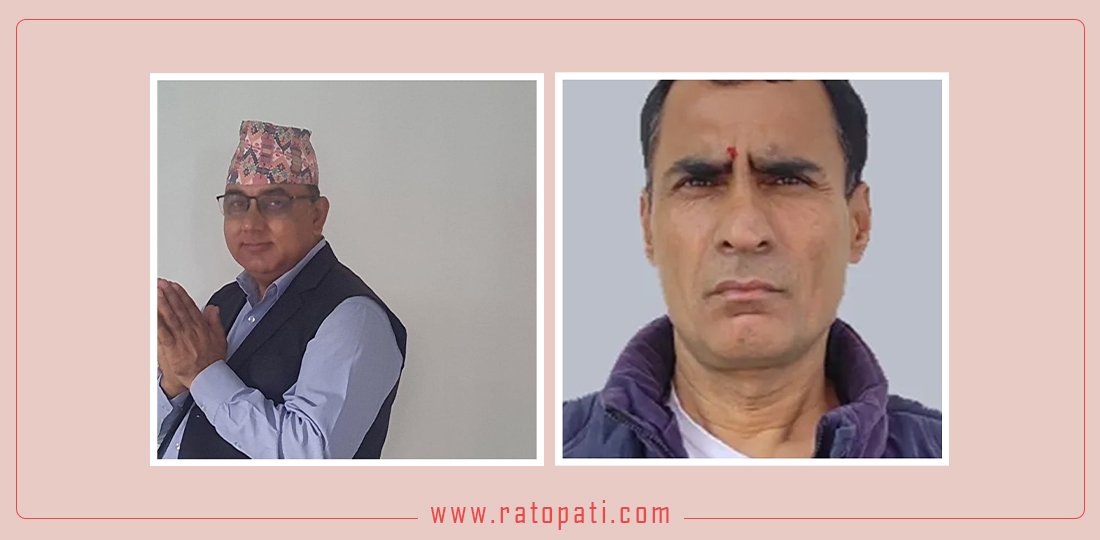
A six-member committee, coordinated by Joint Secretary Dr. Rajan Bhattarai, has been formed to analyze the current status of PPAs. This committee will identify policy, technical, economic, and legal hurdles in the PPA process conducted by the Nepal Electricity Authority (NEA) within 120 days.
Minister Shrestha plans to transition to a new process once the committee recommends necessary reforms to make the PPA process more transparent, competitive, and aligned with national interests.
Additionally, Minister Shrestha has formed a five-member committee led by Joint Secretary Mohan Shakya to review the current status of licenses issued by the Department of Electricity Development.
The committee led by Shakya has been mandated to analyze the status and progress of all licenses issued to date, identifying policy, technical, economic, and legal weaknesses within the licensing process.
Minister Shrestha has instructed the committee to provide suggestions for policy and legal reforms to make the license distribution process more transparent, competitive, and aligned with national interests.
Energy Minister Shrestha has consistently stated that he will proceed based on the committee's report to ensure transparency in PPAs for hydropower generation.
Meanwhile, the private sector has not viewed the Energy Minister's actions positively. The private sector argues that while the government should immediately open and proceed with PPAs, forming a study committee without their participation is not a constructive step.
Prakash Dulal, Deputy General Secretary of the Independent Power Producers' Association, Nepal (IPPAN), has questioned the effectiveness of the committee formed by the Energy Minister. He stated that there is little chance of the committee, which has been given 120 days to submit its report, producing meaningful results.
He remarked, 'What results can be expected when only government employees sit for discussions without involving the private sector?' He emphasized the need for broad consultation for effective policies.
Dulal noted that if such committees were effective, Nepal would have made significant strides in energy development over the last three decades. Highlighting the private sector's dominance in Nepal's energy sector, he pointed out that out of the approximately 4,100 megawatts of electricity currently being produced, the private sector's contribution is 3,200 megawatts.
According to him, the private sector has already signed PPAs for projects equivalent to about 14,000 megawatts. He claimed that among the additional 16,000 megawatts of projects, most have private sector investment and are awaiting PPA approval.
'Any report coming from this committee without listening to the voice of the private sector will be one-sided and ineffective,' said Dulal. He emphasized the need to focus on the 'take-or-pay' model for PPAs.
Dulal stressed that the PPA should be opened immediately in accordance with the Rastriya Swatantra Party (RSP) manifesto.
Meanwhile, the current fiscal year's budget included a provision that PPAs would be signed under the 'take-and-pay' model only after market assurance. Following protests from the private sector upon the introduction of this provision, the budget was passed with a commitment to make changes in Parliament.
Although the then Finance Minister Bishnu Prasad Paudel committed in Parliament to removing the 'take-and-pay' provision, it was not removed from the 'Red Book' (budget document). Since it was not removed policy-wise, the Nepal Electricity Authority maintained its stance of not signing agreements under the 'take-or-pay' model, insisting on the 'take-and-pay' model until electricity export is guaranteed.
The current fiscal year's budget mentions that electricity from run-of-the-river hydropower projects will be purchased only on a 'take-and-pay' basis. Point 227 of the budget states, 'A policy will be adopted to sign power purchase agreements in a way that balances electricity production and consumption. Power purchase agreements for run-of-the-river projects will be signed according to the take-and-pay concept.'
The NEA has maintained that it cannot conduct PPAs outside of this provision as it is still mentioned in the budget. The PPA process has not been able to move forward as the NEA insists on following the policy provision in the budget. However, with the formation of the new government, the Energy Minister is preparing to proceed based on the report of the study committee.
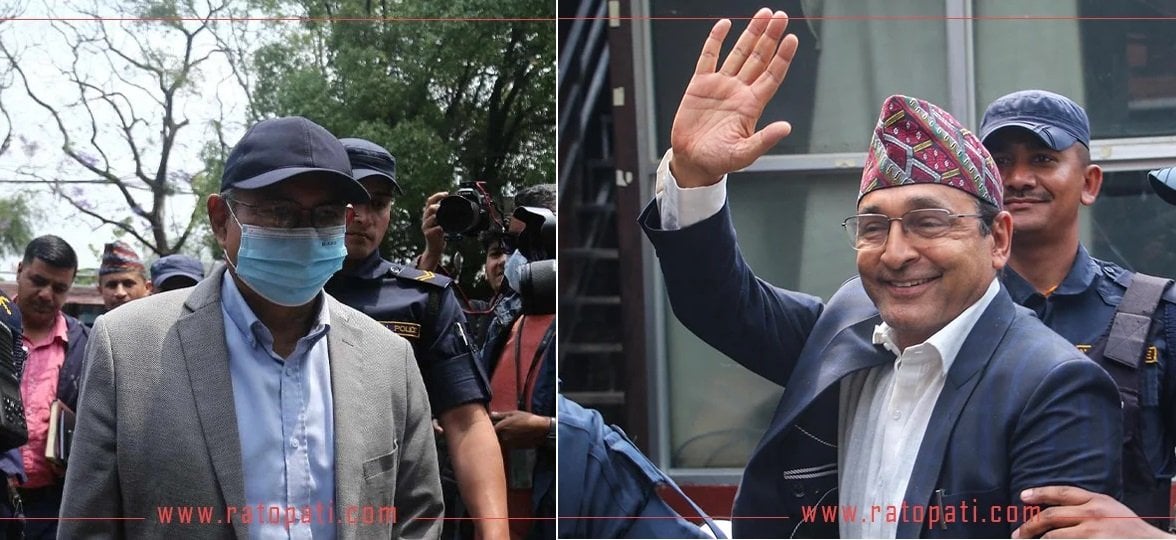
Hitendra Dev Shakya, Executive Director of the Nepal Electricity Authority, who has been stating that further PPAs cannot be moved forward until access to electricity and sales are guaranteed, said he would comment only after the report of the committee formed by the Ministry of Energy is received.
He stated that it would be clearer only after the committee formed by the government to study PPA issues submits its report. He said, 'The Ministry of Energy has formed a committee to study. What does the committee's report say? What is the ministry's directive? The NEA will proceed based on that.'
The NEA has been conducting PPAs primarily under the 'take-or-pay' (must pay whether electricity is taken or not) provision so far. However, the NEA did not want to sign PPAs under the 'take-or-pay' model, citing limited domestic consumption and limited capacity of the existing cross-border transmission line for exports to India.
According to the NEA, PPAs for a total of 15,200 megawatts have already been signed, including those currently in operation, under construction after PPA, and those in preparation for construction. A total of 15,126 megawatts of projects are in the pipeline for PPA, including 6,699 megawatts awaiting PPA after connection agreements and 8,426 megawatts that have applied for PPA.
Energy producers accuse the NEA of trying to discourage the private sector by adopting such policies. IPPAN Deputy General Secretary Dulal said that the stance taken by the NEA in the past based on the policy in the budget was merely an excuse to discourage the private sector and obstruct hydropower development.
A long-term agreement has already been signed between the governments of Nepal and India to export 10,000 megawatts of electricity in 10 years.
- Projects under construction and those with signed PPAs
According to the Electricity Authority, about 190 projects with a capacity of about 5,700 megawatts are currently in various stages of construction under the leadership of the private sector. Once these projects are completed, they will more than double Nepal's energy production capacity.
There are an additional 90 projects that have completed power purchase agreements with the Electricity Authority but are awaiting financial management. The total capacity of these projects with signed PPAs is 2,266 megawatts.
So far, 17 projects promoted by the Authority are in operation. The total production capacity of these projects is 565.55 megawatts. An investment of about 101.72 billion rupees has been made in these.
This specific news has been automatically translated by AI. As a result, there may be some inaccuracies or language errors.