Nepal's Major Trade Unions Protest Government Proposal to Abolish Labor Rights

KATHMANDU. Major trade unions have condemned the government's proposal to abolish trade unions, labeling it an 'undemocratic move' that violates the constitution and international labor laws.
Accusing the state of attempting to strip workers of their rights to mask its own managerial failures, union leaders warned that this could jeopardize Nepal's international reputation and economic benefits like 'GSP Plus'. Arguing that trade unions are not obstacles to development but rather victims of the state's weak implementation capacity, they pledged to unite beyond party affiliations.
Their strategy includes nationwide demonstrations on May 1 (Labor Day) and internationalizing the issue at the ILO conference in Geneva. Leaders warned the government to rectify its decision and engage in constructive dialogue, emphasizing that this is a fight for democracy and worker dignity.
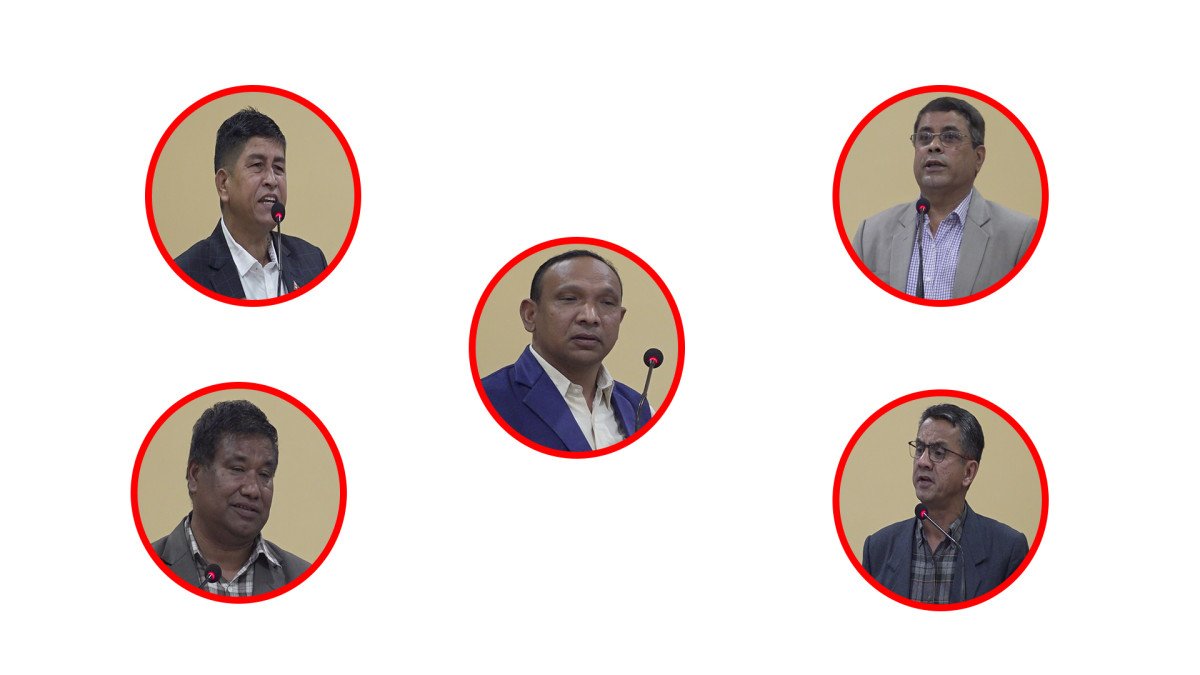
Binod Shrestha, President of the General Federation of Nepalese Trade Unions (GEFONT), stated that the proposal contradicts constitutional provisions and fundamental labor rights. Speaking at a program organized by the Joint Trade Union Coordination Center (JTUCC), he vowed not to compromise on the rights to freedom of association and collective bargaining, as guaranteed by Article 34 of the Constitution of Nepal.
Shrestha argued that interfering with trade union rights violates international commitments, specifically citing ILO Conventions 87 (Freedom of Association), 98 (Collective Bargaining), and 144 (Tripartite Consultation). He warned that such actions could lead to the loss of 'GSP Plus' facilities as Nepal prepares for graduation from the least developed country status in 2026.
Recalling the suppression faced during the direct rule of the monarchy, Shrestha labeled the current government as 'populist and anarchist'. He expressed frustration with political leaders who utilize worker power during movements but fail to acknowledge them afterward. He announced plans for a massive demonstration on May 1 and a sustained legal and constitutional battle.
He stated, 'Any attempt to prevent workers from joining organizations of their choice is unconstitutional; we will face it head-on. International facilities contingent on human rights and good governance could be halted if trade union rights are violated; the government must be serious.'
Dhan Bahadur BK, Senior Vice President of the All Nepal Trade Union Federation (ANTUF), clarified that trade unions are not the cause of Nepal's development issues or labor problems. He noted that out of Nepal's nearly 30 million population, over 11.7 million are working-class people, and their struggles stem from the state's weak implementation mechanisms, not unions.
BK accused new political forces and populist leaders of distracting the public from real agendas. While acknowledging internal weaknesses within unions, he emphasized that the criticism of unions being 'party-affiliated' is merely a diversionary tactic, noting that since political parties run the state, workers are compelled to voice their concerns through them.
Vice President BK said, 'The main problems today are the lack of minimum wage, non-implementation of accident insurance, maternity leave, and pension rights. It is the state's duty to implement these. Instead of concrete plans for poverty alleviation and job growth, talking about abolishing trade unions is just a populist scheme. Populists worldwide declare unions that question them as enemies, and the same is happening in Nepal.'
Punya Prasad Dhakal, President of the Professional Federation of Nepal, stated that the government has provoked the movement by deciding to abolish trade unions. He urged the government not to attempt to 'dismantle' the unions, claiming that the plan mentioned in the 12th point of the government's 100-point agenda violates the constitution and international labor laws.
He noted that the government is attempting to curtail the right to organize granted by Article 17 (Right to Freedom) and Article 34 (Right to Labor) of the Constitution of Nepal 2072. He blamed major political parties for failing to pass the Federal Civil Service Act even 11 years after the promulgation of the constitution.
He expressed outrage at the tendency to blame trade unions for corruption and poor governance within the administration. He called on all unions to observe May 1 as a show of strength against the government. Suggesting that the government should not be arrogant about its numbers (182 seats), he advised them to engage in dialogue through the official trade union management.
He said, 'The government is trying to go against the Labor Act, the Trade Union Act, and the ILO conventions signed by Nepal. This right is not a gift on a platter; it is an achievement gained through long struggle. I am affiliated with the CPN-UML, but past governments led by UML, Congress, and Maoists only used trade unions without wanting to regulate them through laws. Now, they want to uproot the very unions they once relied on. We will not remain silent. If the government does not listen, a storm of street protests will be created.'
Tejendra Prasad Karki, Senior Vice President of the Nepal Trade Union Congress (NTUC), called on political parties to defend trade union rights. Warning that leaders attempting to erase the existence of unions would be punished in the upcoming elections and on May Day, he cautioned that political leaders would pay a heavy price if constitutional trade union rights are attacked.
Karki accused the current government and major parties of trying to defame unions by calling them 'begging bowls' and 'puppets'. He stated that workers would not accept leaders who do not stand for the fundamental trade union rights enshrined in Article 34, Clause 3 of the Constitution. Expressing concern over the lack of attraction for the new generation (Gen-Z) toward unions, he urged all workers to unite under the JTUCC leadership, rising above party loyalty.
He said, 'Yesterday, leaders of the seven parties asked for our help at Hotel Radisson to topple King Gyanendra's autocratic rule. We took to the streets on the condition that our jobs would be reinstated. But today, those same leaders are bent on taking away our rights. If the party does not speak clearly on trade union rights, we will not invite any Congress leader as a chief guest on May Day. We have already defeated leaders with anti-union images in conventions, and we are ready to punish them again.'
Uttam Prasad Katuwal, President of PSI-NCC, warned of a strong resistance against any government attempt to cut trade union rights. He objected to the government's attempt to introduce a Civil Service Act via ordinance that would eliminate trade union rights, alleging it violates the Constitution of Nepal 2072, the Civil Service Act, and ILO conventions 87 and 98.
Targeting the Rastriya Swatantra Party's manifesto pledge to remove 'party-affiliated trade unions', Katuwal clarified that they are not party-affiliated but legally registered civil servants who passed the Public Service Commission exams. Opposing the growing frustration among employees and arbitrary transfers, he emphasized that all six trade unions must unite to protect the right to collective bargaining.
President Katuwal said, 'A media outlet reported that an ordinance is being brought to remove trade union rights. If this is true, we must engage in strong resistance. There is no time to hesitate or argue. We are not party-affiliated unions; we are legally registered organizations. No democratic government can take away trade union rights. We are ready to move forward unitedly. Every drop of water makes an ocean.'
Noting that the movement of Nepali employees has international support, he requested other affiliated organizations to create similar pressure.
This specific news has been automatically translated by AI. As a result, there may be some inaccuracies or language errors.