Prime Minister Balen Shah Implements Strict Governance Reforms at Singha Durbar


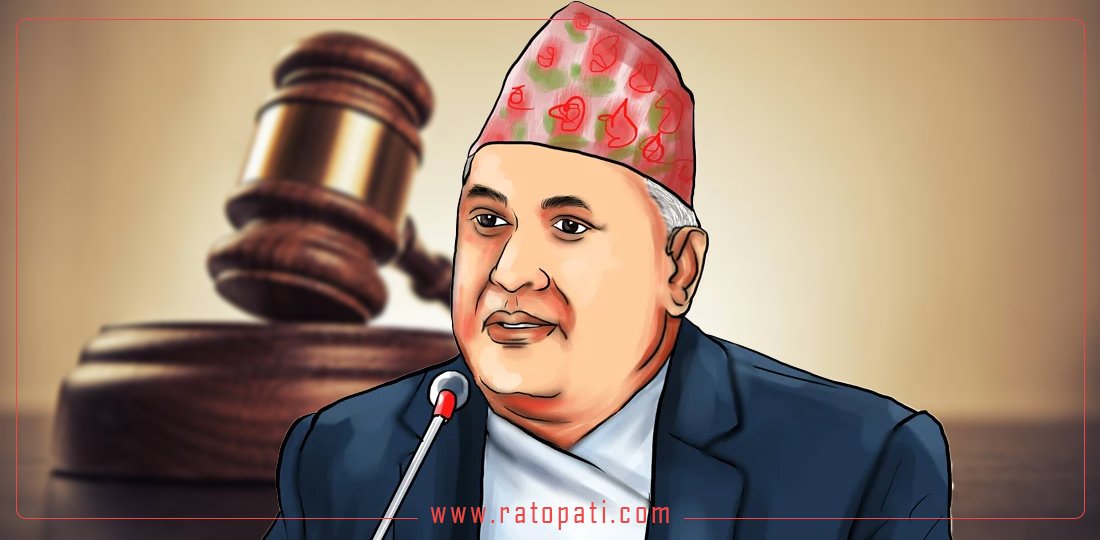
Kathmandu. Prime Minister Balen Shah is leading the nation from a 'restricted zone' within Singha Durbar, the political and administrative heart of Nepal. His secretariat has managed his schedule to ensure he is accessible only to security chiefs and cabinet members.
The Prime Minister's office has little need for external visitors. If necessary, the Prime Minister initiates contact himself. His working style and the office layout have been structured accordingly.
- Striving for a spotless record
Many enter Singha Durbar, but those who leave with a 'spotless' record can be counted on one's fingers. Having established a distinct working style at the Kathmandu Metropolitan City, what roadmap has Balen Shah drawn up now that he has assumed the role of the country's executive head?
A member of his secretariat says, 'Running a government is not just about occupying a chair; it is like driving a high-speed vehicle where everything from the driver to the engine, and from the fuel to the tires, must be in perfect condition.'
According to him, Balen's goal now is to leave Singha Durbar without any questions being raised, remaining 'spotless.' For this, he has put forward a 'reform with restriction' strategy.
- Claiming to accelerate from 10 to 90 speed
The first-year priority set by Balen Shah's team is 'good governance.' He has repeatedly stated, 'Once there is good governance, the pace of work and delivery increases automatically.'
Analyzing that past governments moved at an average speed of 10 out of 100, Balen aims to work at a speed of 90 during his tenure.
How will this gap be filled? A key member of Balen's secretariat argues, 'Our schooling and chain of command are different. We have come not to stall files, but to provide solutions.'
_Fiho8rPE5u.jpg)
He claims that if international circumstances and external tensions do not have a major impact, it is possible to add 80 to the speed of 10 to reach 90 by properly mobilizing Nepal's bureaucracy and resources.
For Balen, good governance is not about getting entangled in processes, but about producing results. 'If anyone comes as an obstacle in the middle, they will be removed. Whether it is legal hurdles or judicial complications, we will resolve everything and move forward,' Balen has been telling his close associates.
Balen has compared the role of the Prime Minister to that of a bus driver. According to the secretariat members, Balen has said, 'To reach the destination, the assistant driver, conductor, mechanic, engine, and tires must all be good. Even the fuel used must be pure.'
This means that ministers, bureaucracy, and policies all require purification.
According to that member, Balen will spend the initial time 'tuning' all these aspects. 'Once the machinery is fit, it becomes easier to gain speed and reach the destination,' he said.
- 'Restrictions' at the Prime Minister's Office
Balen believes that the Prime Minister's office within Singha Durbar had become a place for party worker meetings, idle chatter, and photo opportunities in the past. That will no longer be the case. Balen has imposed strict 'restrictions' at the Prime Minister's office.
According to the Prime Minister's office, the Prime Minister primarily handles international relations and diplomacy, national security, monitoring and coordination of major national pride projects, and good governance from here. Other tasks are not handled from this office.
'One does not need to come to the office just to take photos with the Prime Minister,' is Balen's strict message to his team. He has clarified that minor ministry tasks should be resolved by the respective departmental ministers and secretaries.
'Government spokespersons have been appointed for communication, and information will flow from there. If the Prime Minister needs someone, he will call them himself; otherwise, unauthorized crowds are completely prohibited,' is the internal directive in the Balen secretariat.
Balen argues that crowds need to be reduced not just in the Prime Minister's office, but in Singha Durbar itself. Accordingly, there was a directive for legal practitioners to obtain passes, but following the attention of the Nepal Bar Association, arrangements have now been made to allow entry based on the identity cards issued by the Bar.
_iCG60ZuvHm.jpg)
- No room for even a small stain, 'zero tolerance'
Balen has told his team, 'When wearing a white t-shirt, even a small stain looks like a big mess.' He views himself and his team as that white t-shirt.
'Just as no questions of corruption or immorality were raised against him and his team when they left the Kathmandu Metropolitan City, he wants to maintain that legacy in Singha Durbar as well. We are following the same,' says a government minister.
'Others only gave slogans of zero tolerance against corruption; we will implement it in practice,' the minister said. Insisting that there should be no room for even a small question to be raised about any government work, the minister claimed that working with clean intentions leads to clean results.
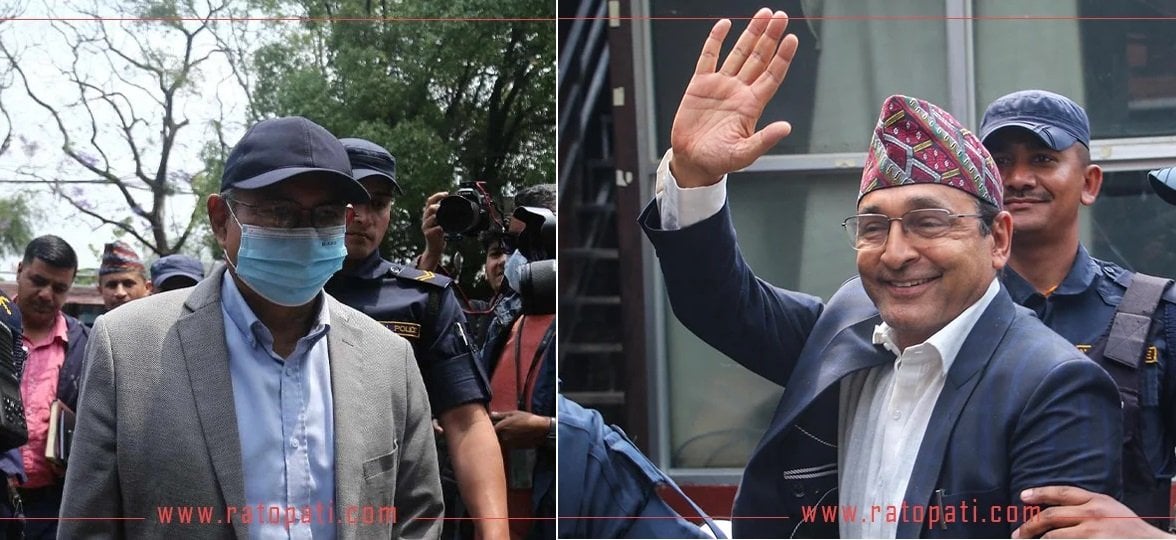
Citing the example of Deepak Sah, who had to resign as Labor Minister within 13 days, the minister said, 'This is an example of how we are working. As soon as it was known that he tried to appoint his wife to the Health Insurance Board, the party and the government became serious. This is just one example. All our activities must be this clean.'
He stated that this applies not only to elected representatives but also to employees.
According to the Prime Minister's secretariat, Prime Minister Balen has instructed ministers and secretaries to take the 100-point governance reform agenda released by the government seriously and work accordingly. The agenda, brought to bring radical changes in the country's administrative, political, and service delivery sectors, mentions completing various tasks within a timeframe of 5 to 1,000 days.
'These 100 points are not just pieces of paper but a benchmark to measure the government's performance,' said Balen's secretariat.
Thinking it is not possible for the Prime Minister to look at everything himself, he has prioritized reporting with lawmakers. Balen plans to understand the problems of their regions with lawmakers from each province, categorize them, and solve them through the budget.
- Singha Durbar: A place to work, not a place to chat
His secretariat states that there is strict 'formality' in Balen's working style. Balen has clearly told his aides, 'Singha Durbar and the Prime Minister's office are places for formal work; no one has the liberty to sit here and have informal chats or fun.'
Balen's directive is that if a meeting is scheduled for 10 o'clock, it must start at 10 o'clock sharp.
To make ministers effective, 4 to 5 lawmakers have been assigned to each minister. 'They will work as shadow ministers. Lawmakers have been sent specifically to assist ministers in policy work. This matters for the long-term work done by the ministry,' says a member of the Prime Minister's secretariat.
According to him, lawmakers with subject expertise and experience have been given responsibility for the relevant ministries.
- Strict monitoring from the Prime Minister's office
Prime Minister Balen usually arrives at the office at 8:45 AM. Once he enters Singha Durbar, he does not leave easily. Since becoming Prime Minister, he has not participated in any public events except for one formal army program.
He usually stays in Singha Durbar until 5:30 PM before returning to Baluwatar.
Political chatter is banned in the Prime Minister's office. That secretariat member said, 'Meeting lawmakers or diplomats is normal, but there is no political chatter here. This office monitors, oversees, and coordinates the work of all ministries.'
Members who are not involved in political work have also been kept in the secretariat. 'The main goal now is to make the government successful,' said that secretariat member, 'For that, the Prime Minister's clear instruction is that everyone must work hard.'
This specific news has been automatically translated by AI. As a result, there may be some inaccuracies or language errors.