Decade-Long Legal Battle Over Chhayadevi Complex Remains Pending in Supreme Court

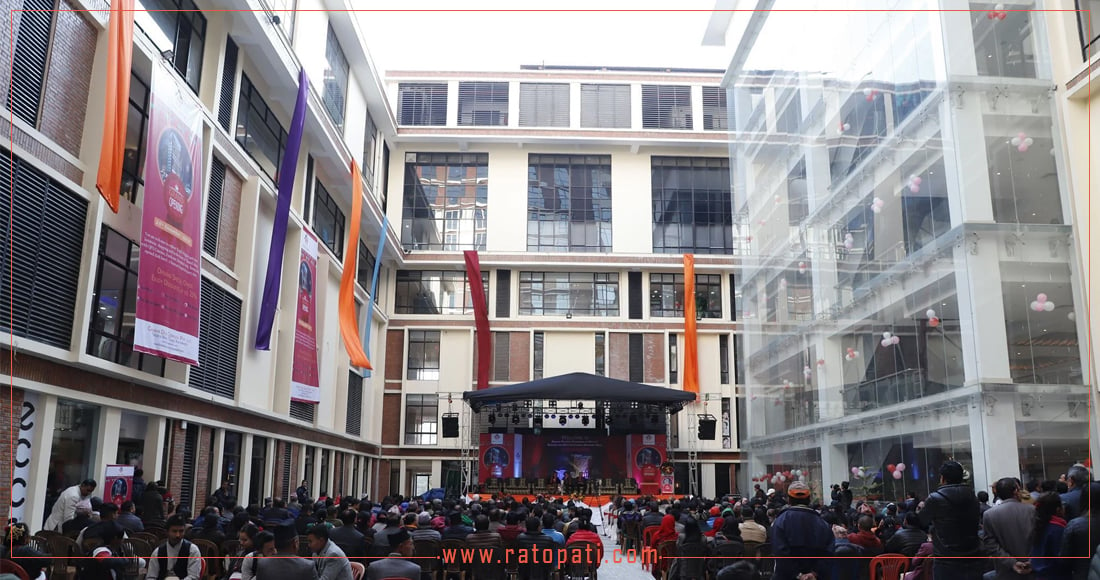
Kathmandu. A case filed at the Supreme Court demanding the demolition of the Chhayadevi Complex, built by encroaching upon the historic Kamalpokhari in Thamel, Kathmandu, has been pending for 10 years.
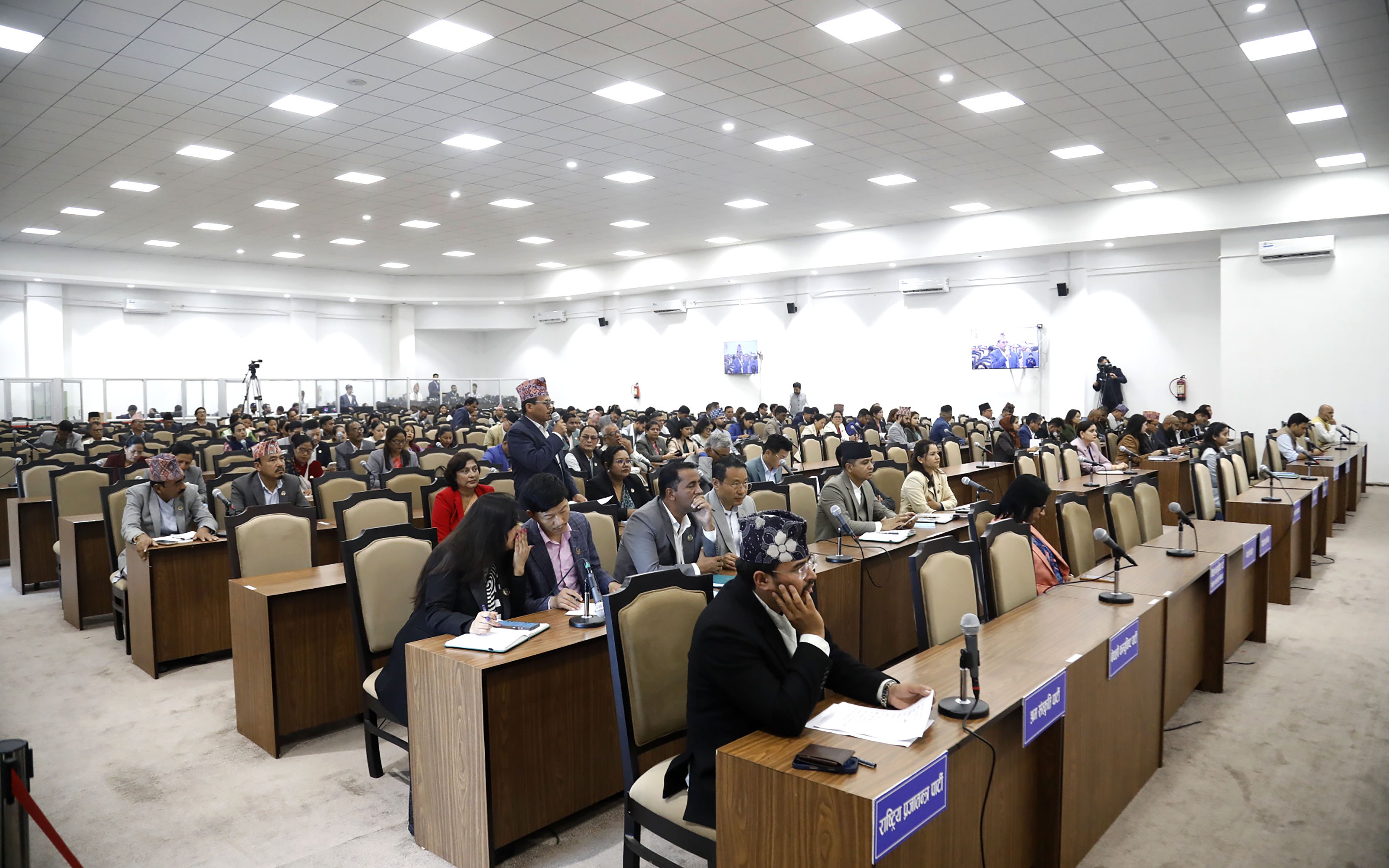
Despite being scheduled for hearings at the Supreme Court's full bench for the past year, the case has yet to be heard. The case, which had been pending in the constitutional bench for 9 years, was ordered to be transferred to the full bench on 2081 Poush 4.
On 2081 Baishakh 11, the case was scheduled for a hearing before a full bench consisting of Justices Kumar Regmi, Hari Prasad Phuyal, and Til Prasad Shrestha, but it was marked as 'not to be heard'. Since reaching the full bench, no hearing has taken place.
In 2071, advocate Dipak Bikram Mishra, Ramhari Shrestha, and others filed 15 separate petitions at the Supreme Court, demanding the demolition of the commercial complex built by banker Prithvi Bahadur Pande in the name of his mother, Chhayadevi Pande, after allegedly destroying the Kamalpokhari located in front of Thamel Bhagwan Bahal.
The court is reviewing all these cases collectively. The land where the pond was located covers an area of 12 ropanis and 13 aanas.
To understand the core of the Chhayadevi Complex dispute, one must look back over 100 years. Adjacent to the Rana-era Keshar Mahal, now located in Kathmandu Metropolitan City-29, lies the Vikramshil Mahavihar, known as 'Tham Bahil'. This Mahavihar, where Buddhists perform birth and death rituals, is considered to be from the Licchavi period and has been maintained under the Shri Singhasartha Bahu Garud Bhagwan Guthi.
The legal dispute appears to have begun in 2027 when one party filed a complaint at the Kathmandu District Court, alleging that Keyur Shamsher threatened to claim the pond as his own by obtaining tenancy rights. The Kathmandu District Court dismissed the complaint on 2030 Baishakh 25.
At one time, there was a pond in front of Tham Bahil. Known as Kamalpokhari because lotus flowers bloomed there, three ropanis of its land were incorporated into the palace compound by Jeet Shamsher in 1958. After Rana Prime Minister Chandra Shamsher bought the palace from his brother Jeet Shamsher and gifted it to his son Keshar Shamsher, it became known as Keshar Mahal.
After acquiring the palace, Keshar Shamsher incorporated the edge of the pond into the Keshar Mahal premises in 1977. Following a dispute, Keshar Shamsher signed a document agreeing to pay an annual land rent of 125 Moru to the Bhagwan Guthi for the use of the pond.
After Keshar Shamsher's death, his son Keyur Shamsher drained the pond and used it for farming. The pond's existence vanished after that incident about 50 years ago, and that is where the dispute entered the court system.
The legal dispute appears to have begun in 2027 when one party filed a complaint at the Kathmandu District Court, alleging that Keyur Shamsher threatened to claim the pond as his own by obtaining tenancy rights. The Kathmandu District Court dismissed the complaint on 2030 Baishakh 25.
On 2031 Ashoj 25, the Patan Appellate Court upheld the district court's decision. After the case reached the Supreme Court, a compromise was reached with the Bhagwan Guthi in the presence of the Guthi Sansthan on 2033 Poush 3, and except for structures that took about 6 years to build and are currently undergoing interior design, other parts are already in operation.
In a case filed by Guthi members demanding that the land seized by Keshar Shamsher on 1967 Magh 29 be returned and Guthi rights be established after his death and that of his son Keyur Shamsher, a compromise was reached in the presence of the Supreme Court on 2039 Poush 3.
Following an order by Supreme Court Justices Prakash Bahadur KC and Bishwanath Upadhyaya, the Guthi Sansthan made another decision on 2047 Chaitra 4, effectively overturning its own decision from 2047 Magh 18. In a case filed against this by Ambika Rana at the then Lalitpur Appellate Court, the court upheld the 2047 Magh 18 decision and overturned the subsequent one on 2053 Jestha 25.
Against that Appellate Court verdict, the Guthi members of the Singha Sartha Bahu Garud Bhagwan Guthi filed a case against Rana at the Kathmandu District Court. While the case was ongoing, a compromise was reached by providing the Guthi members with 15 million rupees and 4 aanas of land.
In a case filed by Guthi members demanding that the land seized by Keshar Shamsher on 1967 Magh 29 be returned and Guthi rights be established after his death and that of his son Keyur Shamsher, a compromise was reached in the presence of the Supreme Court on 2039 Poush 3.
The Chhayadevi Complex at Bhagwan Bahal, located on plot number 167, has been controversial since its construction. According to Land Revenue Office records, the land is still registered as a public pond. In 2044, the government decided to designate this pond as public property. Before that, its ownership was in the name of the Rana family.
In 2044, the government of His Majesty registered the public land covering 57.14.3.2 ropanis in Thamel Ward No. 29 under its own name. In the details of the 12.13.2.2 ropanis of land under plot no. 167 of the registered Kamalpokhari, it is listed as a public pond, and the landowner is listed as the government of His Majesty.
The tenant column also mentions the pond. Keyur Shamsher's name, which appeared in the tenant column in 2039, is nowhere to be seen.
On 2047 Magh 18, Ambika Rana registered the land of plot no. 167 in her name and her brother Shankar Prasad Shah's name as Guthi Raitani (private ownership), which faced opposition. The Guthi Sansthan, stating that the public land was registered in an individual's name due to a mistake by its employees, decided within two months (2047 Chaitra 15) to take departmental action against the Guthi members of the Shri Singhasartha Bahu Garud Bhagwan Guthi and the concerned employees involved in the registration, and to return the land to the Guthi. Rana and Shah were asked to take their money back. Rana and Shah filed a case against the Guthi Sansthan to overturn that decision.
Without the knowledge of the Guthi Sansthan, Rajguthi land owned by the government cannot be registered in an individual's name or transferred to anyone in the name of a compromise. The presence of the court is also seen in this.
Rana and Shah lost that case. The decision made by the Appellate Court on 2053 Jestha 25 went in favor of Rana and Shah. Opposing that decision, on 2055 Mangsir 18, the Guthi members of the Shri Singhasartha Bahu Garud Bhagwan Guthi filed a case at the Kathmandu District Court against the Guthi Sansthan Central Office, Guthi Cost and Tahasil Office, Ambika Rana, and Shankar Prasad Shah to 'restore the pond and its edge to the original ownership and overturn the Appellate Court's decision'. However, they reached a compromise at the Kathmandu District Court on 2062 Ashad 16 for 15 million rupees and 4 ropanis of land. After that, the sale of the land began rapidly.
Without the knowledge of the Guthi Sansthan, Rajguthi land owned by the government cannot be registered in an individual's name or transferred to anyone in the name of a compromise. The presence of the court is also seen in this.
Against this, in 2070, 6 members of the Guthi members' lineage (Bhagwat Narsingh Pradhan, Sanjivman Pradhan, Arjunlal Pradhan, Anjirman Pradhan, Rajeshman Pradhan, and Ranjayman Pradhan) filed a case against Hiranyeshwarman Pradhan and others. But they lost in the district and appellate courts. Then they went to the Supreme Court. In that case, on 2073 Chaitra 10, in the decision made by the joint bench of Justices Jagdish Sharma Poudel and Kedar Prasad Chalise on the case filed by Bhagwat Narsingh Pradhan to 'overturn the Guthi Raitani decision', the court not only found the petitioner's claim to be factual and granted leave to proceed with the case, but also stated that the decisions made by the district and appellate courts in favor of Ambika Rana were flawed.
This specific news has been automatically translated by AI. As a result, there may be some inaccuracies or language errors.
_cvUCBlwFTZ.jpg)