Nepal Government Plans 24-Hour Smart Driving License Issuance Amid Backlog Concerns

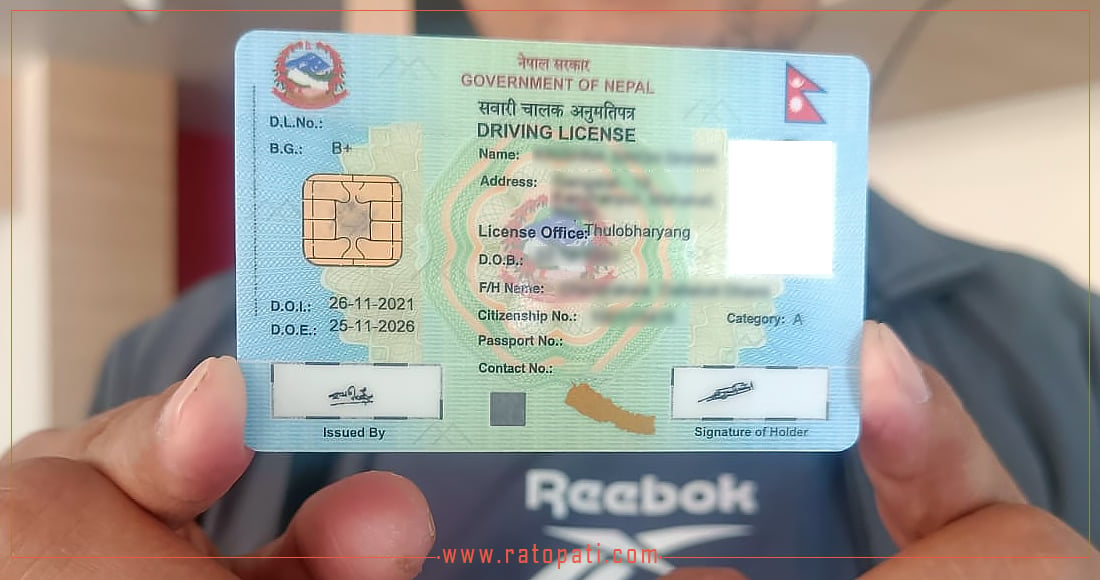
Kathmandu. The government is preparing to print and distribute smart driving licenses within 24 hours. The Department of Transport Management is working to relieve service seekers from the burden of waiting years for their licenses.
Department Director Keshav Khatiwada told Ratopati that within a few days, licenses will be issued on the same day revenue is paid. According to him, the software system has been modified to ensure smart cards are ready within 24 hours of payment.
‘Our technical team has been working without sleep for the past few days to build this system,’ Khatiwada said, ‘We will send the data to the Security Printing Center within 24 hours of revenue payment, and the center will print and provide the card that same night or the next morning.’
However, this process will only begin after paying the revenue, not immediately after passing the trial. He also warned about the legal provision that licenses will be automatically cancelled if there is an 18-month delay in paying the revenue.
On Monday, Minister for Communication and Information Technology Dr. Bikram Timilsina announced that from now on, cards will be printed and distributed within 24 hours of completing the process for new licenses. The government's 100-point agenda also includes ending the long wait for driving licenses and delivering them to service seekers via courier.
The government claims that if this system is implemented, the long wait for new applicants will end.
Doubts over implementation
However, there are doubts about its implementation. Currently, a total of 2.9 million licenses are pending, forcing drivers to rely on receipts for years. Even after handing over the printing to the Security Printing Center, delays persist. Only 15 days remain for the agreement between the Department of Transport Management and the Security Printing Center to print 1.2 million licenses within six months. With the deadline of 2083 Baishakh 12 approaching, the center has only printed and handed over 300,000 cards so far.
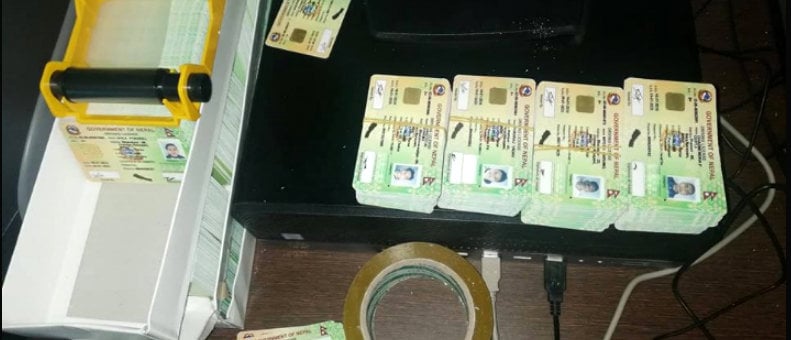
After a fire damaged machines and servers at the department's office during protests last Bhadra, the responsibility for printing was given to the Security Printing Center. According to the agreement on Kartik 12, the center aimed to print 1.2 million cards by Baishakh. Former Communication Minister Jagdish Kharel had claimed they would finish before the deadline. However, only 25 percent of the target has been achieved so far.
Why the delay in printing?
Although it was said that 1.2 million licenses would be printed in six months, the department stated that technical reasons caused the delay. While the workload has increased, the department has been citing problems due to old and weak servers.
Director Khatiwada mentioned that the main server was damaged and they are currently managing with a ‘patched-up’ system. A budget of over 100 million rupees has been requested from the Ministry of Finance to purchase a new server. Khatiwada claims that services will become more effective once the new server arrives through the tender process.
The Department of Transport Management has initiated work to clear the years-long printing ‘backlog’ by the end of Ashar and provide licenses within 24 hours of paying new revenue.
The printer damaged by the fire at the department is six years old, and repairs alone would cost over 20 million rupees. He stated that it is more appropriate to use the high-capacity machines of the Security Printing Center rather than spending a large sum on repairing old machines.
Khatiwada clarified that the legal hurdle is why provinces could not print licenses despite purchasing machines. ‘The Security Printing Act gives the printing center the sole authority to print government documents,’ he said, ‘Until the act is amended to give authority to the provinces, they cannot print licenses even if they have their own machines.’
Claim to clear backlog by Ashar
The Department of Transport Management has initiated work to clear the years-long printing ‘backlog’ by the end of Ashar and provide licenses within 24 hours of paying new revenue.
Currently, the department is responsible for printing 2.9 million licenses. Of these, about 300,000 have been printed and dispatched to the respective transport offices.
Director Khatiwada says, ‘We have already provided 800,000 data entries to the Security Printing Center. Currently, the center is printing 40,000 licenses per day. If work continues at this pace, the printing of all 2.9 million licenses will be completed by the end of Ashar.’
According to Director Khatiwada, as per the notice published in the Gazette on 2082 Shrawan 14, the renewal period for licenses will be 10 years. Licenses issued or renewed from that date will have a 10-year validity.
Similarly, the department has prioritized the licenses to be printed. The department's strategy is not to print old licenses that have less than six months or one year of validity remaining. He stated that arrangements will be made for such service seekers to receive a new 10-year license directly upon renewal.
Claim to end the ‘chit’ era from Shrawan 1, printing 40,000 daily
The Security Printing Center has announced that from Shrawan 1, the compulsion for drivers to carry temporary ‘receipts’ or ‘chits’ will end forever. Executive Director of the center, Devraj Dhungana, said the goal is to print all existing ‘backlog’ licenses by the end of Ashar. He informed that an environment is being created where no service seeker will have to carry a piece of paper from Shrawan 1.
In Nepal, due to the ineffective distribution of smart licenses, drivers have had to drive for years by showing the paper receipt of revenue payment. Service seekers are frustrated by problems like water damage and fading text.
Overcoming the past slowness in card printing, the center is now working at full capacity. According to Executive Director Dhungana, the center's current card printing capacity is 40,000 copies per day. He mentioned that preparations are underway to develop the capacity to print 60,000 cards per day in a few days. He said, ‘Our current capacity is 40,000 per day, and we are preparing to increase it gradually.’
The center has printed 300,000 licenses so far. He informed that 200,000 of those cards have been sent to the Department of Transport Management, and preparations are underway to send another 100,000. He stated that out of the 2.9 million cards to be printed, 300,000 are done, and work is ongoing to finish the remaining 2.6 million by the end of Ashar.
The center is implementing the government's decision to issue licenses within 24 hours in three phases. The first phase covers old pending cards, the second covers essential cards for those going for foreign employment, and the third will print licenses for new service seekers who pay revenue daily.
Executive Director Dhungana said a mechanism has been set up to print and deliver cards to the department within 24 hours based on data sent by the department by 6 PM. He informed that the center starts its work as soon as data is received from the department.
In Nepal, due to the ineffective distribution of smart licenses, drivers have had to drive for years by showing the paper receipt of revenue payment. Service seekers are frustrated by problems like water damage and fading text. Dhungana claims that once all remaining licenses are printed by the end of Ashar, it will be ensured that those who pass the trial from Shrawan will also receive their cards immediately.
This specific news has been automatically translated by AI. As a result, there may be some inaccuracies or language errors.