Nepal Communist Party Reviews Election Setback and Plans Organizational Overhaul

Kathmandu. Following a significant setback in the House of Representatives elections held on Falgun 21, the Nepal Communist Party (NCP) is currently reviewing its defeat. The Central Coordination Committee meeting, which has been ongoing at the central office in Parisdanda since Chaitra 19, is focused on analyzing the party's electoral performance.
Coordinator Pushpa Kamal Dahal 'Prachanda' presented a 10-page election review report, clarifying that both internal and external factors were primarily responsible for the party's defeat. He proposed that the party must immediately formulate a concrete action plan for organizational, ideological, economic, and technical work to reorganize and transform itself.
'The party must immediately move forward by creating a concrete action plan for organizational, ideological, economic, and technical work. A campaign for the reorganization and transformation of the party must be conducted extensively,' the report stated.
For this purpose, he proposed a 10-point concrete action plan regarding organizational adjustment and construction, renewal of party membership and conventions, organizing a unity general convention, leadership reorganization and transformation, training campaigns, effective constructive opposition, mobilization of provincial and local levels, development of technical capacity, and improvement in work style and conduct.
_odMNd0DYUw.jpg)
His conclusion is that the main factor behind the party's electoral setback was the lack of unity among leftist forces. He presented facts showing that there are still more than 10 communist parties in the country, and the nine communist parties that contested the elections independently received over 4 million proportional votes.
'If the leftist forces had been united, more votes could have been attracted. Due to the division of communist votes, the election was lost in 27 constituencies. This would not have happened if they were united. Attacks are being made on leftist forces, yet they are unable to unite. It is necessary to move forward seriously on this,' Prachanda said.
In the election, the NCP won a total of 17 seats, including 8 direct and 9 proportional. In the previous election, the former Maoist Center had received over 1.175 million votes. However, despite 25 communist factions joining together to contest the election within three years, the NCP received only 811,000 votes.
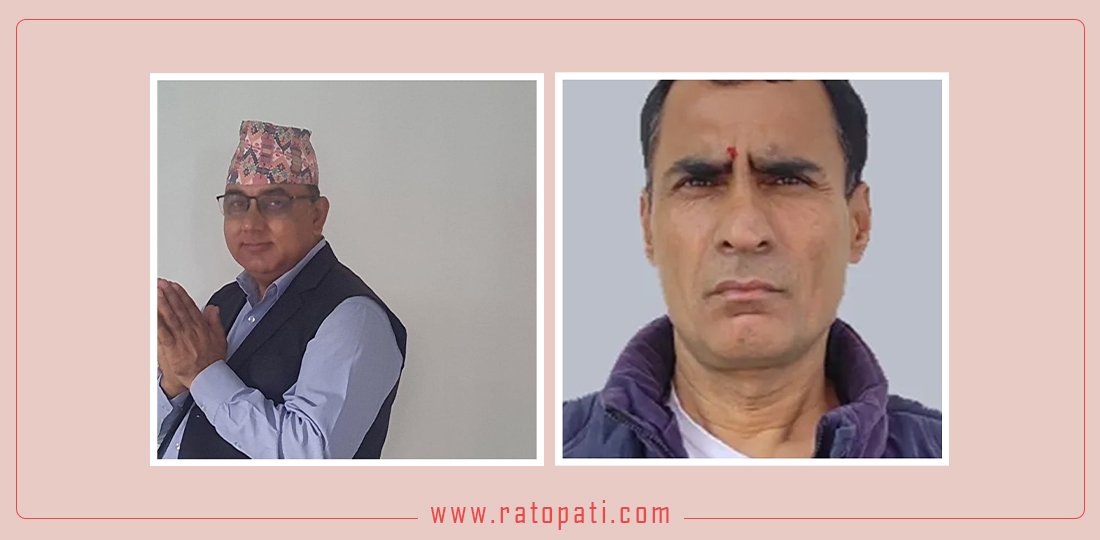
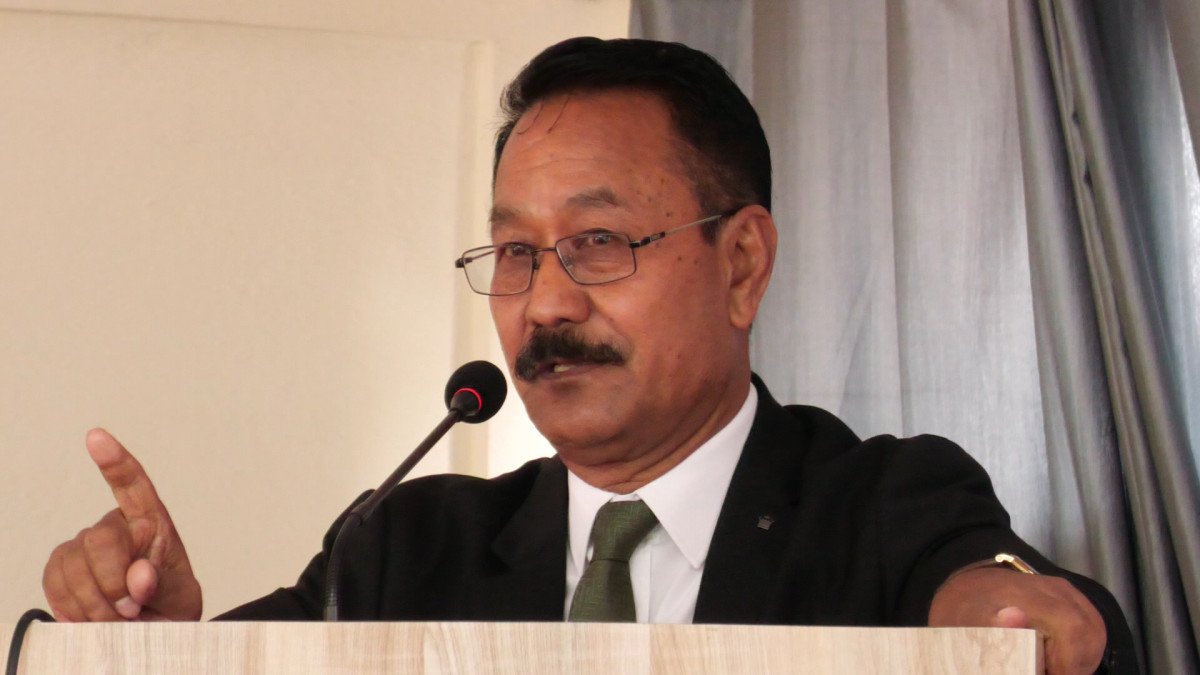
Leaders have been continuously expressing their views on Prachanda's report since Monday. In the meeting, former Prime Minister and senior leader Jhalanath Khanal reviewed the defeat and prioritized internal unity and unity among communist parties.
Regarding party integration, Khanal provided written suggestions to complete it immediately from the center down to the unit level.
'The integration process must be completed immediately from the center, province, district, municipality, ward, and unit levels. While doing so, the sentiments of all groups united in the party must be incorporated, and the entire party must be integrated with a concrete action plan,' he said.
_pme8ZWMehC.jpg)
Furthermore, regarding the unity among communist parties, Khanal proposed four basic theoretical foundations. He proposed accepting Marxism-Leninism as the guiding principle, acknowledging that Nepali society is in the phase of socialist revolution and transformation, considering the program of the revolution as a socialist program with Nepali characteristics, and adopting a revolutionary path to achieve socialism.
Khanal pointed out that the internal reasons for the party's defeat in the election were the failure to form a leading core team, the failure to start the integrated campaign on time, and the failure to hold an integration assembly instead of a message assembly. He also expressed that the three-month period after the merger was not utilized, the agreement to issue circulars and appeals created suspicion, there was no committee system, mass organizations were not unified and mobilized, it was unclear against whom the election campaign was directed, youth were not mobilized, and an effective mechanism to conduct the election campaign was not formed.
Khanal alleged that the leadership did not even notice that the Gen-Z movement in Bhadra was designed by external and internal conspiracies.
'The destruction on the 24th and its impact, and preparations for the constitution and elections were not taken seriously, and an agreement was made to conspire to hold elections within 6 months,' he said. 'Some leaders praised themselves for finding a great trick to announce the elections, but they could not keep in mind that the country is being turned into a base for international powers.'
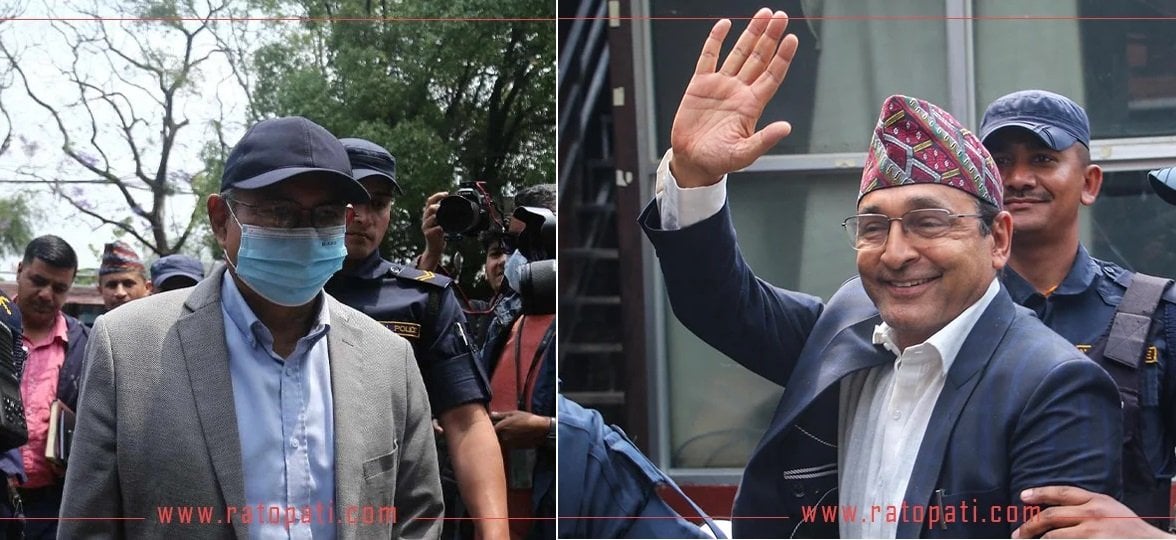
In the meeting, former Deputy Prime Minister and senior leader Bamdev Gautam claimed that a 'color revolution' took place in Nepal under the design of imperialist powers. He emphasized strengthening internal party unity and the unity of communist parties.
_pQhyfcueCv.jpg)
'A blue revolution happened in Bhadra under the design of imperialist powers. The Rastriya Swatantra Party took advantage of it. To complete the scientific socialist revolution, strengthening internal party unity and broad unity among communist parties is the need of the hour. The party must take special initiatives to mobilize communist parties on the theoretical and ideological ground of Marxism-Leninism,' a leader quoted Gautam as saying to Ratopati.
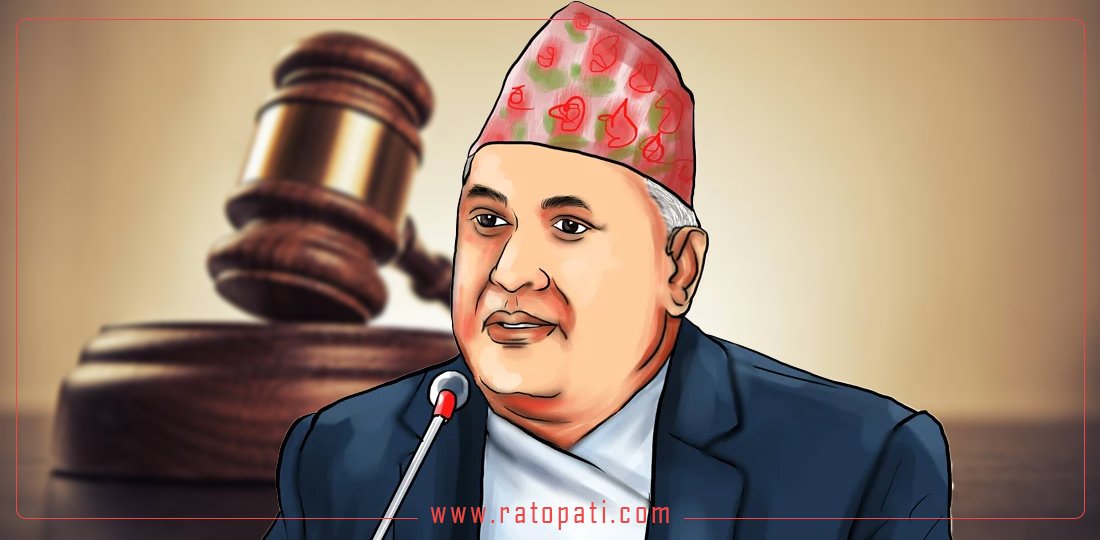
Another leader, Rajendra Prasad Shrestha, suggested that since the balance of power has shifted in the 75 years since the establishment of democracy in Nepal, the party should move forward according to a new strategy.
'For 75 years, there was competition between the Congress and the Communists. After the Gen-Z movement in Bhadra, the balance of power has shifted. The party must set a new direction and program to achieve superiority in competition by strengthening the organization,' he said.
However, Shrestha stated that the party's role was important in conducting the elections by cutting through two extremisms in a difficult situation after the Gen-Z movement.
_RGSrvpSNnZ.jpg)
He suggested that in the changing situation, the party should change its ideological, organizational, and leadership styles. He emphasized that since capitalism has just begun in Nepal, a single communist center should be formed.
'Two communist parties can go together in socialism, but they cannot in capitalism. In the current situation, only one communist party is possible. There is no alternative but to merge or perish,' he said. He stated that socialism cannot run on old 'jargon'. He emphasized the need to search for socialism with intellectual artificiality.
Reviewing the election, Shrestha claimed that the NCP suffered less damage compared to the two major parties, the Nepali Congress and the CPN-UML. However, he argued that the party's failure to achieve expected superiority was due to a weak organization.
Shrestha said, 'Because of a strong organization in Karnali and Lumbini provinces, populism and algorithms could not have an impact, but in other provinces, the lack of a strong organization seems to have caused damage to the party. This should be seriously reviewed, and the organization and party should be transformed accordingly in the upcoming general convention. 50 percent of the youth should be brought in from the center to the unit level.'
However, youth leaders have demanded the dissolution of the existing central committee and the immediate announcement of a general convention, stating that the central committee, central working committee, and central coordination committee formed by the party are not inclusive and youth-friendly.
_sfLOMd8H80.jpg)
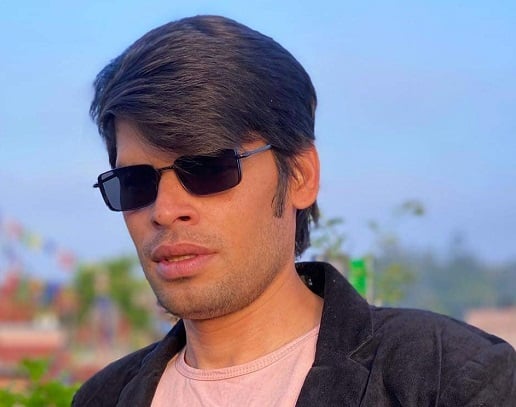
Ram Prasad Sapkota, the faction in-charge of the Young Communist League (YCL), said that the party should not just make minor improvements but should make a break from the past. He has pressured the leadership to dissolve all umbrella-shaped organizations and start over.
'The Nepal Communist Party should not make minor improvements but should decide on a break from the past and (catastrophic) transformation. Carrying the current organizational structure will not yield even a frog, let alone a fish. Let's dissolve all umbrella-shaped organizational structures and start from zero,' he wrote on the social network Facebook.
Youth have expressed anger that the 45-member work coordination committee recently formed by the NCP includes old leaders who should be in the advisory committee. Leader Prakash Jwala said that since the discussion on Coordinator Prachanda's report is ongoing to address the demands of the youth, a concrete decision of the party will come in a few days.
'Leaders are continuing to speak in the meeting. Since no time limit has been set, a single leader has expressed their views for one to one and a half hours. The discussion is focused on election review and future tasks. The party will make its concrete decision and program public in two-three days,' he said.
This specific news has been automatically translated by AI. As a result, there may be some inaccuracies or language errors.