
Bagmati Provincial Assembly Resumes Amidst Tensions Over Federalism and Governance

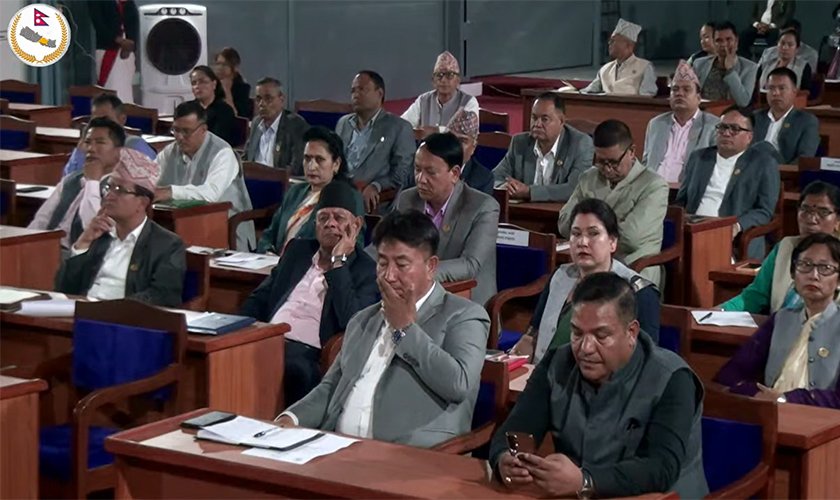
Hetauda. The winter session of the Bagmati Provincial Assembly commenced on Tuesday after a five-month hiatus.
In this session, held after a long interval, leaders from both the ruling and opposition parties expressed both expectations and frustration regarding the federal government's role in implementing federalism, administrative instability, and central interference in the province's budget.
During the meeting, leaders of the parliamentary parties criticized the federal government's working style, while some expressed optimism. The leaders shared their views on contemporary national politics.
In their remarks, the leaders demanded full autonomy and authority from the central government. They argued that administrative instability, central influence over the budget, and the economic crisis are making the practice of federalism challenging. Chief Minister Indra Bahadur Baniya expressed 'hope for obtaining constitutional rights,' while opposition leaders voiced 'frustration toward the center.' They emphasized that the government must act seriously regarding inflation control and good governance.
Chief Minister Baniya's Concern for Federalism
Addressing the meeting, Bagmati Province Chief Minister Indra Bahadur Baniya stated that the current federal government and Prime Balendra Shah 'Balen' are fully committed to federalism. His address reflected both hope from the federal government and serious concern for the institutional development of federalism.
Expressing his concern for federalism, he voiced positive expectations regarding Prime Minister Balen's stance toward the provincial government. He expressed hope that the provincial constitutional rights, which have been stalled at the center for a long time, will now be obtained through a 'fast track.' Chief Minister Baniya also claimed that since the current Prime Minister himself experienced administrative hurdles and a lack of authority while leading the local level (as Mayor), he understands the province's plight closely. He expressed dissatisfaction with the center's arbitrary transfers of civil servants.
'We have heard about the difficulties and ironies the honorable Prime Minister faced when he was Mayor. Therefore, we believe that he will understand the essence of the current federalism and the personnel and administrative problems being faced by all seven provinces and will resolve them soon,' he said.
He requested the federal government to ensure a tenure of at least two years for the Chief Secretary and Secretaries of the province when they are posted, stating that coordination, cooperation, and co-existence are the essence of the republic.
UML's Outrage: 'Government Has Become Authoritarian and Immature'
Jagannath Thapaliya, leader of the CPN-UML Bagmati Provincial Parliamentary Party, presented himself quite aggressively against the federal government. He accused the current federal government of moving on an authoritarian path and engaging in political vendetta.
Leader Thapaliya stated that the government's recent activities are against democratic values and norms. He expressed objection to the government's retaliatory actions against former Prime Minister and UML Chairman KP Sharma Oli and former Home Minister Ramesh Lekhak.
'The act of arresting and detaining UML Chairman Oli and leader Lekhak is condemnable and objectionable. This is a direct example of the government's authoritarian tendency and insensitivity,' he said.
He questioned the government's silence on the issues of Lipulekh, Kalapani, and Limpiyadhura, and stated that the public is being cheated by increasing the burden of foreign debt.
Leader of the main opposition party, CPN (Maoist Centre) leader and former Chief Minister Shalikram Jamkattel, said that the current situation requires moving forward by understanding the post-Gen Z movement scenario. He stated that the government has violated the rule of law by 'cutting' the budget passed by the parliament. He mentioned that the budget for projects included in the Red Book was cut and reallocated to cadre-oriented projects.
According to Jamkattel, the government has cut a total of 7.59 billion rupees from the allocated budget, including 2.31 billion in current expenditure and 5.28 billion in capital expenditure. He warned that if the government operates outside the law, the province's administrative mechanism will collapse.
'When consumers go to implement the budget that was presented and passed in parliament on Ashad 1, the budget is zero. What kind of governance is this? The first right to make the budget and pass programs belongs to the parliament; it is the wrong path for the cabinet to keep deciding on multi-year projects,' he said.
In the meeting, former Chief Minister and Congress MP Bahadur Singh Lama also considered administrative stability as the basis for good governance. Stating that the practice of frequent transfers of employees has spoiled the working environment, he demanded that the center allow secretaries to work for at least one year without being moved. Lama drew the federal government's attention to the rising inflation and the increase in petroleum product prices.
'The government should run based on what the parliament has passed; the parliament should not be bypassed,' he said.
RPP leader Uddhav Thapa expressed outrage, stating that the government is silent on rising inflation and the economic crisis. He warned that if the government does not correct its working style, there will be another movement, as the new generation (Gen Z) is seeking good governance and change in the country. He urged the government to be serious about maintaining the rule of law and the supremacy of the constitution, stating that RPP is ready to make any sacrifice for the sake of the people.
He accused the government of failing to understand the people's sentiments and choosing the path of misgovernance. Stating that positions are temporary and only the law is permanent, he urged the government to abandon arrogance. Leader Thapa expressed dissatisfaction, saying that the provincial government has 'cut' 1,671 projects passed by the parliament.
'The price of petrol, which was 72 rupees, has reached 202; bananas, which were 210, have reached 280. What is the government watching? Is it appropriate for the government to enjoy by forming a jumbo cabinet at such a time?' he said.
NMKP leader Surendra Raj Gosai claimed that foreign interference in Nepal has reached its peak. He argued that the US Embassy directly calling for applications for the Youth Council is an attack on sovereign power. He accused the government of being trapped in a debt trap and urged it to choose the path of self-reliance.
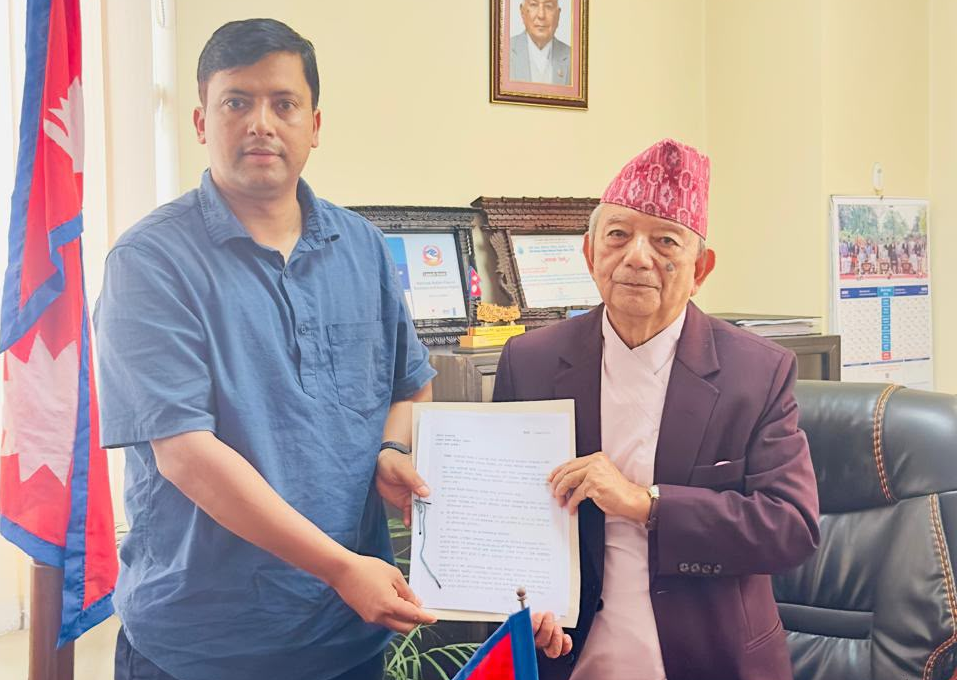
In the provincial assembly meeting held on Tuesday, the letter received from the Office of the Province Head was read, and information was given about the resignation letter of the then Speaker of the Bagmati Provincial Assembly, Bhuwan Kumar Pathak. The next meeting of the Provincial Assembly will be held on Wednesday at 11 AM.
This specific news has been automatically translated by AI. As a result, there may be some inaccuracies or language errors.
_Vh1wedG2Zd.jpg)