
Karnali Province Initiates Project Selection Process for Upcoming Fiscal Year

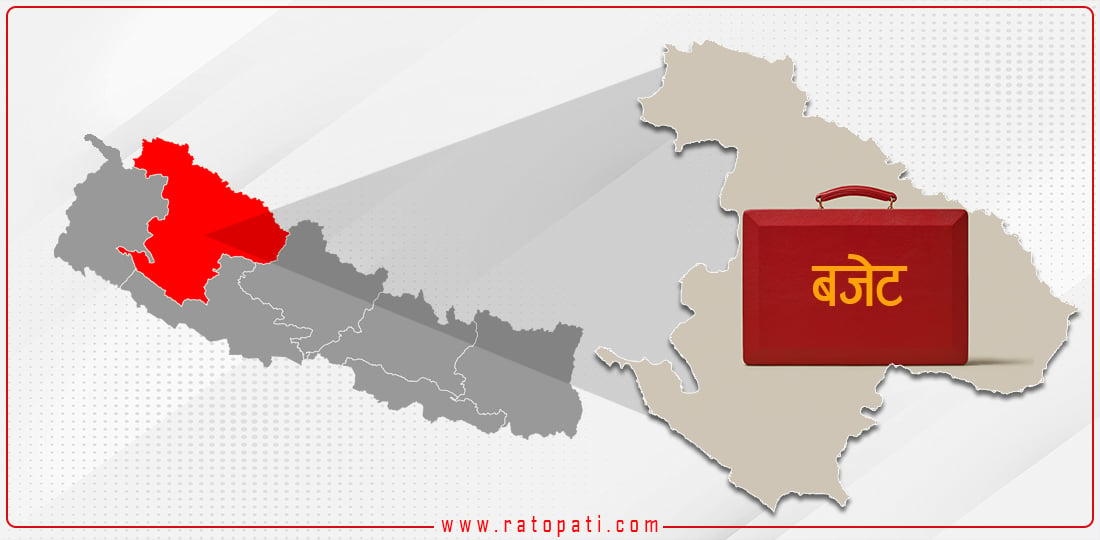
Surkhet. The process of selecting projects for the upcoming fiscal year (083/084) has commenced in Karnali Province. While the formal budget formulation has not yet begun, the project selection phase is underway.
Following the conclusion of the winter session, provincial assembly members have returned to their respective home districts to participate in the project selection process.
To enhance transparency, effectiveness, and accountability in the development process, the provincial government has established a 'Procedure for Project Proposal and Selection,' which eliminates the need for stakeholders to visit ministries for project selection as was common in the past.
A district-level project proposal selection and recommendation committee has been formed. This committee includes the senior-most member of the provincial assembly elected from the district as coordinator, along with other provincial assembly members, heads and deputy heads of the District Coordination Committee, local level heads and deputy heads, and heads of relevant provincial government offices/directorates as member-secretaries.
This committee will discuss, analyze, and recommend suitable projects to the relevant ministries, ensuring sectoral and geographical balance while avoiding duplication.
In accordance with this method, provincial assembly members are currently in their districts to select projects for the upcoming year.
Vice-Chairman of the Provincial Planning Commission, Suryanath Yogi, informed Ratopati that assembly members are conducting programs in their home districts as per the procedure.
According to him, notices for project proposals were issued by provincial offices in the districts starting from Shrawan, with a deadline for submission by the end of Mangsir.
However, there was some delay this time due to elections and other reasons. "Once proposals are submitted to the thematic offices of the ministries, they are discussed by the district-level selection committee," Vice-Chairman Yogi said. "They rank the projects and submit them to the respective ministries by Baisakh 15. The ministries verify them, a meeting is held under the coordination of the secretary, and upon the minister's recommendation, they are sent to the Planning Commission, where they are managed in the project bank based on prioritization."
The Planning Commission evaluates, analyzes, and prioritizes these projects, completing the process by Jestha 7 for submission to the relevant ministries.
Subsequently, ministries propose budgets for project implementation within the annual budget ceiling based on these priorities.
In the past, ministries were crowded with people seeking projects based on influence. Since the implementation of the procedure last year, this practice has ended, although stakeholders note that the process remains somewhat cumbersome.
Vice-Chairman Yogi mentioned that the procedure was amended and strengthened last Kartik to address certain flaws.
The commission has also conducted orientation programs across various districts regarding the procedure and the project bank.
"The era where anyone could walk into a ministry and demand a project is over," he stated. "The procedure ensures that projects are selected based on a system, necessity, and prioritization."
This system has also curbed the malpractice of securing projects through influence and collecting money from consumers in advance.
- Control of Fragmented Projects
The provincial government has controlled fragmented projects through this procedure. Previously, projects as small as 500,000 were often initiated by the province.
Previously, the policy was not to select road and building infrastructure projects under 3 million and other projects under 1.5 million.
This time, the provincial government has revised this policy. According to the amended procedure, the minimum cost threshold has been increased: 5 million for road infrastructure and 2 million for others.
"The provincial government will no longer implement projects below these thresholds," said Vice-Chairman Yogi. "However, small irrigation projects related to agriculture are exempted, with a threshold of 1 million."
He added that small projects will be transferred to the local level, while the provincial government will focus on strategic and large-scale projects.
According to Yogi, projects with a cost exceeding 5 million operated by the provincial government must be entered into the 'Project Bank'.
"This means large projects will be kept in a central record, which will help eliminate duplication and ensure efficient resource allocation," he said.
- Grant Programs in Final Stages
According to Chetankumar Timilsina, spokesperson for the Ministry of Economic Affairs and Planning, the selection of grant-based projects (jointly funded by the province and local levels) is in the final stages.
"We issued a notice for the first phase of supplementary and special grant projects from Falgun 1 to Chaitra 1," he said. "We are currently correcting the projects received from the local levels."
He stated that this work will be completed by the first week of Baisakh.
Regarding budget formulation, he noted that the ceiling from the federal government has not yet been received. "If the center provides the ceiling in 10-15 days, we will provide it to the ministries here," Timilsina said. "Then the budget formulation process will begin."
This specific news has been automatically translated by AI. As a result, there may be some inaccuracies or language errors.




_beJFbtmC3W.jpg)