Minister Timilsina Emphasizes Institutional Reform and Accountability in Public Service Broadcasting


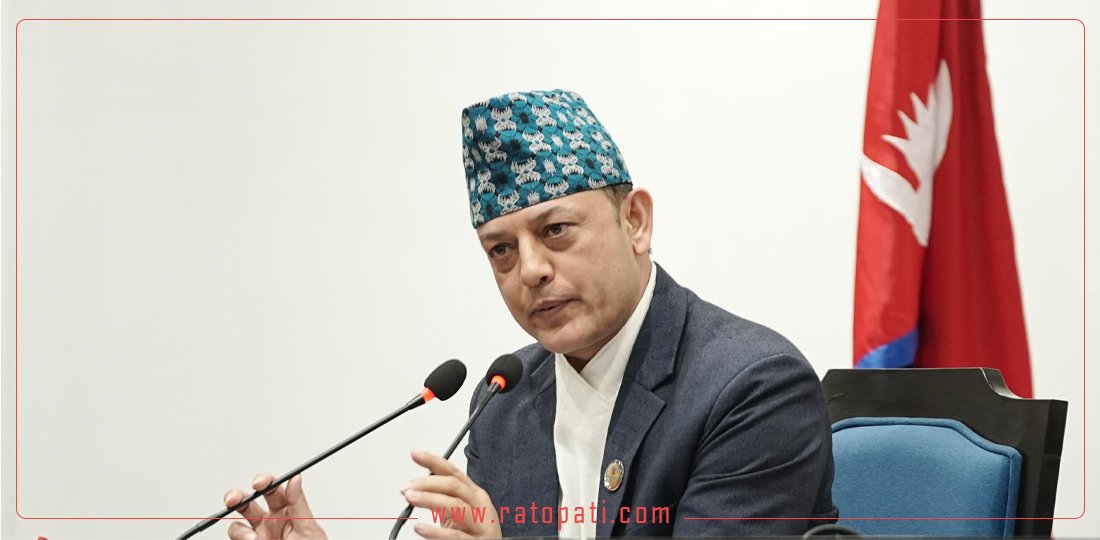
Kathmandu. Minister for Communications and Information Technology Dr. Bikram Timilsina has stated that ensuring easy, swift, and effective service delivery to citizens through the institutional capacity development of government agencies and public institutions is a top priority for the government.
On the occasion of the 76th anniversary of Radio Nepal, the Public Service Broadcasting organization, Minister Timilsina clarified that the ministry has moved forward with new energy and momentum toward making the institution stronger, more accountable, and result-oriented.
He said, “Citizens receive easy and quality services only when government agencies are strong. Therefore, the ministry has initiated work in a new way regarding how to strengthen institutions. There is no alternative to building strong, accountable, and effective institutions.”
Noting that the responsibility of running the country has fallen on the shoulders of the youth following the House of Representatives elections, Minister Timilsina stated that it is necessary to change the negative trends seen in political and administrative structures. “Negativity has dominated our institutions politically. We must identify the direction the country is seeking and change accordingly,” he said, “The political root has improved; now is the time for every institution to improve and for every citizen to fulfill their responsibilities.”
Clarifying that there will be no compromise on accountability and discipline, Minister Timilsina said, “We will not do anything wrong ourselves, not even by an inch, and we will not spare those who do wrong. Where there is a weakness, we will take action. The ministry and the government are working to bring those involved in 'setting' to legal justice.”
Emphasizing the need for austerity in government spending, Minister Timilsina clarified the relationship between controlling unnecessary expenses, effective information dissemination, and good governance. He also mentioned that citizens share a common responsibility in the goal of creating conditions where youth do not have to go abroad within the next five years.
Minister Timilsina stated that in a democratic system, information is a fundamental right of citizens and emphasized that public service broadcasting organizations must protect it. He expressed that it is necessary to make public service broadcasting more effective, credible, and people-oriented, keeping in mind changing communication technologies, market competition, and the evolving desires of viewers and listeners.
Recalling his student life, Minister Timilsina mentioned that Radio Nepal inspired him toward literary writing and stated that public service broadcasting institutions have a long-term impact on nation-building.
This specific news has been automatically translated by AI. As a result, there may be some inaccuracies or language errors.