BP Highway Reconstruction Intensifies Following Severe Flood Damage

_DRK2NCS4RD.jpg)
Kavrepalanchok. Travel along the BP Highway has been arduous for the past year and a half. The highway, which frequently faces disruptions even from moderate rainfall, has already been blocked twice by mid-Chaitra. Permanent reconstruction aimed at restoring the highway, which had facilitated travel to the mid-hill region until a year and a half ago, has now begun.
The BP Highway is the shortest, sole alternative, and a vital road link connecting the federal capital, Kathmandu, with eastern Nepal. Floods in October of last year and the year before left the road section from Chaukidanda in Kavrepalanchok to various areas in Sindhuli in a dilapidated state. With sections in the Kavrepalanchok region washed away, travel has become hazardous, and road connectivity was even severed.
Although some damage occurred during the monsoon, the relentless rains in October caused the Roshi River in Kavrepalanchok to flood, severely damaging sections of the highway. This year, floods and landslides again devastated the road, erasing traces of the highway in some parts and making it impassable even for pedestrians. Despite operating temporary roads and diversions on the damaged highway last October, it was forced into a dilapidated state again while still in the process of permanent restoration.
Preliminary inspections by the Division Road Office, Bhaktapur, indicate that approximately four kilometers of the road have been washed away, necessitating the creation of diversions through the riverbed to maintain traffic. Built at a cost of approximately 26 billion Japanese Yen, this highway provides a short and direct link between eastern Nepal and the capital, eliminating the need to travel via the East-West Highway through Narayanghat-Mugling-Kathmandu.
Continuous rainfall on October 10, 11, and 12 last year damaged 10 kilometers of road from Bardibas to Dhulikhel due to the Roshi River flooding. After being operated through temporary repairs, the road suffered further damage from rains on October 17 and 18. Starting from Dhulikhel on the Arniko Highway in Bagmati Province, this route also connects to the under-construction Pushpalal Highway in the mid-hills. However, the floods and landslides of 2081 and 2082 BS have further damaged this route, which had already seen some sections destroyed by earthquakes.
The Bhayakure, Ghyampe, and Roshi rivers, where bridges have yet to be constructed, remain recurring problems. During rainfall, flash floods from these rivers frequently lead to road closures. Last year's rains caused significant damage to about 30 kilometers of road from Bhakundebensi in Kavrepalanchok to Nepalthok in Sindhuli. Specifically, hundreds of meters of road were washed away in places like Nepalthok-Aaptar, Kaldhunga, Dalabensi, Chiuribas, and the Number One Bridge, where even small streams washed away diversions.
Last year, road sections at Narke Bazaar, Chaukidanda, Daunne, Mamti Khola, and Besi in Kavrepalanchok were completely washed away. Although temporary tracks were opened, floods in the last week of Baisakh washed away these diversions and temporary roads again. These were also repaired temporarily to resume operations. Meanwhile, the Division Road Office, Bhaktapur, stated that permanent reconstruction of the flood-damaged BP Highway is now being accelerated, with work starting simultaneously at three locations.
Senior Divisional Engineer Suman Yogesh, head of the office, stated that construction is being accelerated to complete infrastructure in high-risk areas before the upcoming monsoon and to ensure traffic flow. According to him, the road reconstruction is expected to be completed within two years. Yogesh noted that 25 percent of the work has been completed on the three contracted road sections in Kavrepalanchok.
Permanent reconstruction began in Mangsir after following due process, following further damage from the floods of Ashoj 2081 and this year's rains. Yogesh informed that for the remaining one of the four damaged sections, a contract for the 3.2-kilometer road from Barkhekhola to Piple, to be reconstructed by the Japan International Cooperation Agency (JICA), will be signed this month. RCC wall construction is underway in various damaged locations, and work has begun on RCC walls at Chaukidanda, Charsayabensi, and Bhakundebensi. Additionally, road widening is ongoing in the Dalabensi-Mangaltar section and the Charsayabensi-Narke section. He stated that structures are being designed to withstand floods in areas where the road was completely destroyed.
The goal is to complete the reconstruction of the damaged sections in Kavrepalanchok and Sindhuli within the next two years. According to the office, work has begun simultaneously on three sections. Yogesh mentioned that this year, the focus is on building structures and widening the road, while next year, the remaining sections will be completed with structures and blacktopping. Floods and landslides damaged about 30 kilometers of the road in the Kavrepalanchok and Sindhuli sections.
The reconstruction will upgrade the highway to a two-lane road. "The reconstructed sections will be two lanes, and new bridges will be built alongside existing ones to make them two-lane as well," Yogesh said. He added that there is a plan to convert five bridges into two-lane structures.
The office stated that the contract for the 8.5 km road reconstruction from Dalabensi to Charsayabensi was awarded to Khani-A1-Kamaljeet JV for Rs 1.4237 billion (including VAT). Similarly, the contract for the 11.8 km road from Charsayabensi to Bhakundebensi was awarded to Lama-Navakantipur JV for Rs 1.3353 billion. The contract for the 4.90 km road from Nepalthok to Barkhekhola was signed with Kharidhunga-Ghising-Kshitij JV for Rs 610 million (including VAT).
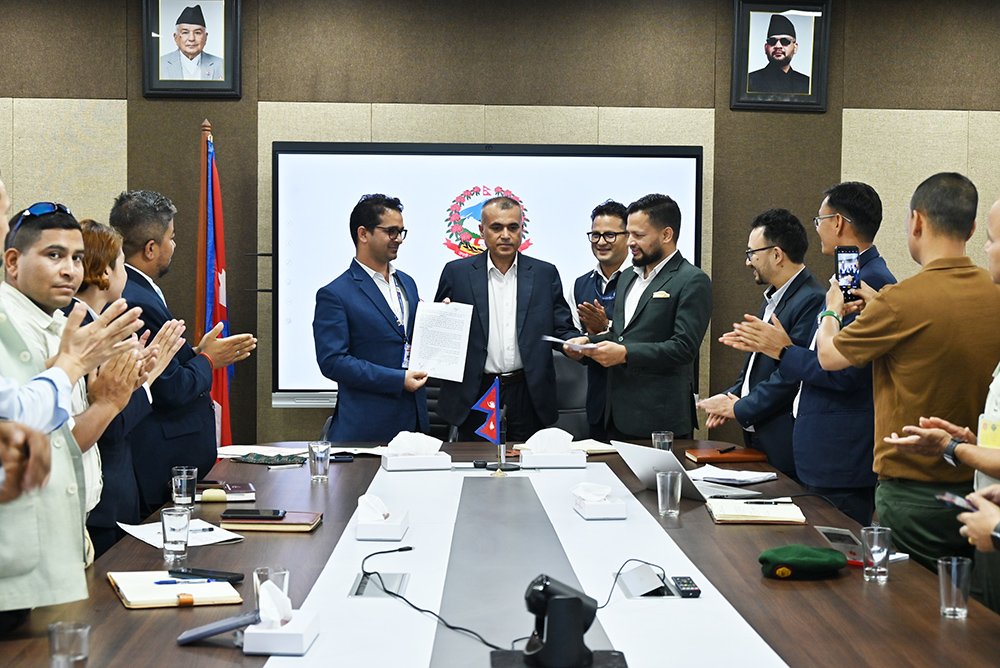
Of the total 29.5 km of damaged road, a memorandum of understanding has been signed for JICA to provide a grant of Rs 2.63 billion for the 3.2 km section from Barkhekhola to Piple. The government had already awarded contracts for sections other than those to be built by JICA before last Ashoj. The government has provided a source commitment of Rs 8.5 billion for the reconstruction of the damaged sections. Of this, Rs 7.5 billion has been allocated for the three Kavrepalanchok sections and Rs 1 billion for the Sindhuli section. Engineer Bindu Adhikari of the office stated that detailed monitoring and inspection have been conducted, and temporary restoration work has begun.
The office reported that continuous rain starting on the night of Ashoj 17 caused significant damage to the Bhakunde-Nepalthok road section. According to Engineer Adhikari, the Roshi River damaged 17 locations on this section, and areas like Chaukidanda, Boksekuna, Mamti, Charsayabensi, and Ghumaune remain highly vulnerable. Adhikari stated that repairs in these areas will now start from scratch.
According to the office, traffic is currently operating on 110 kilometers of the road, while 50 kilometers are in the reconstruction phase. This year, the process was initiated to reconstruct the 29-kilometer section of the BP Highway damaged by the floods of Ashoj last year in four parts. At that time, floods and landslides had completely washed away eight kilometers of the road.
The permanent reconstruction of the damaged highway will feature a seven-meter-wide blacktopped road allowing two vehicles to pass easily, and RCC walls will be built below the river level to prevent damage from future Roshi River floods. In the first phase, the office will make the 28-kilometer road from Bhakunde to Nepalthok two lanes. Due to risks, nighttime traffic has frequently been restricted on the highway. While about 3,000 vehicles use the highway daily, this number triples during festivals.
Technical studies by JICA have prohibited vehicles weighing over 16 tons on the BP Highway. However, traders have been influencing the administration to operate vehicles up to 25 tons. Although tippers carrying up to 25 tons of gravel and sand operate freely, the regulatory bodies often remain silent spectators. Tippers operating on this road are a major factor in destroying the highway's structure. More than 600 tippers are operating daily with loads exceeding capacity. Despite occasional police checks, regular monitoring is not happening, a fact tipper operators exploit. Organized tipper operators and crusher business owners have been influencing the local administration, putting the structure of the BP Highway at risk.
According to the District Traffic Police Office, Kavrepalanchok, more than 3,000 small and large vehicles currently travel on the BP Highway daily. When the Mugling-Narayanghat road section is blocked, most small vehicles from the east use the BP Highway. Tippers, mini-buses, Tata Sumos, and microbuses are the most common vehicles on this road. Construction of the BP Highway (the 160 km Dhulikhel-Sindhuli-Bardibas road) began in the fiscal year 2053/54 with grant assistance from the Japanese government. The highway, completed in sections, was formally handed over by the Japanese government to the Government of Nepal on Ashad 18, 2072. The highway is considered the shortest route connecting the central capital, Kathmandu, with the mid-hills and eastern Nepal.
This specific news has been automatically translated by AI. As a result, there may be some inaccuracies or language errors.
_iL3K2wYemS.jpg)