
Nepal Government Faces Backlash Over Proposed Dissolution of Kathmandu Valley Public Transport Authority

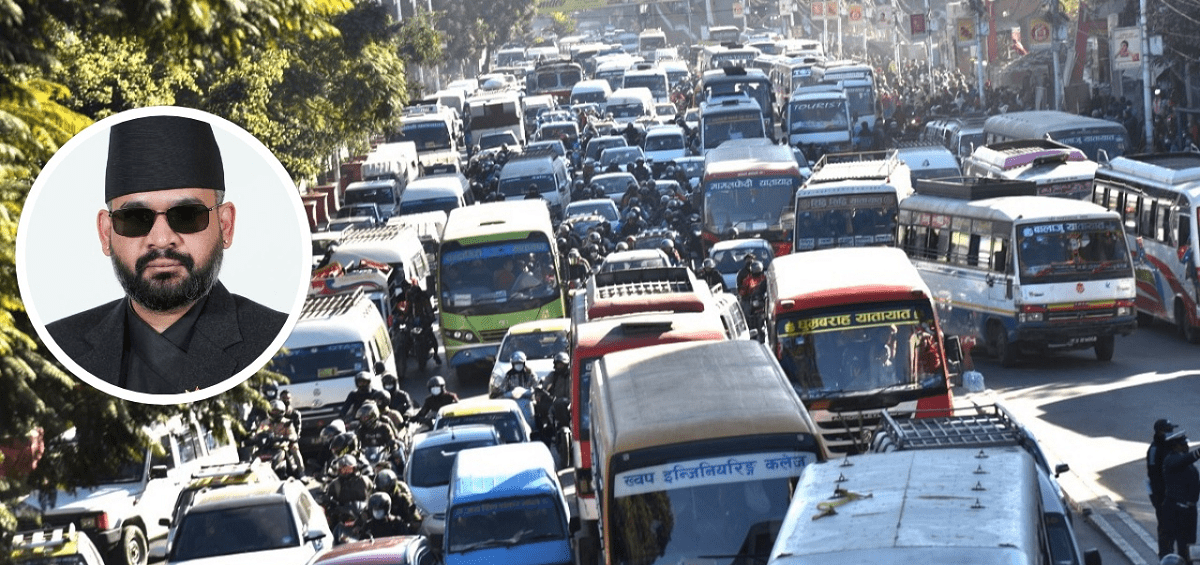
Kathmandu. After significant effort, the government had enacted the 'Urban Area Public Transport (Management) Authority Act, 2079' to end the hardships, arbitrary fares, and unsafe travel conditions faced by passengers. However, before the 'Federal Capital Urban Area Public Transport Authority' established under this act could operate at full capacity, the government has placed it on a 'dissolution' list, questioning its relevance.
In the 'Good Governance Roadmap, 2082' released by the government for administrative reform and cost-cutting, it has proposed either dissolving this authority or transferring it to the provinces.
Experts advise the government against dissolving the authority. Transport expert Shriram Dhakal emphasized that instead of dissolving the authority, it should be further strengthened.
In a conversation with Ratopati, Dhakal stated that major reforms are needed in the public transport sector, and such a structure is indispensable for that purpose.
According to Dhakal, it is unfortunate that the debate over dissolution has started before the authority could even function fully. 'It hasn't even found its footing yet,' he said. 'The authority has not been able to work as expected because it was not provided with the necessary manpower and resources; this does not mean the structure itself should be dissolved.'
He argues that if the government dissolves this concept introduced for public transport reform instead of implementing it, the public transport sector will become even more chaotic.
The government's proposed good governance roadmap suggests dissolving a dozen agencies for cost-cutting and administrative efficiency. However, according to Dhakal, there is always a need for an empowered body to manage a complex and challenging sector like public transport.
'If some legal or practical provisions make it difficult to work, they can be amended,' he added. 'It is in the state's interest to move it forward by putting it through a process of gradual improvement and equipping it with resources.'
Is the proposal for dissolution based on facts or impulse?
According to the Authority's Executive Officer Kuber Nepali, the government did not conduct an objective study when proposing the dissolution. 'This discussion has come up based on a report submitted by the outgoing Finance Minister a year ago, which is completely biased. That report, written without any discussion with stakeholders and the authority, is not irrefutable,' he said.
According to Nepali, the authority is an institution established by an act. 'An act made by the parliament cannot be dissolved by a government announcement; it requires the parliament's own process,' he said. 'The proposal to dissolve the Railway Board appeared in the budget two years ago, but it has not happened yet. It is impractical to talk about dissolving such institutions without understanding their relevance.'
The authority is tasked with maintaining integrated data on transport operators, vehicles, and routes, implementing a 'cashless' system to manage fare payments, and developing an integrated transport system based on information technology.
Citing examples of successful transport management through the 'authority model' in developed cities around the world, Nepali stated that it is essential for Kathmandu as well. He argues that in a valley with 18 municipalities, where a single route crosses multiple local levels, management is impossible without an integrated body like the authority.
'Our constitution gives the right to inter-provincial transport to the federal government and local routes to the provincial and local levels. However, the valley must be considered a single economic unit,' Nepali said. 'Administrative divisions do not align with transport planning. A single mechanism must oversee everything from Dakshinkali to Budhanilkantha.'
What has the authority done so far?
The main goal of this authority, as envisioned by the Urban Area Public Transport (Management) Authority Act, 2079, is to make public transport in the valley easy, accessible, passenger-friendly, reliable, and cost-effective. For this, the authority is tasked with maintaining integrated data on transport operators, vehicles, and routes, implementing a 'cashless' system to manage fare payments, and developing an integrated transport system based on information technology.
Although the authority has plans and technology, those reform files are gathering dust in drawers due to the government's low priority and administrative hurdles.
According to Executive Officer Nepali, the 10-year master plan to make the valley's transport world-class, an app to track thousands of vehicles, and a cashless fare system are all fully prepared. However, he said that the pace of reform has been halted due to a lack of resources.
Similarly, the authority has prepared a 'business plan' in collaboration with the World Bank to be completed in various phases of 2, 4, 6, and 10 years. Nepali claims that the entire landscape of the valley's transport can be transformed with an investment of about 7 billion rupees under this master plan.
'Currently, there is unhealthy competition between vehicles on the same route. The current problem is a flawed business model where the vehicle owner gets more money the more passengers they carry,' he said. 'We have proposed a contract model. In this, the vehicle owner is paid based on service quality and adherence to schedules, not on the number of passengers.'
Nepali mentioned that a policy has been formulated to merge small companies for this purpose.
The authority has technically completed the main work. A mobile app called 'KTM Public Transport' is ready, with 1,000 vehicles currently connected to it.
Nepali said, 'Passengers can live-track where their nearest bus stop is and how many minutes it will take for their desired vehicle to arrive via their mobile. For example, a passenger living in Bishalnagar can see on the app which vehicle number is at what distance.'
This app is yet to be released. The authority is also ready for a 'cashless' fare system. The plan to distribute 500,000 to 1 million smart cards and install card machines in vehicles has been stalled due to the complexities of the Public Procurement Act. 'As soon as the Procurement Act is amended, we will implement the system of paying fares via smart cards in the valley within 6 months,' said Nepali.
For transport reform, the authority has identified and finalized 300 bus stops in coordination with the Kathmandu Metropolitan City. He argues that when bus stops are not designated even on major roads like Maitighar, the actions taken by traffic police are not practical.
An institution with so many plans and technology is currently in a helpless state. There is not a single full-time employee in the authority to date.
Additionally, the 'vehicle layout' standards for new incoming vehicles have also been prepared. 'The seats reserved for women, people with disabilities, and senior citizens are not just labeled; we have created technical standards for how safe and accessible they are,' he said.
An institution with so many plans and technology is currently in a helpless state. There is not a single full-time employee in the authority to date.
Nepali said, 'The government gives a budget of 10 million rupees a year, of which 2 million goes to office rent alone. How can such a major reform be done with the remaining money?'
There is also a major legal bottleneck in the decision-making process. He mentioned that the 35-member 'Public Transport Council' is very cumbersome and it takes months to hold its meetings. He demands that it be replaced by a professional board of 5-7 members.
Executive Officer Nepali said, 'It doesn't take rocket science to improve Kathmandu's transport; it is enough to just let the authority operate at full capacity.'
He claims that if the government immediately passes the authority's regulations, assigns full-time skilled manpower, and ensures the necessary 7 billion budget, a remarkable change in the valley's public transport will be seen within the next two years.
This specific news has been automatically translated by AI. As a result, there may be some inaccuracies or language errors.
_Yq85YOxh21.jpg)
_jqRIbYgb17.jpg)