Dalit activists demand state apology and reparations for historical discrimination

_fKWpCic9oK.jpg)
Kathmandu. Dalit and human rights activists have stated that the state must offer a formal apology along with reparations to the Dalit community.
The government's 100-point agenda for governance reform includes a commitment to 'formally acknowledge the injustices, discrimination, and deprivation of opportunities faced by Dalits and historically excluded communities due to state, societal, and policy structures, and to announce reform-oriented programs within 15 days, including a formal apology from the state, to lay the foundation for social justice, inclusive rehabilitation, and historical reconciliation.'
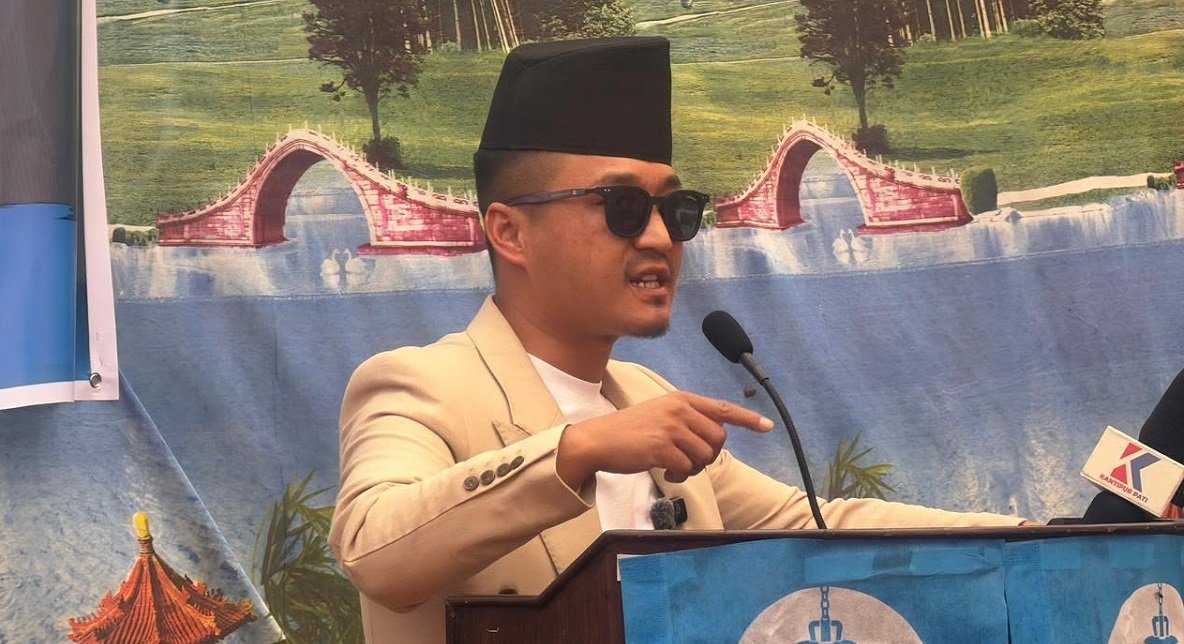
An interaction program was held today at the NGO Federation with Dalit and human rights activists regarding this issue. During the discussion, activist Dr. Drona Rasaili cited examples from countries like South Africa and Australia, where states have apologized to marginalized communities to restore their dignity, but noted that this alone would not solve the problems faced by Nepal's Dalit community.
He expressed that while there has been pressure to include a provision for a state apology in the constitution, it has not been practically implemented. He stated that while the current government's announcement to apologize is positive, it is not sufficient. He said, "If the state has systematically excluded the community through policy, it must apologize with reparations."
Former Secretary of the Government of Nepal, Dr. Man Bahadur Bishwakarma, suggested that the government should focus on introducing integrated legislation for the Dalit community. He further stated that the rights of the Dalit community enshrined in Articles 24 and 40 of the Constitution must be fully implemented through legislation, and the state should introduce clear policies and budgets to increase the scope of reparations for the Dalit community, which has been subjected to discrimination for centuries.
"The current government appears more flexible and cordial toward the Dalit community than in the past, but the state must demonstrate a sense of responsibility for result-oriented transformation, not just through sentiment," he said.
Similarly, Dalit activist Motilal Nepali mentioned that while the Constitution of Nepal envisions equality and the end of untouchability, there has been no practical transformation. He said, "The wounds of the Dalits are deep; an apology alone will not heal them."
JB Bishwakarma, President of the Dalit NGO Federation (DNF), emphasized that just as the state previously used policies and laws to deprive the Dalit community of access to resources, the government must now introduce an action plan to provide reparations through similar legislative and policy measures.
Jivan Tiruwa, a representative of the Dalit GenZ Alliance, stated that at a time when Dalits are still not free from the evil practice of untouchability, a national awareness program is necessary to eradicate it.
Activist Rita Pariyar emphasized the need to ensure Dalit rights in proportional political representation. The Dalit civil society concluded that they would collect the suggestions discussed during the interaction and submit a memorandum to the government.
This specific news has been automatically translated by AI. As a result, there may be some inaccuracies or language errors.