Gaur Incident Resurfaces: Political Tensions Rise Over Potential Investigations


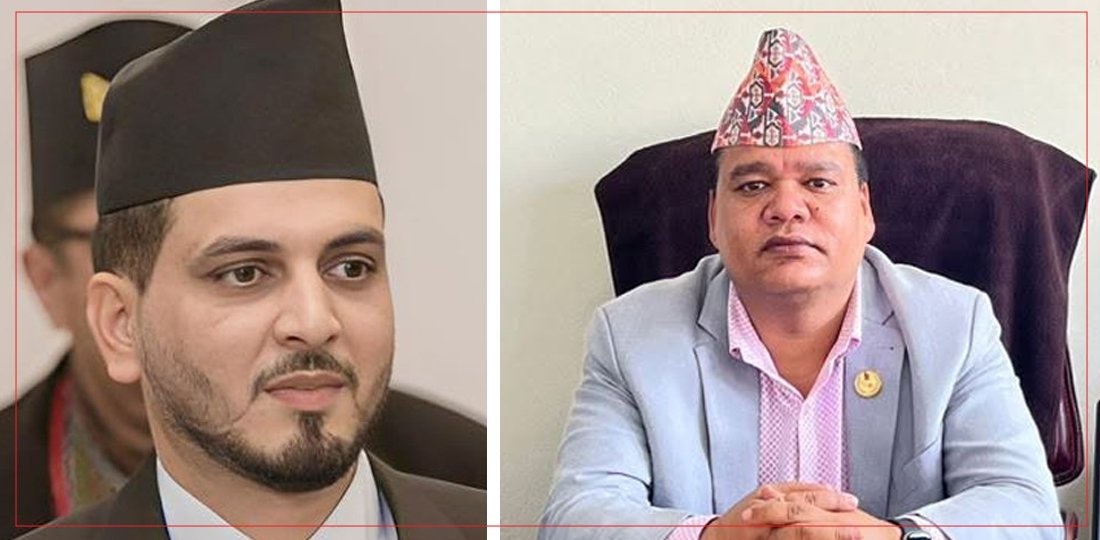
Kathmandu. The Gaur incident of 2063 has returned to the spotlight. Following discussions regarding the government led by Balendra (Balen) Shah potentially acting on reports and complaints related to the incident, Mahanta Thakur, patron of the Janata Samajbadi Party (JSP) Nepal, met with Rabi Lamichhane, chairman of the Rastriya Swatantra Party (RSP).
The meeting between the two leaders on Tuesday has fueled further debate over the Gaur incident. Thakur, who is also a member of the National Assembly, inquired with RSP Chairman Lamichhane about the possibility of arresting JSP Nepal Chairman Upendra Yadav in connection with the incident.
In response, Chairman Lamichhane stated that there is no truth to the rumors circulating. JSP Nepal leader Ramkumar Sharma noted that Lamichhane clarified the government would not engage in political vendettas and suggested he would rather meet with JSP Nepal Chairman Upendra Yadav directly to discuss the matter.
While briefing JSP Nepal leaders on the meeting, Thakur mentioned that Lamichhane assured him the rumors regarding the Gaur incident were baseless.
In 2066, a clash between the then-Maoists and the Madhesi Jana Adhikar Forum in Gaur, Rautahat, resulted in the deaths of 27 Maoist leaders and cadres. Various government, non-governmental, and international organizations investigated the incident and submitted reports to the government.
Following the incident, formal complaints were filed at the police station. Victims' families also filed a case in the Supreme Court, alleging that the perpetrators were not being arrested. The court has directed the police to investigate the complaints filed regarding the incident, and sources indicate the current government has been asked to implement this.

The news that the government has ordered the implementation of these police complaints has sparked speculation that JSP Nepal Chairman Upendra Yadav could be arrested.
JSP Nepal leader Dr. Surendra Kumar Jha stated that the Gaur incident is brought up whenever a new government is formed, and there is an attempt to defame the party by spreading rumors of Upendra Yadav's arrest.
'Let there be an investigation; if Upendra Yadav is found guilty, we are ready to take him to jail along with thousands of party workers,' he said. 'Not just this government, but no government should make decisions based on revenge or prejudice.'
Jha expressed full support for the government's steps toward good governance following the recent mandate, emphasizing that the truth behind every incident must be investigated.
Stating that various reports have already indicated that JSP Nepal Chairman Upendra Yadav was not present at the scene during the Gaur incident, he insisted on an impartial investigation into every event to prevent forced defamation.
Prabhu Sah, chairman of the Aam Janata Party (AJP) Nepal, who was directly involved as a Maoist leader at the time of the Gaur incident, has repeatedly demanded action. Shortly after meeting JSP Nepal patron Mahanta Thakur on Tuesday, RSP Chairman Lamichhane also met with AJP Nepal Chairman Prabhu Sah.

While the details of what Prabhu Sah raised regarding the Gaur incident during the meeting have not been disclosed, he has previously pressured the government multiple times to take action against those responsible.
Following protests by victims of the Gaur incident, a five-point agreement was reached with the then-government in Shrawan 2080. Narayan Kaji Shrestha was the Home Minister at the time. The first point of the agreement, dated Shrawan 23, 2080, mentions initiating legal action against the guilty based on facts and evidence, including investigating the complaints registered at the time. Rumors of Upendra Yadav's arrest had circulated after that agreement as well.
What the Commission's Study Says
In 2079, the National Human Rights Commission (NHRC) prepared a report with suggestions for the government to take action against the guilty. On Poush 19, 2079, the commission concluded that even after 16 years, no investigation, inquiry, or prosecution had been carried out regarding the formal complaints.
The commission recommended that the government take departmental action against the then-Chief of District Police Office, Rautahat, Superintendent of Police Yogeshwor Romkhami, and the then-Chief District Officer Madhav Prasad Ojha, Superintendent of Police Ramkumar Khanal, Armed Police Deputy Superintendent Dharmananda Sapkota, and Deputy Superintendent Kamakhya Narayan Singh for failing to prevent human rights violations, if they are still in service. If retired, the commission recommended they be denied any future state opportunities.
The commission also directed the government to investigate individuals identified in the formal complaints and the 2064 Gaur Incident Investigation Commission report, and to inform the commission every three months. A commission member stated that this directive has yet to be implemented.
Noting that the families of the deceased have not received any relief or compensation from the government, the commission recommended providing at least 300,000 rupees per family as compensation under Section 16 of the National Human Rights Commission Act, 2068, and informing the commission within three months. This directive also remains unimplemented.
How Did the Incident Occur?
The commission concluded that the bitter and vengeful behavior of the then-CPN (Maoist) sister organization, Madhesi Mukti Morcha, and the Madhesi Jana Adhikar Forum was responsible for the Gaur incident. The commission found that the then-Forum Chairman Upendra Yadav, Forum cadres in Rautahat, and the then-Maoist sister organization Madhesi Mukti Morcha's General Secretary Prabhu Sah and former People's Government Chief Bindeshwor Yadav held programs at the same place and time, knowing that the situation could deteriorate.
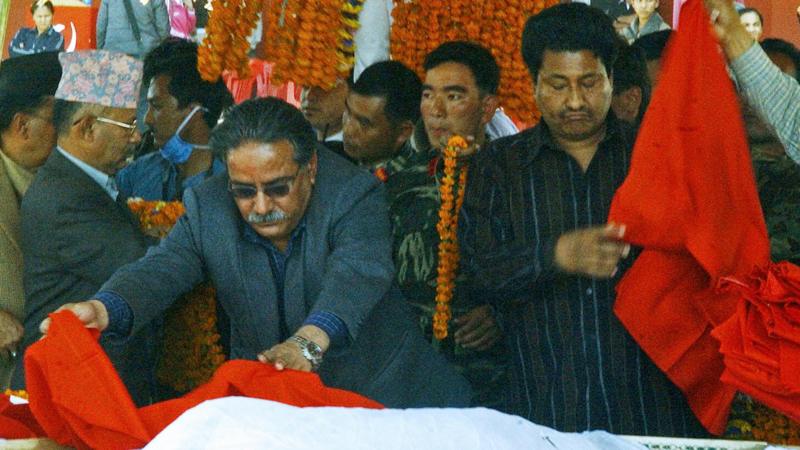
The commission noted that after the Forum demolished the Madhesi Mukti Morcha's stage, the first shot was fired by the Madhesi Mukti Morcha in retaliation. The commission stated that the subsequent actions taken by the Forum to capture the Maoists were inhumane and cruel.
The commission concluded that, on one hand, the Nepal Police and Armed Police did not send reinforcements as per the District Security Committee's decision, and on the other, there was no effective coordination between the Nepal Police and the Armed Police in the district.
Local Security Personnel Also Guilty
The commission stated that local security personnel and the administration, who had a weak presence before and on the day of the incident, failed to bring the perpetrators of such a serious crime to justice.
The commission concluded that the then-Chief District Officer Madhav Prasad Ojha made no effort to prevent the incident, and the role of the National Investigation Department was also ineffective.
The commission noted that despite two formal complaints being registered at the District Police Office, Rautahat, the responsible agencies remained completely indifferent, and the Police Headquarters and the Office of the Attorney General also ignored the matter.
Prachanda and Upendra Guilty
Stating that both the CPN (Maoist) sister organization and the Forum used weapons and could not accept each other's freedom and existence, the commission concluded that district-level leaders of both parties, as well as central leaders including then-Forum Chairman Upendra Yadav and then-CPN (Maoist) Chairman Prachanda, failed to restrain their cadres or assist the police in bringing the guilty to justice.
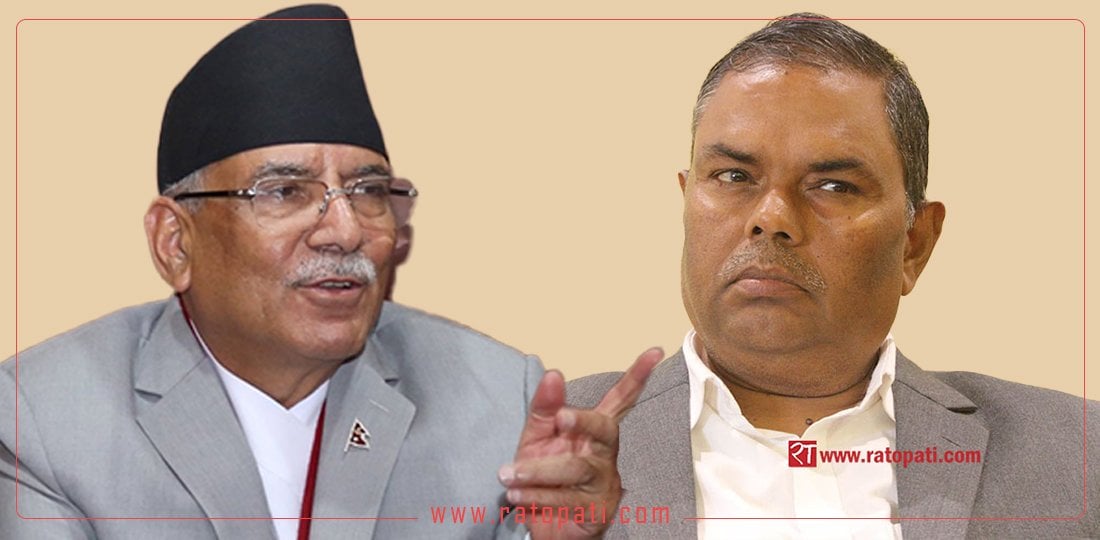
The commission stated that Maoist Chairman Prachanda, then-Madhesi Mukti Morcha General Secretary Prabhu Sah, former People's Government Chief Bindeshwor Yadav, and then-Forum Chairman Upendra Yadav were responsible. The commission noted that the name of then-Forum Chairman Yadav was included in the complaints registered at the District Police Office, Rautahat, and in the report of the government-formed Gaur Incident Investigation Commission.
This specific news has been automatically translated by AI. As a result, there may be some inaccuracies or language errors.