Koshi Province Finance Committee Criticizes Government for Ignoring Parliamentary Directives

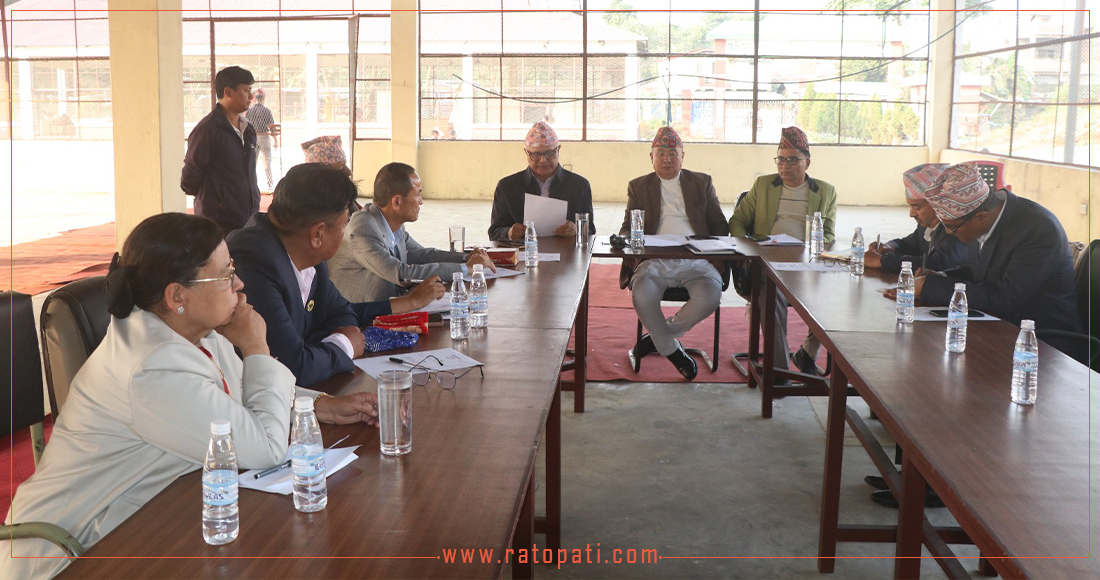
Biratnagar. The Finance Committee of the Koshi Province Assembly has expressed dissatisfaction, stating that the provincial government has failed to fully implement the committee's directives and its own commitments.
In its annual report (FY 2081/082) submitted to the Koshi Province Assembly, the committee concluded that the government's actions pose a challenge to the parliamentary practice of holding the executive accountable.
In a parliamentary system, the parliament and its committees monitor government activities and provide necessary guidance. However, the report highlights that the Koshi provincial government has been ignoring the committee.
The report, presented by Committee Chairman Binod Rai, explicitly points out in the section on 'Problems Perceived by the Committee' that the government has not fully complied with the committee's decisions and directives.
'Due to the dominance of the party system and the fact that a parliamentary majority is the basis for government formation, the executive (government) maintains complete control over the legislature (parliament) when a majority government is in power,' the report states. 'The lack of mandatory provisions for implementing directives and reports, and the failure to fully implement commitments made by the government, are the main problems.'
The committee concluded that since the majority of its members belong to the ruling party, the government can influence committee decisions, increasing the likelihood that they will not be implemented. The report also notes that the government's disregard stems from the lack of binding mechanisms, while the committee's own work is often rushed due to insufficient preparation and lack of expert input.
The report emphasizes the need to develop a mechanism for coordinated operations and continuous monitoring of suggestion implementation to resolve jurisdictional conflicts that arise when other committees intervene in economic matters.
Despite complaints about the government ignoring directives, the committee has provided significant suggestions for budget formulation and improving the provincial economy. It recommends increasing capital expenditure by allocating budgets only to implementable projects, discouraging the trend of spreading small budgets of 10 million or less, and bringing the approximately 40 percent of informal economic activities into the tax net.
The committee also suggests broadening the tax base without increasing rates, boosting exports of tea, cardamom, and herbs, and branding local liquor for export. It recommends establishing a land bank for cultivating barren land and developing religious and tourist sites targeting Indian tourists from border areas like Jogbani and Kakarbhitta.
The Finance Committee further suggests implementing programs to provide agricultural subsidies directly to the bank accounts of genuine small farmers. It also calls for reducing lump-sum budget allocations, prioritizing the completion of stalled and multi-year projects, and ensuring effective coordination between federal, provincial, and local levels to avoid duplication of plans.
The committee also emphasized the need to manage budgets for compensating farmers for crop damage caused by wildlife and prioritizing the construction of paved roads connecting district headquarters to local level centers.
This specific news has been automatically translated by AI. As a result, there may be some inaccuracies or language errors.