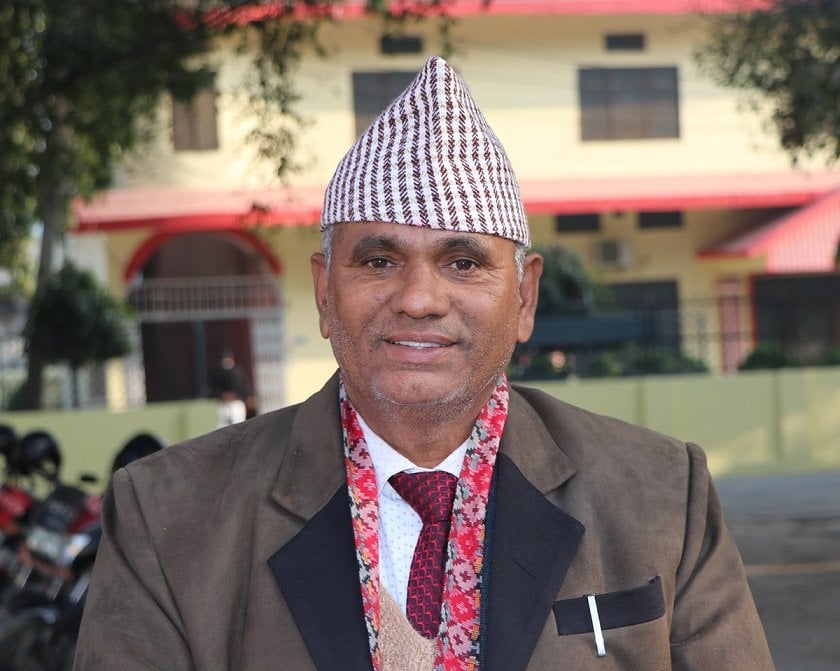
Former Kathmandu Chief District Officer Arrested in Connection with Deadly 'Gen-G' Protests


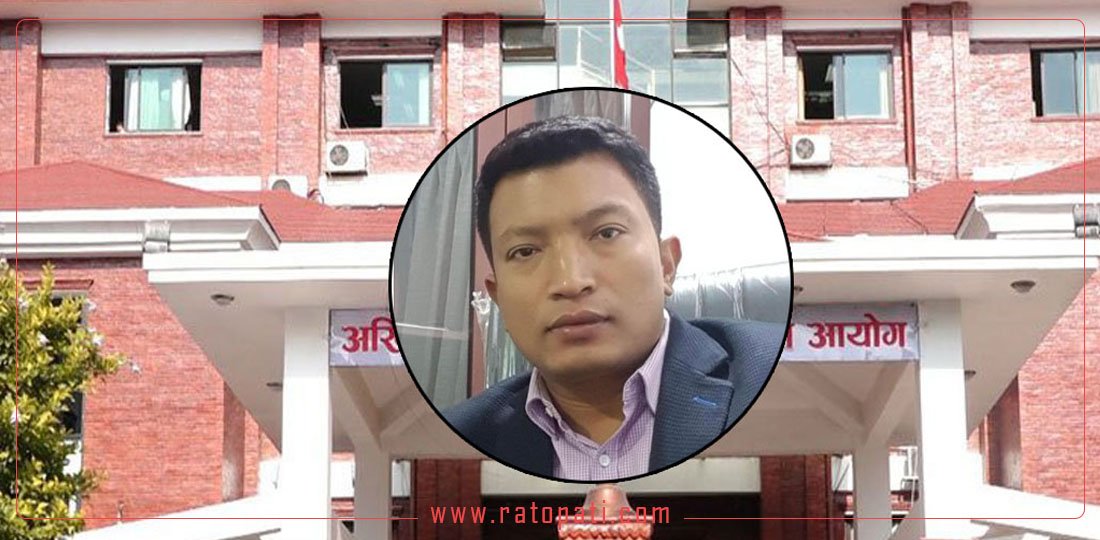
Kathmandu. Following the arrest of then-Prime Minister KP Sharma Oli and then-Home Minister Ramesh Lekhak on charges of playing a role in the 'Gen-G' movement, the third person arrested is Chhabi Rijal, the then Chief District Officer (CDO) of Kathmandu.
He was arrested by the police on Tuesday morning from Subidhanagar, Kathmandu. He was arrested based on the recommendation of the investigation commission, holding him responsible for the human casualties caused by the use of lethal force during the 'Gen-G' demonstrations in the Baneshwor area on Bhadra 23 and 24.
The high-level investigation commission led by Gauribahadur Karki had identified then-CDO Rijal as guilty in the incident and recommended criminal prosecution against him.
After the Council of Ministers decided to implement the commission's report, then-Prime Minister Oli and Home Minister Lekhak, who were accused of playing the main role in suppressing the movement, had already been arrested and remanded for 5 days by the court. Meanwhile, Rijal had been facing intense criticism for allegedly ordering the shooting that resulted in the deaths of teenagers in Baneshwor.
According to the investigation commission's report, then-CDO Rijal is primarily accused of serious 'negligence' in his official duties. The commission concluded that as CDO, he failed to take any effective initiative to stop the firing or normalize the situation, even when security personnel fired continuously for nearly four hours in Baneshwor, leading to the deaths of demonstrators.
Furthermore, the report pointed out that he failed to ensure effective coordination among security agencies even after issuing a curfew order and was completely unsuccessful in enforcing the principle of use of force. Concluding that human casualties occurred due to the complete negligence of the officials, the commission recommended that the government investigate and prosecute Rijal and others under Section 182(1) of the Muluki Criminal Code, 2074, according to the law.
However, the arrested Rijal claimed in his statement to the commission that he did not order firing with lethal weapons. He asserted that he only gave verbal instructions to use minimum force according to the 'dual objective doctrine'—to protect the Parliament building and the lives of the protesting youth—and, as a last resort, to fire rubber bullets aimed below the knee.
In his statement, he disclosed that he had informed the then-Home Minister, Chief Secretary, and Home Secretary after the demonstrators advanced towards the Parliament building on Bhadra 23, and the curfew was imposed from 12:30 PM under their direction. Although he tried to evade responsibility by claiming he continuously instructed security personnel to maintain restraint and consider human rights, the commission made it clear that he could not be absolved of responsibility for that heinous incident.
This specific news has been automatically translated by AI. As a result, there may be some inaccuracies or language errors.