Government Accelerates Public Procurement Act Amendment Amid Calls for Comprehensive Review


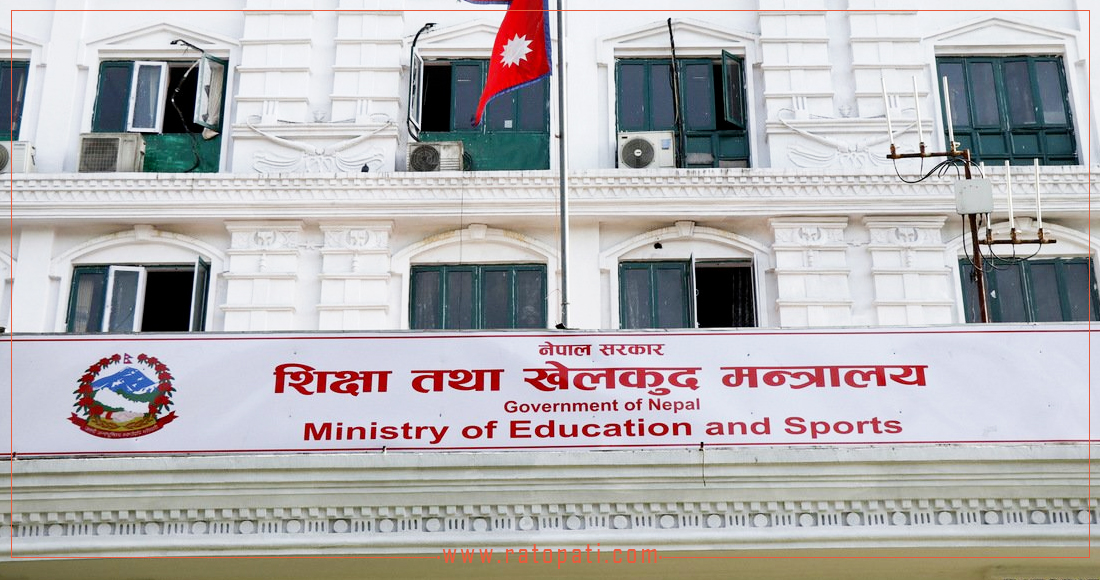
Kathmandu. The government has intensified the process of amending the 'Public Procurement Act' as part of its one-hundred-point action plan. The Public Procurement Monitoring Office (PPMO) stated that it has advanced the necessary groundwork and consultations with stakeholders for the act's amendment.
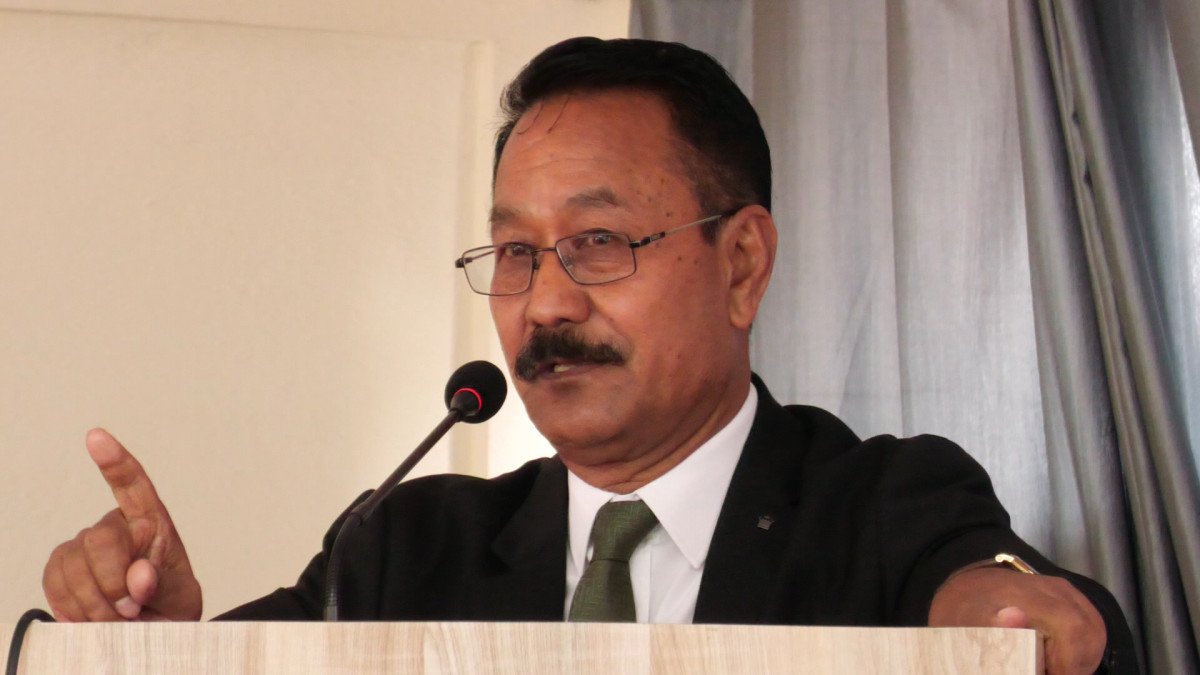
According to Ram Prasad Acharya, Joint Secretary and Spokesperson for the PPMO, work is underway to complete this priority matter for the government within the stipulated time. "This is included in the government's 100-day program; we will complete our part within the set 'time-bound' framework," said Spokesperson Acharya.
Responding to the government's goal of amending the act within 30 days, he clarified that the office would complete the task of drafting and sending the proposal on time. However, he noted that the final decision on the amendment rests within the jurisdiction of the Parliament and the government.
The office is also collecting opinions, advice, and suggestions from various stakeholders to modernize the act. Acharya mentioned that although some 'work out' had been done previously for the amendment, discussions are being held now because further refinement is deemed necessary in the current new context.
"We are currently in the initial phase. Meetings are being held, and the process of collecting suggestions from stakeholders is ongoing," he said. "We will move forward with the amendment proposal on time, incorporating the views of all parties."
Previously, although the amendment was discussed, the process had not gained momentum due to changes in government and other technical reasons. Construction entrepreneurs had been demanding amendments, arguing that the long-standing ineffectiveness of the Public Procurement Act was hindering construction and causing projects to miss deadlines, but the amendment had not progressed.
Experts have suggested that amending this act in 30 days, as the government desires, is not feasible and that rushing the amendment might omit crucial aspects. Public procurement expert Dr. Rajendra Prasad Adhikari stated that it is impossible to amend the Public Procurement Act within the short period of 30 days announced by the government.
The current government has placed this high on its list of 100 agendas for governance reform. Through the new amendment, the government intends to implement modern concepts such as 'Value for Money,' 'Life Cycle Costing,' 'e-GP Marketplace,' and 'Performance-Based Contracting.' The main objective of the government is to make the procurement process fully digital, transparent, and trackable while encouraging competition.
Amendment in 30 Days Impossible, Rushing May Omit Key Issues
Experts have suggested that amending this act in 30 days, as the government desires, is not feasible and that rushing the amendment might omit crucial aspects. Public procurement expert Dr. Rajendra Prasad Adhikari stated that it is impossible to amend the Public Procurement Act within the short period of 30 days announced by the government. He clarified that while amending the regulations could be done by the Council of Ministers, the amendment of the Act requires a mandatory parliamentary process, warning that a rushed amendment could overlook many important issues.
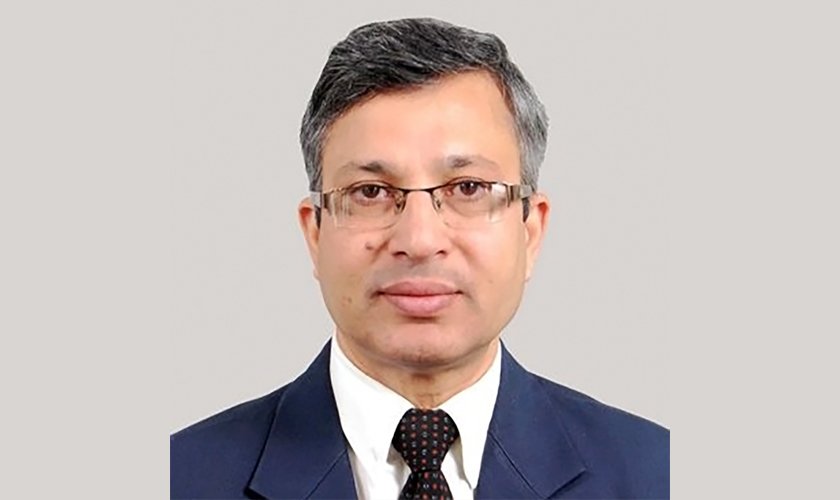
"We must first be clear about the objective of the amendment," says Dr. Adhikari. "If sufficient preparation and study have been done at the government level, the process can move forward, but a hastily done amendment can miss many important aspects."
Dr. Adhikari stated that the main necessity now is not the amendment of the act but rather boosting the morale of employees who are in a 'state of indecision' and managing problematic (sick) projects.
According to expert Adhikari, many projects are currently in disarray. He suggested that the government should focus on how to manage these projects within 30 days, how to resolve payment issues, and how to make the provisions for contract termination effective. "Currently, employees in public agencies are unable to make decisions due to fear of the Commission for the Investigation of Abuse of Authority (CIAA) and the Office of the Auditor General; it is necessary to create an environment and enhance the capacity for them to make correct decisions. Discussions and consensus with all stakeholders are necessary for the act's amendment, which may take 3 to 6 months," he added.
What Issues Need Amendment?
Dr. Adhikari suggests that the existing procurement act, being centralized, needs to be adapted to federalism. He noted that when amending the Public Procurement Act, coordination must also be maintained with the Construction Business Act 2055 and the Public-Private Partnership and Investment Act (PPP).
Furthermore, Adhikari analyzes that the practice of awarding contracts based on the 'lowest bid' in the Nepali procurement process has caused problems for projects. He stated that to exit this cycle, the Public Procurement Act must be amended after extensive discussion. He also pointed out that there is a lack of clarity at the government level regarding advance payment submission, and work cannot proceed despite the existing act due to problems related to water supply, electricity, forest, environment, and land acquisition.
Regarding the infrastructure construction company established by the government, expert Adhikari made a sharp comment. He says, "This company has neither resources nor experience and capacity. The Public Procurement Act envisions competition, but this company does not appear capable of competing." He suggested that the state seems to have created this company merely to 'provide jobs,' and it will take a long time to develop its efficiency and experience.
Dr. Adhikari says, "Many things like forest, environment, and land acquisition are causing work to halt even though they are provisioned in the act. How to facilitate these? How to bring together issues related to utility poles and water pipes is another fundamental question. After that, procurement needs to be separated in procurement."
According to expert Adhikari, there is a clear need to distinctly separate the procurement process into federal (central) and provincial levels. This should look not only at construction procurement but also integrate the status of associated consultants and construction businesses.
The aspect of goods supply is even more complex and extensive compared to construction. This covers everything from purchasing airplanes to procuring medicinal supplies, agricultural tools, and agricultural products. Emphasis is placed on creating clear management and specific standards for procuring these differently natured goods and materials.
Regarding the infrastructure construction company established by the government, expert Adhikari made a sharp comment. He says, "This company has neither resources nor experience and capacity. The Public Procurement Act envisions competition, but this company does not appear capable of competing." He suggested that the state seems to have created this company merely to 'provide jobs,' and it will take a long time to develop its efficiency and experience.
He stressed the need to proceed by clearly classifying the procurement process into goods, construction, and consulting services, and having separate and clear provisions for complex procurements such as aircraft, medicines, and agricultural tools.
Demand from Entrepreneurs for Subject-Specific Amendment
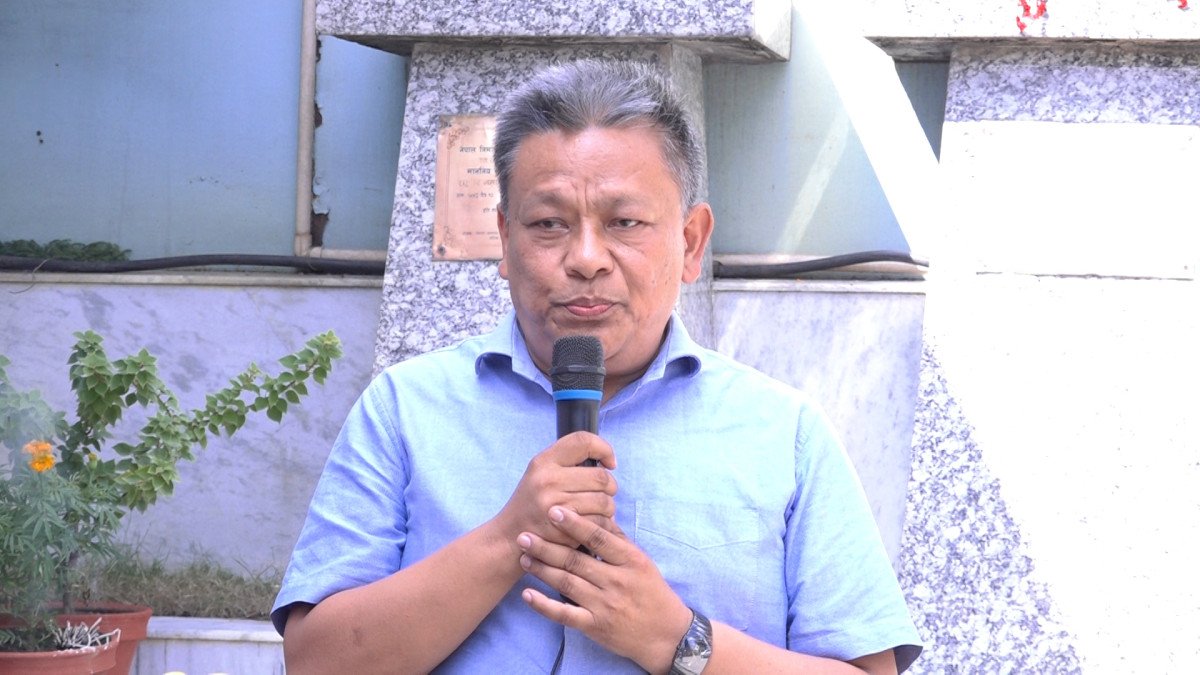
Rabi Singh, President of the Nepal Contractors' Association (FNCCI), stated that subject-specific amendments to the Public Procurement Act are necessary to accelerate the pace of infrastructure development in the country. He argued that having a single procurement act for everything from buying salt to buying airplanes is impractical and requires modification based on subject matter.
President Singh mentioned that the current procurement act is not implementable and has added complexity to the construction sector. He emphasized the need to open a path for easy exit if problems arise in construction work, allowing contractors to leave by forfeiting their 'performance guarantee.'
Furthermore, President Singh argued for the complete repeal of Sub-sections 3 and 8 of Section 59 of the Public Procurement Act. According to him, the provision to recover additional amounts even after the performance guarantee is forfeited is finishing off entrepreneurs. "We are here to do business, not to gamble," Singh said. "If a contractor cannot perform, they should be released after forfeiting the deposit, so that work can proceed through a new process and projects do not remain stranded."
He argued that the 5 percent performance guarantee could be increased to 7 percent, but entrepreneurs should not be penalized further and entangled.
Similarly, Singh suggested that the amendment should include a provision in the act for the government to allocate at least 40 percent of the total budget to capital expenditure to maintain the reputation of the construction sector and strengthen the supply chain. He also stated that projects without budget assurance should be canceled, and there must be a full guarantee of payment upon completion of work.
Lack of Coordination Between Acts
Singh stated that construction work is obstructed due to a lack of coordination between the Procurement Act and the Economic Act, Local Act, Forest Act, and Environment Act. "Currently, one agency is only obstructing the other," he said. "Laws must be created collaboratively by all stakeholders, the Ministry of Finance, and regulatory bodies to support each other."
He stressed that due to the excessive price hikes in fuel and construction materials recently, old contracts are becoming impossible to execute, and the state should create an environment for work rather than finishing off entrepreneurs.
This specific news has been automatically translated by AI. As a result, there may be some inaccuracies or language errors.