One Year Since Violent Pro-Monarchy Protest in Kathmandu: A Look Back at the Unrest and Current Political Climate

Kathmandu. Exactly one year ago, the demonstration organized by a royalist group in the Tinkune area of the capital, challenging the current system, turned violent, resulting in the untimely deaths of two people. Significant damage to physical infrastructure also occurred.
The demonstration, allegedly held with the 'knowledge' of former King Gyanendra Shah, was organized under the leadership of the then coordinator of the United People's Movement for the Restoration of the Monarchy, Navaraj Subedi, and organized by Durga Prasai, the coordinator of the National, Nationality, Religion-Culture, and Citizen Protection Grand Campaign.
Although permission was obtained from the administration for a 'peaceful demonstration,' the protest turned violent contrary to the plan. Protesters not only encouraged activists to breach the prohibited zone and threw stones at the police, but they also rammed police groups with vehicles. Private property, hospitals, media houses, police stations, political party offices, commercial centers, and vehicles were vandalized and set on fire. Two lives were lost due to that agitation.
In that agitation, Durga Prasai was given the responsibility of 'Commander' by the 'United People's Movement for the Restoration of the Monarchy.' Although a commander is expected to be strategically skilled, Prasai has consistently been accused of playing a role in worsening the situation by arriving at the peaceful protest site in a 'heroic style' with a convoy of vehicles. However, Prasai refutes this, still asserting that the situation deteriorated because preparations were made even to kill him. Prasai's style was certainly wrong, and the security apparatus also failed to manage the situation. Indiscriminate arrests of protesters were made.
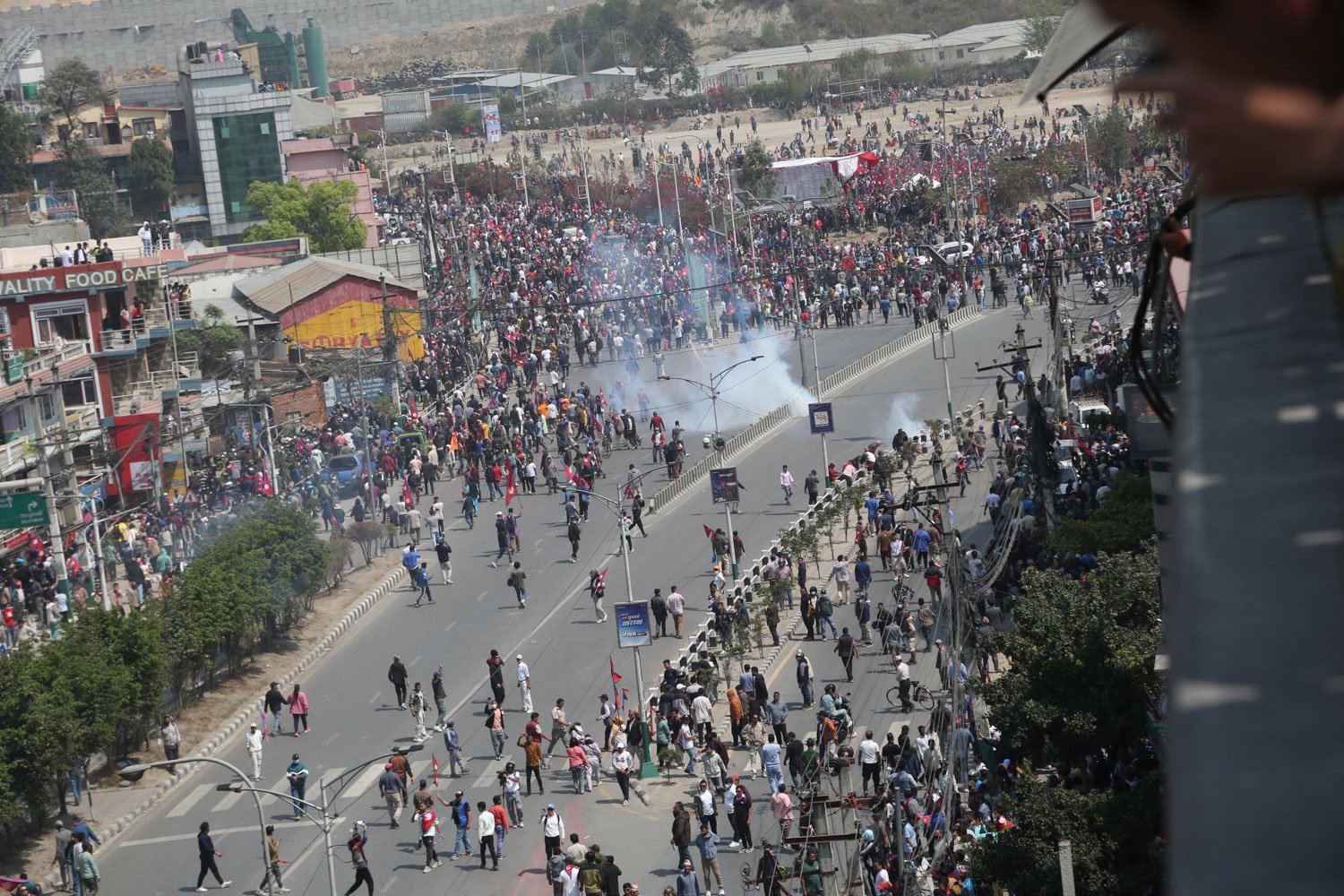
Subsequently, a situation arose involving vandalism, arson, and looting, forcing the local administration to issue a curfew order in the affected areas. The army also had to be deployed on the streets to assist the police.
Prasai, along with then-Rastriya Prajatantra Party (RPP) leader Rabindra Mishra, RPP General Secretary Dr. Dhawal Shamsher Rana, and many royalists and those involved in looting, were later arrested for playing a role in making the incident violent. Following that demonstration, former King Gyanendra Shah also became embroiled in controversy. After questions were raised about his role, the former King attempted to defend himself through his secretariat, stating he had no role in the agitation.
_6RAR7fvl4T.jpg)
Former King Gyanendra Shah, who lost his throne due to the strength of the 2006 People's Movement (062/63), has repeatedly criticized the current system in his statements. Royalist leaders say that he attempted to unite royalists, hoping to 'cash in' on the growing public disillusionment fueled by rampant mismanagement, corruption, and irregularities in the country.
Following that plan, the former King formed a committee with the objective of uniting all royalists under Subedi's leadership. The 'Steering Committee' members of that committee included RPP Chairman Rajendra Lingden and 11 others, including Asmita Bhandari, Kamal Thapa, Keshar Bahadur Bista, Durga Prasai, Pashupati Shamsher Rana, Prakash Chandra Lohani, Rama Singh, Rabindra Mishra, and Haribahadur Basnet.
During that period, as the royalists united and began protesting amidst some minor disputes, it created a stir in the political arena. However, the Tinkune violent protest caused the royalist movement to collapse suddenly. In other words, the agitation, which was planned to be indefinite, could not take place after that incident. Although attempts were made to revive the movement some time later, it failed to gain public support.

When the violent protest occurred in Tinkune on Chaitra 15 last year, CPN-UML Chairman KP Sharma Oli was the Prime Minister. Durga Prasai has repeatedly claimed that Oli held a grudge against him. Indeed, Prasai's imprisonment began during Oli's tenure. Since then, he has been arrested and released numerous times. Nevertheless, he continues to champion the cause of restoring the monarchy and a Hindu state, asserting that only this agenda serves the nation's interest.
Today, Chaitra 15, the situation has changed. While one year ago the Tinkune area of Kathmandu was characterized by agitation, tension, and suppression, a new government has been formed today in the aftermath of the Jan Andolan (People's Movement).

The Jan Andolan took place on Bhadra 23 and 24. In the elections held by the interim government formed on the strength of that Jan Andolan, the RSP government, which secured nearly a two-thirds majority, was formed.
Oli, who was in power last Chaitra, is now entangled in legal troubles. He is currently in police custody facing criminal charges for his alleged role in suppressing the Jan Andolan. Other leaders have also begun to be arrested in various scandals, and the future course of the country remains uncertain.
Asmita Bhandari, President of the World Hindu Federation International Committee and a member of the then 'People's Movement Committee,' states that the monarchy remains the best option for the country's stability in the current situation.
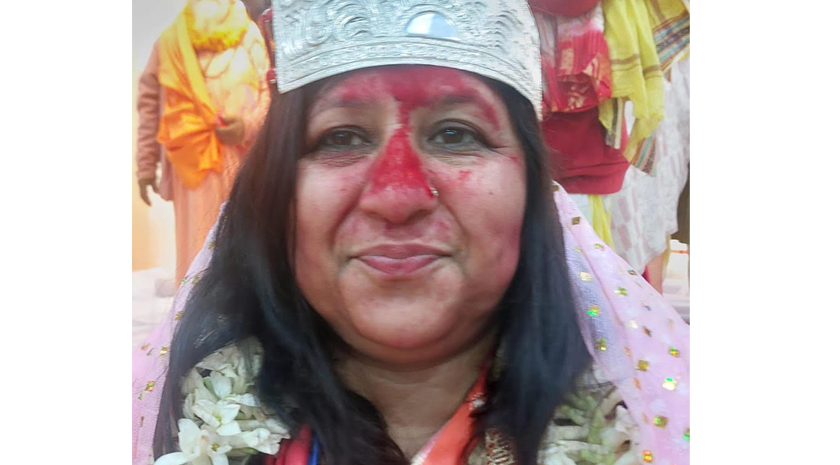
She recalls that although the Chaitra 15 agitation was expected to proceed peacefully, it turned violent due to various infiltrations and circumstances, leading to the death of innocent citizens and many injuries. Remembering that day as a 'black day,' she opined that although the movement had the potential to unite the public in favor of nationalism and nationality, it ultimately failed to succeed.
She stated that the state's suppression during the agitation further complicated the situation. However, she also admitted to some shortcomings from the movement's side, noting that a lack of coordination and disorganized participation prevented the agitation from moving forward in the long term.
She asserted that the need for a monarchy remains relevant in the current political context, presenting it as a 'guardian force.' She reiterated that the monarchy is necessary for stability, nationality, and unity in the country.
She also mentioned plans to move forward with a new strategy according to the changing political situation and to expand the campaign for the restoration of the monarchy by centering the younger generation.
This specific news has been automatically translated by AI. As a result, there may be some inaccuracies or language errors.
_cvUCBlwFTZ.jpg)