Singer Himal Sagar Discusses Two Decades in Music, Near-Depression, and the Future of AI in Sound on 'Talk Forward' Podcast


Kathmandu. Himal Sagar is remembered by music lovers primarily through two 'timelines'. Through the song 'Ma Maile Lekhen Na Unle Lekhin' around the year 2060 BS, and more recently through 'Ae Ho Ra Maya'. The generation listening to the first song was predominantly Gen Y, while the generation listening to the recent song is Gen Z.
He has been continuously active in Nepali music for over two decades. His first song, 'Na Maile Lekhen', became popular. After that, it can be said he never looked back. Some songs did well in between. Gradually, the taste of music also changed, and it became difficult for Himal to continue in the old style.
He made a strong comeback about four years ago with the song 'Ae Ho Ra Maya'. This song became so popular that four more songs under the same title were released. All of them won the hearts of the audience.
Himal has sung songs across all genres. Originally rising from Sugam Sangeet (light music), he has sung Ghazals and Pop songs. Recently, he also sang a Rodhi Bhaka Kauda song, 'Surkhet Jhapali'.
During an interview on the Ratopati podcast 'Talk Forward', Himal shared insights ranging from the start of his musical journey and the struggles of releasing albums, to reaching a state of near-depression when his songs stopped charting, the changing technology, and the future of music. He also openly shared his views on whether it is right or wrong for artists to enter politics. Here is the edited excerpt from the interview (the full video can be watched and listened to):
Singers must update themselves according to the times. Your 'Ae Ho Ra Maya' series created a sensation in the market. When recording that song, did you think it would be this successful?
To be honest, when recording 'Ae Ho Ra Maya', I never thought it would be this successful. Sometimes, songs we work very hard on and feel are excellent do not perform well, but songs we consider average hit the market. 'Ae Ho Ra Maya' was like that.
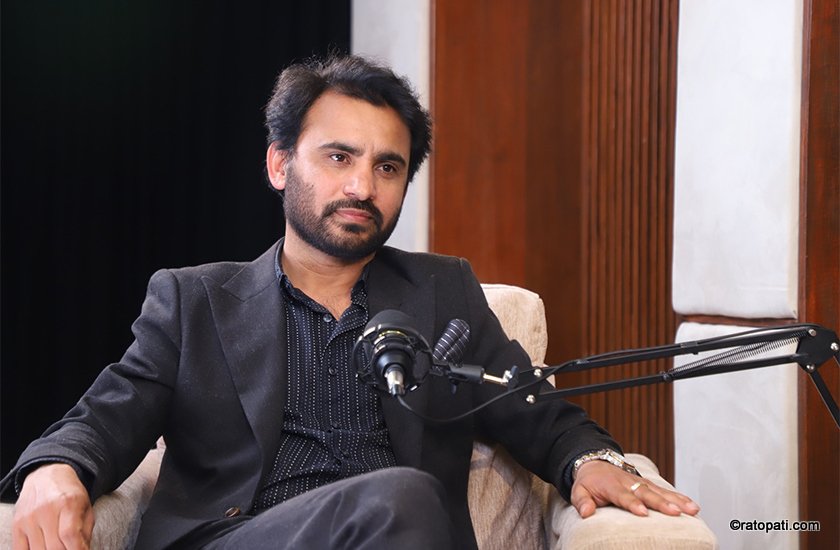
Five or six parts of it came out, and all received millions of views. 'Luck' and timing also play a role in this. When there are no other major content releases, or when a song is released at the right time, it gets a chance to rule unilaterally. This song captured the current generation and trend. If this song hadn't come out, perhaps I would have faded away for some time. Even now, when I go to concerts, the audience demands this song the most.
Technology changed with time. You have only recently started your official YouTube channel. For someone who has understood the music market for so long, why the delay in utilizing digital platforms?
I admit I was a bit late in this regard. I knew I needed to open a channel, but songs were becoming hits on other people's channels, and I was busy with programs at home and abroad, so I was a bit lazy initially. But now I realize that I should have activated my own channel 5-7 years ago. Although late, I have started 'Surkhet Jhapali' from my own channel, and the plan is to release all my future content from here.
Let's go back to the past for a moment. In 2060 BS, your first album 'Relation' was released, which featured the superhit song 'Na Maile Lekhen'. What were the days of struggle like back then?
I arrived in Kathmandu from Baniyani, Jhapa, in 2059 BS. Actually, I hadn't come with the intention of becoming a singer. I came to receive Tika from my sisters during Tihar and to study. But I had an interest in music since childhood. After coming to Kathmandu, friends and family encouraged me to stay and do something here. My friends Chudamani Dahal and my cousin Bharatkumar Pathak invested nearly 4 lakh rupees for my first album. 4 lakh was a huge amount back then.
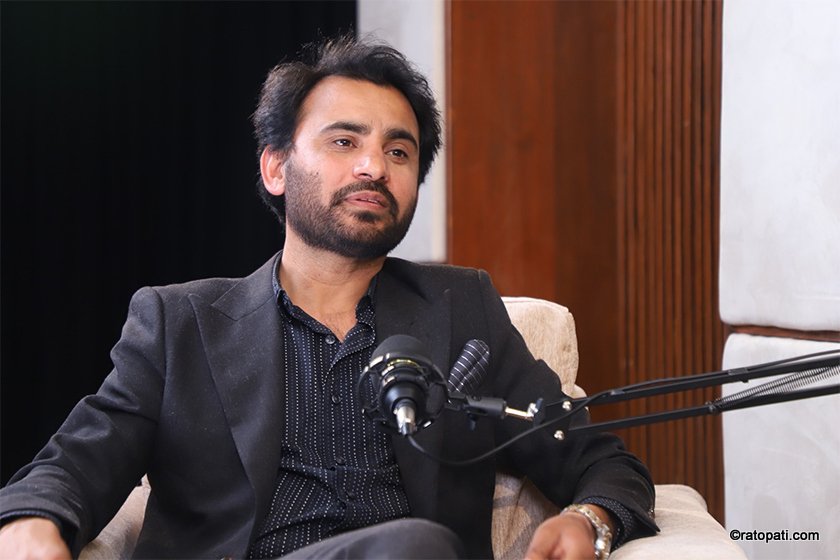
Initially, it took 9 months to prepare the album. Running to recording studios and finding arrangers was very difficult. Even after the album was released, nobody bought it for the first month. I was very disappointed. But later, as the songs started playing on FM stations and Radio Nepal, it gained such momentum that I couldn't keep up with signing autographs. Back then, singers had to sign the back of cassettes. My hands used to hurt from signing 2-3 thousand copies daily. Later, a stamp was made.
What was your experience like for your first concert and first remuneration?
My first concert was in Pepsi Cola. I was new then, and I was very nervous sharing the same stage with legends like Anand Karki and Kunti Moktan. I traveled to the venue by Vikram tempo. After the program, the organizer gave me 1500 rupees in an envelope. That was my first earning. That money made me so happy that I went to Bhrikutimandap and bought a pair of jeans and shoes worth 450 rupees. Those days are very memorable.
A musical journey is not always uphill. Was there a time when you felt like leaving the music industry or reached a point of extreme disappointment?
After my second album 'For You', a very difficult time came in my life. Although 'Mero Maya Marepachhi' became a big hit, offers for concerts stopped coming. Many organizers lured me with false promises of taking me abroad, took my passport, and disappeared for months; some even left me stranded without holding the event. I also became very weak financially. I lived in a small room in Dillibazar, where Pramod Kharel Mama (Singer Pramod Kharel) used to live before. Sitting alone in the room, many thoughts crossed my mind; my frustration reached its peak.
But I did not give up. I used to think—I came from a small village and reached this far, why should I be afraid now? I shared my stress with others, which made me feel lighter. Amidst that pain and struggle, I composed the song 'Mero Manma Aago Laune' with lyrics by Dr. Bhola Rijal, which gave me a musical rebirth.
Nowadays, many artists are settling in America or other developed countries. You also went to America; why didn't you have the desire to settle there?
I went to America for a charity show after the 2072 BS earthquake. Many people advised me to stay there. Everyone argued that the future would be secure. But I felt that I still had a lot of work left to do in Nepal's music industry. An artist has to start from zero level after moving abroad.
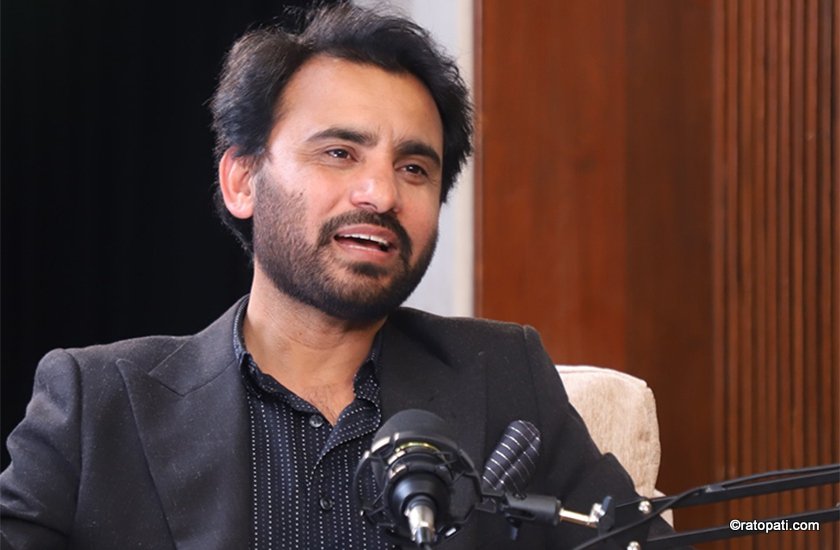
Work is respected there; even cleaning toilets carries dignity, but one has to kill their passion. The love from my country and its audience pulled me back here. I respect others' personal choices, but I prefer to struggle here in Nepal.
The relationship between artists and politics is highly discussed these days. Did you never wish to enter politics? Or did you not receive offers?
It's not that I have absolutely no interest in politics. As a conscious citizen, it is natural to worry about the country's constitution, good governance, and unemployment. Like the common Nepali, I also have hopes from Balen Shah or new forces. But I am not thinking of joining politics.
Video/Photo: Manoj Khadka/Ratopati
This specific news has been automatically translated by AI. As a result, there may be some inaccuracies or language errors.