Newly Appointed Finance Minister Swarnim Wagle Takes Charge, Vows Swift Reforms and Zero Tolerance for Corruption
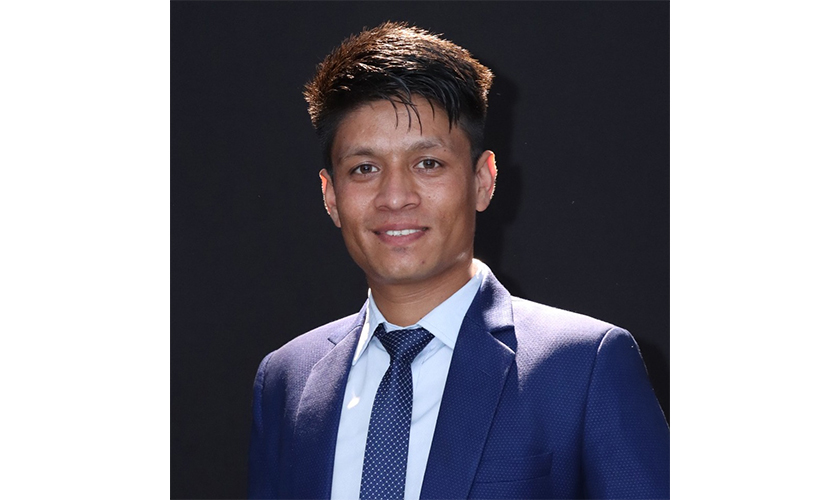

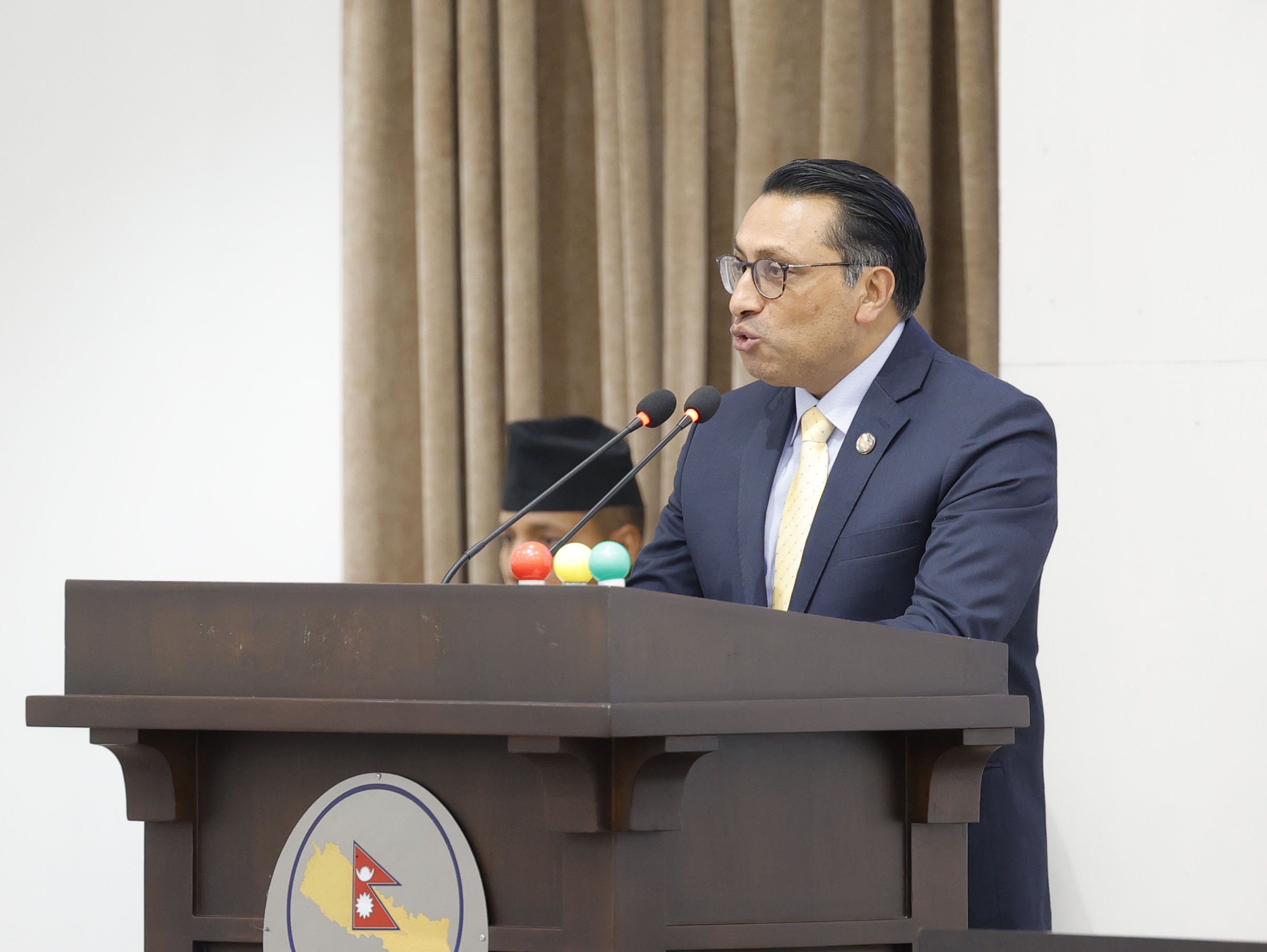
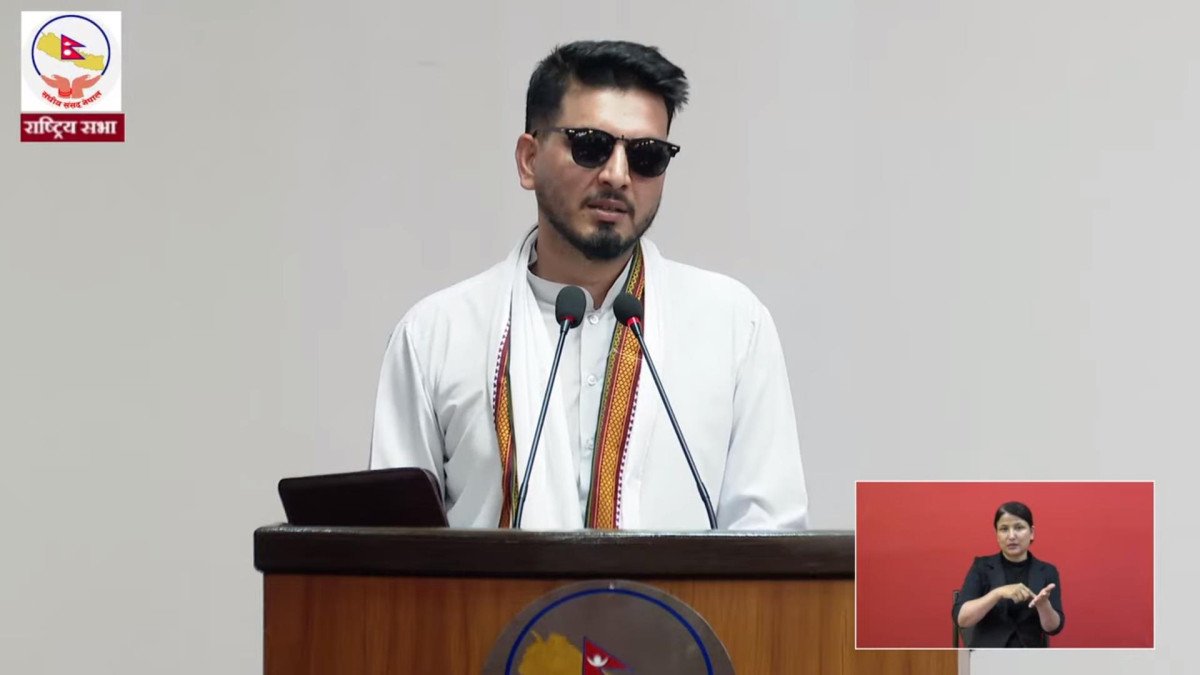
Kathmandu. Upon assuming office, the newly appointed Finance Minister, Dr. Swarnim Wagle, sought to send a message that the government is friendly to the private sector. Immediately after taking charge, he made three key decisions: preparing an 'Economic Status Report' instantly and developing 100-day, mid-term, and annual action plans for implementing election pledges.
He indicated that implementing the report from the High-Level Commission for Economic Reform Suggestions-2081 would be a priority. Singling out the recommendation to abolish the Department of Revenue Investigation, he announced the initiation of the process to repeal 15 such acts, including this one.
His first decision involves prioritizing the formulation of a roadmap for comprehensive economic-legal reform, either by introducing new bills or amending existing laws to ensure the security and promotion of the private sector and facilitate large development projects.
The report from the High-Level Commission for Economic Reform Suggestions had recommended the repeal of the Income Ticket Fee Act, 2019, the Black Market and Some Other Social Crimes and Punishment Act, 2032, the Private Forest Nationalization Act, 2013, the Administrative Procedure (Regulation) Act, 2013, and the Compensation Act, 2019.
Furthermore, it recommended repealing the Birtā Abolition Act, 2016, the Act Prohibiting Birtā Holders from Levying/Collecting Money in Birtā, 2015, the Revenue Leakage (Investigation and Control) Act, 2052, the Act Prohibiting Investment Abroad, 2021, and the Nepal Agency Act, 2014.
The acts recommended for repeal also included the Provincial Development Plan (Implementation) Act, 2013, the Export-Import (Control) Act, 2013, the Social Behavior Improvement Act, 2033, the Nepal Currency Circulation Enhancement Act, 2014, and the Act Relating to Institutions Performing Financial Intermediation, 2055. The private sector had repeatedly drawn the government's attention to the need to repeal or amend these laws.
Finance Minister Wagle stated that the policy would be to solve the problems seen in the economy holistically, rather than in fragmented parts. He committed to systemic reform by eliminating discretionary powers. He mentioned prioritizing the implementation of recommendations from the Public Expenditure Review Commission, increasing domestic production, creating employment, and formulating a transformative budget.
He also mentioned initiating efforts from the Ministry of Finance to promote an electronic governance system and move towards a 'paperless' and 'cashless' system. Furthermore, he stated that the current international situation, especially the problems seen in the Middle East, would be analyzed meticulously, and their impact managed through inter-agency coordination.
'Delivery' is Top Priority, Corruption and Partisanship Unacceptable
In his first directive to senior ministry officials, Finance Minister Wagle declared zero tolerance for traditional practices, corruption, and partisanship. Finance Minister Wagle stated that the government's main mantra now is 'delivery,' meaning results-oriented service delivery.
Finance Minister Wagle mentioned improving service delivery directly connected to citizens above other issues. The message from Finance Minister Dr. Wagle was that the operation to fix the economic problems started today. Finance Minister Wagle emphasized that the entire focus and energy of the current government are centered on delivery.
He stated that the compulsion for ordinary citizens to pay bribes or wait in unnecessary queues when seeking services at government offices must end. He said, "We must break the environment where Nepali people, starting tomorrow, feel that hassle, that suffering, and cringe at the mention of government offices."
Minister Wagle stated that good governance should be viewed from two perspectives. He said, "Micro-governance, where the public experiences the government, and secondly, macro-governance (policy and institutional reform) which lays the foundation for long-term development."
The Era of Elite Capture is Over
He declared the end of practices like elite capture, policy capture, and institution capture, where limited individuals or groups previously seized state resources and policy-making. Asserting that laws made for the greater good of the Nepali people must be implemented honestly, he made it clear that the Ministry of Finance would not be run under the influence of vested interest groups.
He opined that partisanship has entered sensitive sectors like Nepal's bureaucracy, education, and health, destroying the social and economic structure. He announced an immediate end to this.
He directed employees to abandon old partisan biases and prejudices and move forward as completely impartial civil servants. "If you carry the values of merit, integrity, and dedication, you are my friend," Finance Minister Wagle told the employees. He also warned that while honest and diligent employees would always receive his protection and encouragement, those who neglect their official duties would not receive the government's favor.
Priority on Infrastructure and Legal Reform
Finance Minister Wagle stated that there are more than 40 to 50 economic and development-related acts in the pipeline of the Parliament and the government. He mentioned that these acts must be passed rapidly based on priority. He committed to utilizing the government's comfortable majority for national development and passing laws based on merit.
He announced an immediate end to delays in infrastructure construction. He highlighted the reality of how delays in land acquisition, compensation distribution, and forest clearance affect projects. He stated that the upcoming budget and policy would place special emphasis on improving connectivity, affordable and reliable internet, energy, and air services.
He expressed his personal desire to make the budget, coming on Jestha 15, truly transformative. "The time has now come to steer this ship of economic governance in the right direction," he said.
Challenges and Areas for Reform
Despite being excellent in knowledge, capability, and international experience, Dr. Wagle faces a mountain of challenges. He needs to move forward through coordination with all bodies.
The Ministry of Finance is a body where the Finance Minister must coordinate and work by binding regulatory bodies like Nepal Rastra Bank, the Securities Board, and the Insurance Board, as well as industrialists, traders, and the entire private sector, under a single thread.
Regardless of technical knowledge, paying attention to teamwork is crucial for success in Nepal's complex political and administrative sphere. It appears that the economic reform agenda of the RSP will only materialize if he demonstrates coordination skills and takes everyone along.
Finance Minister Wagle's main priorities must now focus on expanding the contracted size of the economy, making the low capital expenditure effective and rapid, and creating an investment-friendly environment by fully activating the private sector.
This specific news has been automatically translated by AI. As a result, there may be some inaccuracies or language errors.