
Reviewing the Performance of Sushila Karki-Led Interim Government Ministers

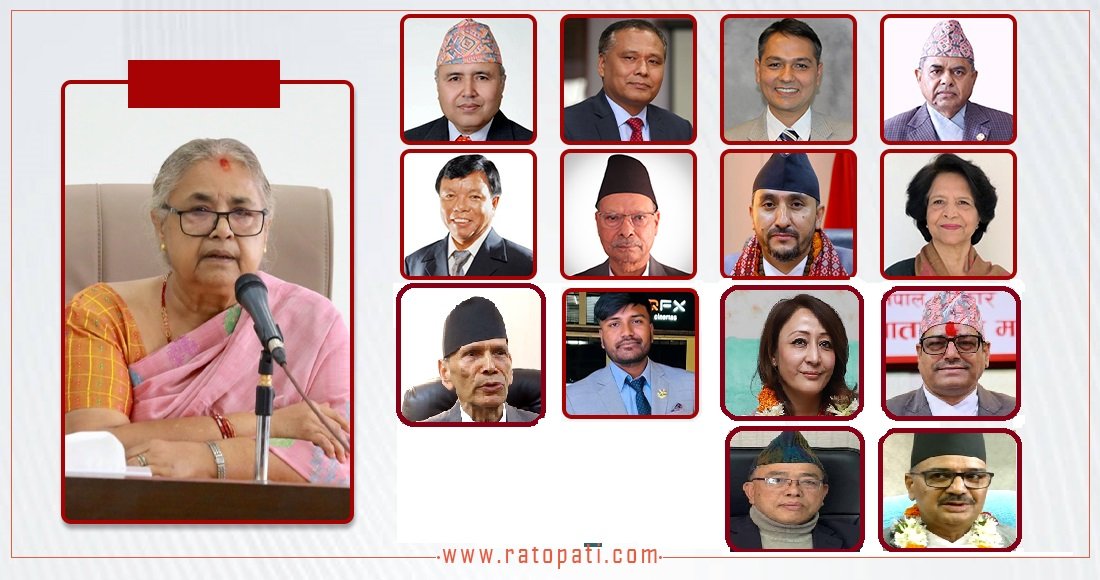
Kathmandu. The term of the interim government led by Sushila Karki has concluded. Having been formed with the objective of completing the House of Representatives elections, the country constitutionally reverted to its state before Bhadra 27 once the elections were completed and the newly elected members took their oaths on Thursday. The principle of necessity has now returned the government formation process to Article 76 of the Constitution.
Fifteen ministers, including the Prime Minister, were appointed to that government. Of these, eleven remained until the end, while four resigned midway and left. Here, we will conduct a general evaluation of the individual performances of everyone who participated in the Karki government.
1. Sushila Karki - Prime Minister

In the state of being without a government that emerged after KP Sharma Oli resigned on Bhadra 24 amidst the Genji movement, Sushila Karki was appointed Prime Minister on Bhadra 27 based on the principle of necessity.
Throughout her tenure, she fully managed the responsibilities of the Prime Minister and Defense Minister, while also partially handling the responsibilities of other ministries.
The biggest credit for the interim government is given to Karki for fulfilling the mandate of holding elections. Appointed on Bhadra 27, she decided to dissolve the House of Representatives in her very first meeting and also recommended the announcement of elections for Falgun 21.
Besides this, she formed a commission on Assoj 6 to investigate the incident that occurred during the Genji movement under the leadership of Gauribahadur Karki, and signing an agreement with Genji on Mangsir 24 was her achievement.
During this period, although some factions of Genji demanded her resignation, that voice subsided as the election process moved forward.
However, she did not remain free from criticism on a few issues. She was particularly criticized for extending the tenure of the commission led by Gauribahadur Karki beyond the election period, not making the report public after receiving it, appointing her own cabinet members and personal secretary at the last moment, and making unnecessary foreign trips.
2. Rameshwor Khanal

Rameshwor Khanal, who was appointed in the first cabinet expansion on Bhadra 30, became the Prime Minister. Initially responsible for the Ministry of Finance, Khanal also received the responsibility of the Ministry of Federal Affairs and General Administration a week later, on Assoj 6.
He accomplished some important tasks under the Ministry of Finance. Specifically, he initiated the implementation of an automated valuation system instead of the reference price system at customs, and the abolition of the Inland Revenue Office, starting this service from the local level. The system of approving every file from the Ministry of Finance digitally was also established during his tenure.
Furthermore, during this period, he put a hold on projects worth approximately 1 Kharba 20 Arab Rupees mentioned in the budget. Consequently, it was estimated that the capital budget expenditure would be nearly 41 percent less during the mid-term review of the current fiscal year. He could not handle the sluggishness in budget expenditure and revenue collection, and the economic pressure.
Some of his actions in the Ministry of Finance, despite his reputation for a clean image, remained controversial. Notably, he made the controversial decision to grant tax exemption to the Dolma Impact Fund of Mauritius. Moreover, cabinet members accused his ministry of showing high-handedness in allocating budgets and approving projects to other ministries.
In the responsibility of the Ministry of Federal Affairs, he did not have any particularly significant work or controversy. However, during this period, nearly two hundred local levels became without chief administrative officers.
Having joined during the first cabinet expansion, he started a 'cooling period' a week earlier. Nevertheless, he is regarded as a minister who supported the Karki government from beginning to end.
3. Omprakash Aryal

Aryal, with a legal background, was appointed as a cabinet member during the first expansion and received the responsibilities of the Home Ministry and the Law Ministry. However, a week later, he was relieved of the responsibility of the Law Ministry, so his contribution to this ministry was minimal.
While at the Home Ministry, he initially became a subject of criticism. Genji leaders opposed him for not arresting high-ranking officials from the previous government who were accused of suppressing the Genji movement.
However, he proved those demands wrong by ensuring all parties participated in the election and that the election was conducted peacefully, thereby validating himself. It is said that Prime Minister Karki praised him for not being greedy for a 'lucrative' ministry and for continuously supporting her.
As the leader of the security apparatus, he is credited with successfully averting major damage in central Nepal during the rains that occurred during the Dashain festival.
Furthermore, his success during this period was the undisputed transfer and promotion of police personnel and employees under the Home Ministry, right up to the Inspector General level.
However, as he was leaving the government, he became publicly criticized for making a decision to appoint himself to the National Assembly.
3. Anil Kumar Sinha

Anil Kumar Sinha is one of the ministers who joined ten days after the government was formed and supported the Karki government until the end. During this period of six months and seven days, he fully managed five ministries.
Initially, he was given the responsibilities of the Ministry of Industry, Commerce and Supplies, the Ministry of Law, Justice and Parliamentary Affairs, and the Ministry of Land Management, Cooperatives, and Poverty Alleviation. However, on Mangsir 26, he was also assigned the responsibility of the Ministry of Culture, Tourism, and Civil Aviation. On the same day, he was relieved of the responsibility of the Ministry of Land Management.
After Kulman Ghising resigned from three ministries, Sinha was also given the responsibility of the Ministry of Energy, Water Resources, and Irrigation on Poush 25, filling one of the vacancies. Including responsibilities taken on during ministerial foreign trips, he managed seven ministries.
His performance during this period was partially successful. He played a coordinating role in making the elections successful. Furthermore, the efficiency seen in supply management despite the risk of floods and landslides was his most positive aspect.
However, some of his actions were not free from controversy. Notably, the government's decision to abolish the Land Commission was overturned by the court during his tenure. The Supreme Court also halted the appointment of the General Manager of Nepal Airlines Corporation. On the other hand, he was accused of violating the seniority order in the appointment of the acting Director General at the Civil Aviation Authority of Nepal.
4. Rajendrasingh Bhandari
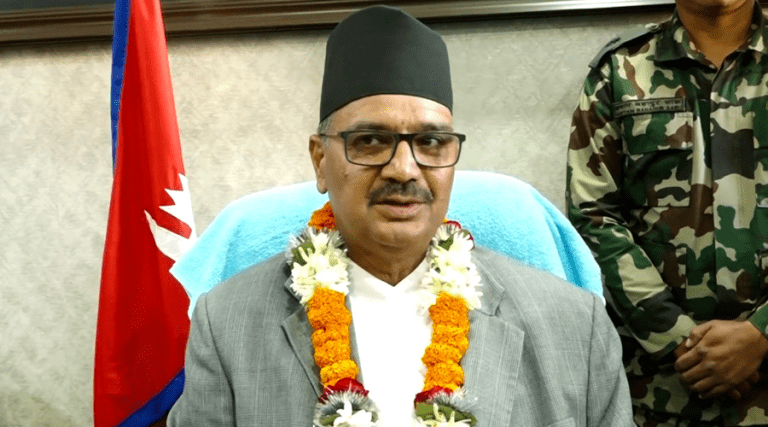
Rajendrasingh Bhandari's name also comes forward among the influential ministers of the Karki government. Appointed on Mangsir 26, he succeeded in reducing the health check-up fee, which his own government had decided to increase due to the influence of middlemen.
During his tenure, the long-awaited labor agreement with Saudi Arabia was signed. This will provide additional facilities and opportunities for workers going from Nepal to Saudi Arabia. Although there was no other significant work, the ministry did not undertake any controversial work during this period, which is his most successful aspect.
On Poush 11, he was also given the responsibility of the Ministry of Water Supply. During this period, no major significant work, other than daily administration, was seen in the Ministry of Water Supply.
5. Dr. Madan Pariyar

Dr. Madan Pariyar was appointed as the Minister of Agriculture and Livestock Development in the interim government during the second cabinet expansion. Under his leadership, as an agricultural expert leading the ministry, the ministry could not achieve any memorable work.
He is among the ministers who received less public attention while in government. Since he was appointed after winter began and left before the monsoon started, he was not heavily criticized for issues like the acute fertilizer shortage that became the most pressing problem. However, no steps for improvement in these areas were seen during this period.
Nevertheless, he was found to have done some work to ensure good governance in the bodies under the ministry.
6. Prof. Dr. Kumar Ingnam
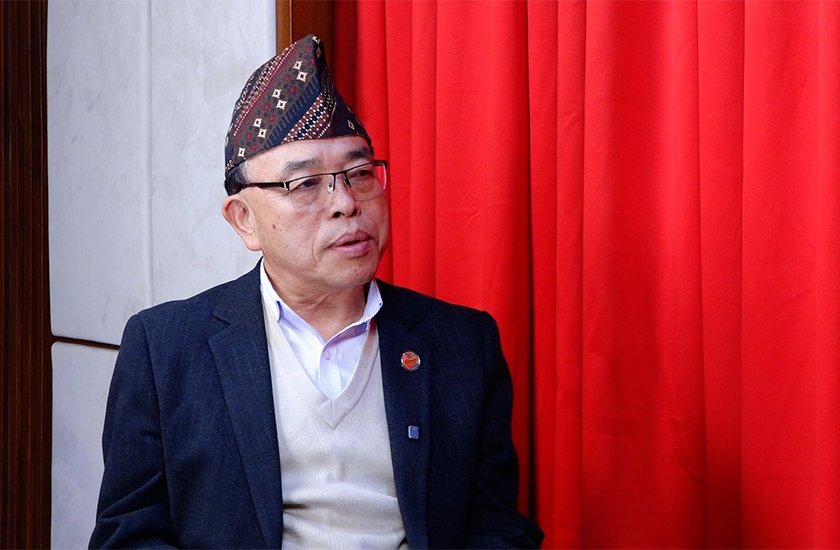
Kumar Ingnam is a minister appointed on Mangsir 26. Initially leading the Ministry of Land Management, Cooperatives, and Poverty Alleviation, he also received the responsibility of the Ministry of Urban Development, which became vacant after Kulman Ghising left the government.
No results-oriented work was seen in either ministry during his tenure. However, he made some attempts regarding the transfer of land revenue officers on charges of taking bribes, the dismissal of the Chinese Lama in Boudha, the attempt to revert the management of problematic cooperatives to the old leadership, and the expansion of land-related rights to local levels.
Furthermore, he showed special interest in matters like the construction of the Parliament Building under the Ministry of Urban Development. However, none of these efforts were particularly successful. He bid farewell to the government declaring himself the most unsuccessful minister in history.
His departure brought him into the spotlight due to the allegations he leveled against employees and the Ministry of Finance.
7. Madhav Prasad Chaulagain
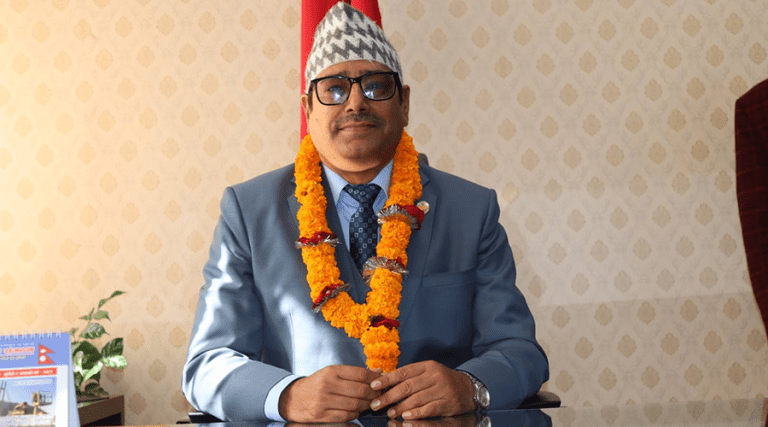
Madhav Prasad Chaulagain is also an individual appointed as a minister on Mangsir 26. Initially responsible for the Ministry of Forest and Environment, he was also given the responsibility of the Ministry of Physical Infrastructure and Transport on Poush 25 after Kulman Ghising resigned.
During his tenure, there were neither significant achievements nor major controversies. However, he spent his two-and-a-half-month tenure monitoring various road projects.
8. Shraddha Shrestha

Shraddha Shrestha also became a minister during the expansion on Mangsir 26. She was given the responsibility of the Ministry of Women, Children, and Senior Citizens.
Her tenure was also not particularly memorable. However, the ministry claimed to have attempted to work on good governance, legal reforms, and digitalization within bodies under the ministry, including the Social Welfare Council, while she was the minister.
10. Balananda Sharma
_12mDjgnaBh.jpg)
Balananda Sharma is the minister appointed latest in the Karki government. He was appointed Foreign Minister on Poush 11.
Minister Sharma also did not achieve any memorable or significant work during this period, nor was his tenure particularly controversial. Recently, he has shown activity in collecting data on Nepalis wishing to be rescued amidst the ongoing war in West Asia.
11. Sudha Gautam

Sudha Gautam joined as the Minister of Health and Population on Mangsir 26. Her tenure of about three and a half months was spent on daily administrative tasks.
During this time, there was neither a situation to deal with a major challenging step nor an opportunity for policy reform. However, during this period, government hospitals faced the situation of having to stop services due to the payment crisis seen in the Health Insurance Board.
Apart from these, four ministers left midway through their tenure. These relatively active figures left the field due to political ambitions. They are as follows:
12. Kulman Ghising

Kulman Ghising, who became a minister at the very beginning on Bhadra 30 during the cabinet expansion, was given the responsibility of three major development ministries: Energy, Water Resources and Irrigation; Physical Infrastructure and Transport; and Urban Development.
Immediately after being appointed minister, he aggressively pursued the process of terminating contracts, terminating the contracts of more than two hundred projects. Furthermore, he came into controversy and discussion after removing the Executive Director of the Electricity Authority, Hiteindradev Shakya, and appointing a new Executive Director. However, the court put a stop to this action.
He resigned on Poush 23 following controversy over his involvement in establishing the Ujyalo Nepal Party while leading the citizen government. However, his party did not achieve the expected results in the election.
Amidst controversy, he played a significant role in ending the distortions seen in contracting.
13. Mahabir Pun
_ZuhQF0L4e4.jpg)
Mahabir Pun was appointed Minister of Science and Technology during the second cabinet expansion on Assoj 6. The founder of the National Innovation Center, immediately after his appointment, he lobbied the Prime Minister to remove the Prime Minister from the position of Chancellor and appoint officials to Tribhuvan University and others based on meritocracy.
He resigned the day before filing his candidacy for the House of Representatives, alleging that the government did not cooperate in his attempt to achieve this through an ordinance, and went to contest the election. He has now been elected as a member of the House of Representatives from Myagdi.
During his tenure, he played a role in clearing the forest area in Tribhuvan University to build a park.
14. Jagadish Kharel

Jagadish Kharel became a minister on Assoj 6 during the second cabinet expansion. Responsible for the Ministry of Communications and Information Technology, he initially announced the installation of free Wi-Fi in public places in the Kathmandu Valley within two months and in ten cities within five months.
Accordingly, he managed this arrangement in some places in Kathmandu. His role as the spokesperson for the Ministry of Communications was commendable. Notably, he played a role at that time in connecting political parties like UML and Congress with the Genji government.
However, he is not free from allegations such as transferring a secretary due to a conflict of interest in telecom contracts. It is not that the allegation of leaving the responsibility of the interim government unfinished midway has not been leveled against him.
He has now been elected as a member of the House of Representatives from Lalitpur Constituency No. 2 on behalf of the Rastriya Swatantra Party.
15. Bablu Gupta

Bablu Gupta is the minister who spent the shortest time in the Karki-led government. He is the only minister from the Genji age group formed on the foundation of the Genji movement. Appointed to the Ministry of Youth and Sports on Mangsir 26, Gupta also resigned before filing his candidacy for the election. He spent nearly a month and a half in the ministry.
There was no significant work done in the ministry during his tenure either. However, during his tenure, the second Nepal Premier League was completed. Although his personal contribution to this was minimal. Rather, he became criticized for the temptation of traveling to America before resigning.
He has been directly elected as a member of the House of Representatives from Siraha Constituency No. 1 on behalf of the Rastriya Swatantra Party.
This specific news has been automatically translated by AI. As a result, there may be some inaccuracies or language errors.
_Yq85YOxh21.jpg)

_jqRIbYgb17.jpg)