Controversy Surrounds Investigative Commission Report on August/September Protests

Kathmandu. The report of the investigative commission formed under the chairmanship of former Justice Gauri Bahadur Karki regarding the 'Jenji' protests that occurred on Bhadra 23 and 24 is currently at the center of discussion and controversy.
With the full text of the report prepared by the commission being made public through the media, the question of its implementation has now arisen. The report submitted by the commission has not yet been officially made public.
Three months ago, the Supreme Court had already pointed out the risk of the report becoming 'null' due to doubts raised over the impartiality of the commission's chairman, Karki. The government formed a three-member investigation commission on Ashoj 5 last year to investigate the incidents during the 'Jenji' protests. The commission, chaired by Gauri Bahadur Karki, included legal expert Bishweshwar Bhandari and former AIG Bigyanraj Sharma as members.
In a writ petition filed questioning the impartiality of the commission, the Supreme Court had raised questions of ethics regarding the commission's chairman. Despite the Supreme Court raising ethical questions, Chairman Karki did not resign. Currently, questions are being raised about the report submitted by the commission chaired by Karki, alleging that it held those involved in the Bhadra 23 incident guilty but shirked responsibility for investigating the destruction on Bhadra 24.
Advocate Ananta Raj Luintel states that legal as well as serious ethical questions have arisen regarding the formation, working style, and the submitted report of the investigative commission formed to probe the incidents of Bhadra 23 and 24. According to Advocate Luintel, particularly a previous order issued by the Supreme Court and the commission's remarks that exceeded its jurisdiction have raised significant questions about its credibility.
Bipin Dhakal had filed a case in the Supreme Court regarding the very formation of the Karki Commission. In that case, a full bench comprising Justices Manoj Kumar Sharma, Nahkul Subedi, and Shrikanta Paudel delivered a verdict mentioning some serious points. Before the commission was even formed, Chairman Gauri Bahadur Karki had already publicly expressed his opinion through social media platform Facebook and the media, stating that the then Prime Minister, Deputy Prime Minister, heads of security agencies, and others should be prosecuted.
Advocate Luintel states that if any person has already formed an opinion on a subject, the investigation they conduct cannot be impartial. According to Advocate Luintel, the Supreme Court did not question Karki's qualification but seriously questioned his impartiality and neutrality.
'Questions may arise regarding the acceptance and implementation of the commission's report, so he should have considered it on ethical grounds, but he did not resign from the post and submitted the report. This makes the report look ethically weak from the beginning,' he said.
The main job of such commissions formed under the Investigative Commission Act, 2036, is only to collect facts and investigate. 'This is not a court that can declare someone guilty or innocent,' Luintel said, 'but the Karki Commission has also attacked the judiciary, legal practitioners, and journalists by exceeding its jurisdiction.'
The report has been criticized for defaming the judiciary, commenting that judges are 'party cadres,' and recommending specific prison terms for individuals. 'The Investigative Commission Act only grants the commission the authority of an investigator, not a blaming authority,' he said, 'The commission has no authority from anywhere to prejudicially find fault with independent bodies and individuals.'
Advocate Luintel also stated that the process adopted by the commission during its investigation was flawed. For example, he clarified that treating the incidents of Bhadra 23 and 24 separately was wrong from both a technical and practical perspective. 'Those incidents were interconnected. The death of a student one day and the destruction of property and heritage the next day were the result of the same situation,' he said, 'But the investigation conducted without looking at that deep connection clearly shows that the commission did not perform its duty honestly.'
Advocate Luintel stated that when any report is prejudiced and exceeds its legal limits, the justification for its implementation ceases to exist. 'The Karki Commission's report appears to be inspired by preconceived notions rather than being based on facts,' he said.
Luintel stated that when the report itself is incomplete, flawed, and prejudiced, any decision or implementation based on it is certain to be equally flawed.
Senior Advocate Jyoti Baniya states that it is difficult to distinguish whether an investigation report is a tool for political consumption or not. 'A fact-finding committee is formed to ascertain the truth of any incident and prevent such mistakes from recurring in the future, but it seems that in Nepal recently, investigation reports are becoming means for political interests and public consumption rather than tools for dispensing justice,' he said.
The committee was tasked with providing a detailed analysis of the events of both Bhadra 23 and 24. According to Senior Advocate Baniya, the report focused only on the issue of the 23rd and completely neglected the aspect of the 24th. 'When any report is one-sided, it only promotes prejudice instead of justice. This report seems intent on forming a certain opinion rather than getting to the depth of the incident,' he said.
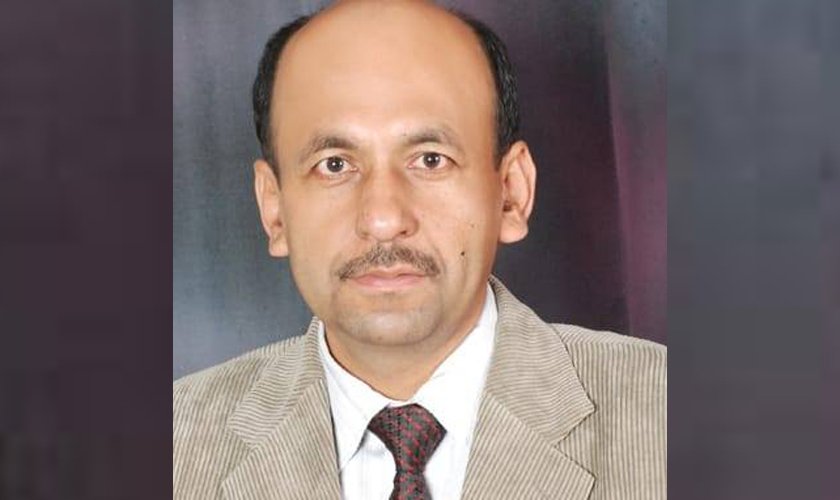
According to Senior Advocate Baniya, a close study of the report reveals that it was prepared merely for 'public consumption.' He stated that the committee seemed more concerned with weaving a web of words to please the current government and its supporters.
He termed this as 'intellectual dishonesty.' He clarified that the commission's comments on unnecessary matters like monasteries and state governance, going beyond its jurisdiction, raised significant questions about its impartiality.
Baniya commented that another controversial aspect of this investigation was the disregard for the Supreme Court's order. The court had suggested reconsideration, questioning the structure and discretion of the committee. 'When judicial remarks implying that you should not sit were made, the forceful writing of the report shows the weak moral ground of the committee,' he said, 'Not including the court's sentiment in the report, or even mentioning it, is a mockery of the rule of law.'
Senior Advocate Baniya stated that this investigation report on the incidents of Bhadra 23 and 24 is certain to push the country into further problems and confusion instead of setting the right direction. He said it signals a new series of sedition and that emotion and political vendetta have prevailed over facts.
In such a situation, he concluded that it would be wise to wait for the report of the National Human Rights Commission and proceed with an objective discussion based on that.
This specific news has been automatically translated by AI. As a result, there may be some inaccuracies or language errors.