Nepal's Political Turmoil in 2082: From Violent Crackdown to New Government Formation

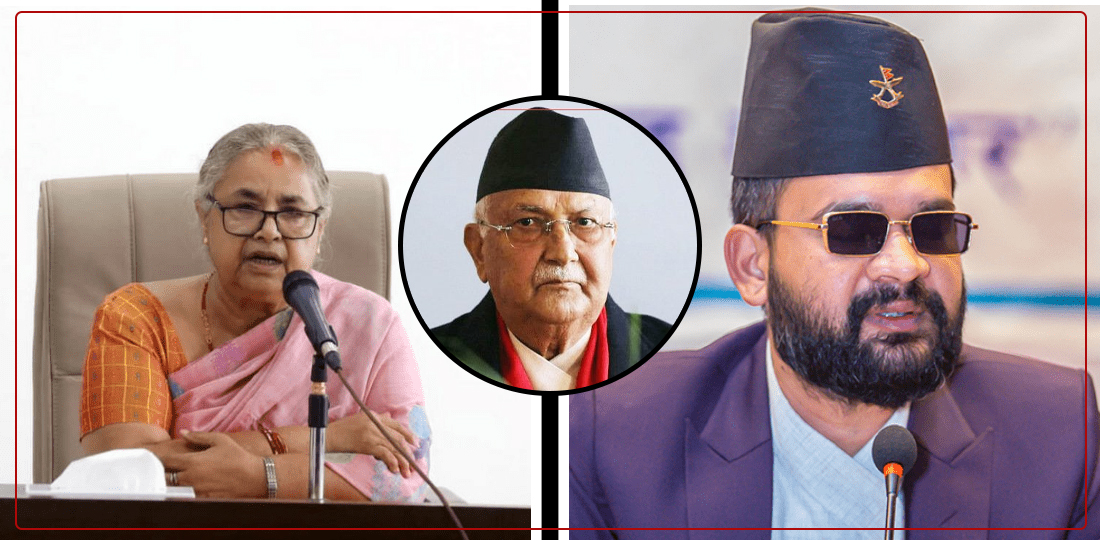
Kathmandu. The year 2082 proved to be tumultuous in Nepal's history. The political landscape of the country took a new turn due to the ruthless crackdown by the then government led by KP Sharma Oli on the Janji Movement on Bhadra 23.
Due to the Janji Movement, the then Prime Minister Oli was forced to resign, and within 082, the country is set to see two Prime Ministers.
Following the ousting of the Oli government on the strength of the Janji Movement, an interim government was formed under the leadership of former Chief Justice Sushila Karki on Bhadra 27. The Karki government dissolved the previous House of Representatives and announced elections for the House of Representatives on Falgun 21.
In those elections, established parties like the Nepali Congress, CPN-UML, Communist Party of Nepal, RPP, and Madhes-centric parties were swept aside. The new party, Rastriya Swatantra Party (RSP), won close to a two-thirds majority, securing 182 seats. Senior RSP leader Balendra (Balen) Shah is preparing to take the oath of office and secrecy as Prime Minister on Friday.
A high-level investigation commission was formed under the coordination of former Justice Gauribahadur Karki to investigate the incidents that occurred on Bhadra 23 and 24. Although the Karki Commission submitted its report to the government, it has not yet been formally made public. However, according to the report made public through the media, it recommended imprisonment ranging from three to ten years for those in leadership positions, including then Prime Minister Oli and Home Minister Ramesh Lekhak, finding them guilty of criminal offenses. Questions have been raised about the impartiality of the Karki Commission report as it remained silent on the destruction that occurred on Bhadra 24.
This specific news has been automatically translated by AI. As a result, there may be some inaccuracies or language errors.